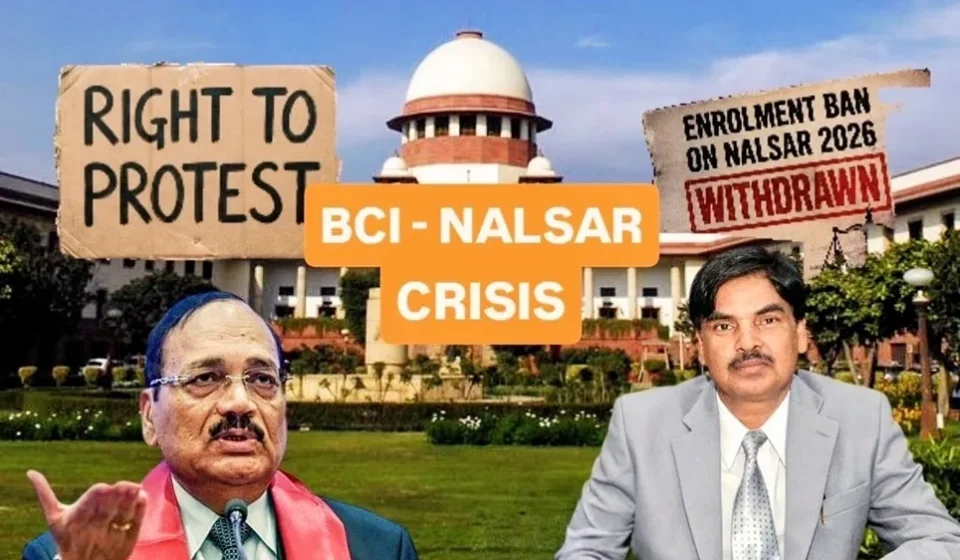

The controversy involving the Bar Council of India (BCI) and NALSAR University of Law students has triggered a wider debate on the limits of regulatory authority, student freedom of expression, and the relationship between professional bodies and legal education institutions.
The dispute began after graduating students of The National Academy of Legal Studies and Research (NALSAR) University of Law, Hyderabad, raised objections over the invitation of Chief Justice of India (CJI) Surya Kant as the chief guest for their convocation ceremony. The matter escalated when the BCI, led by its chairman Manan Kumar Mishra, who is also a Bharatiya Janata Party (BJP) MP, issued a directive freezing the enrolment of NALSAR’s entire 2026 graduating batch pending an inquiry.
However, the decision was rolled back within hours following widespread criticism and judicial scrutiny. In a late-night post on X August 13–14, Mishra stated that the 2026 NALSAR batch had “no role in any disturbance or movement” and that the BCI had decided to close the proceedings altogether. The reversal brought immediate relief to students but also intensified questions over the extent of the regulator’s authority and the use of professional restrictions in response to campus dissent.
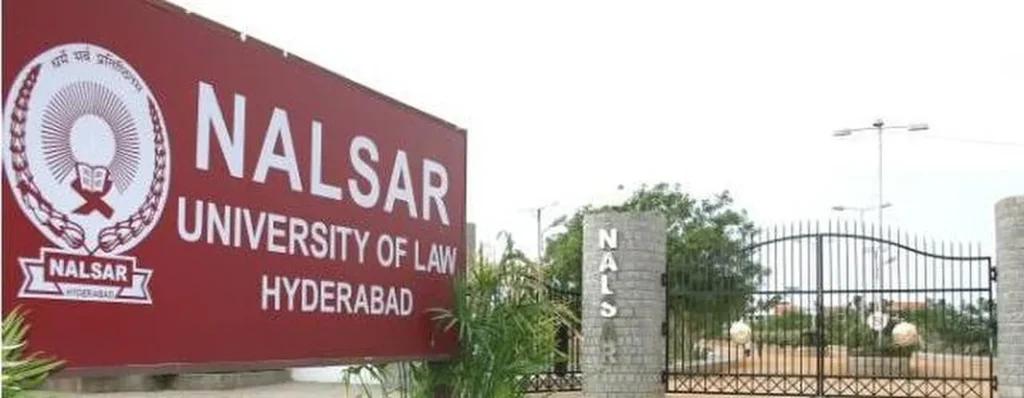
The episode has raised important questions: Can a regulatory body penalise students for peaceful protest? How far can the BCI intervene in university affairs? And does professional discipline extend to students before they enter legal practice?
- Bulldozer Justice: The Alarming Question Behind Demolitions
- Pahalgam Attack 2025: The Attack That Challenged Kashmir’s Security Narrative
- Uttarakhand Cloudburst: How Extreme Weather Threatens India-China Border Infrastructure
- Indian National Congress: Rise, Decline and Future Battle
- Mecca Agreement: A New Security Order Taking Shape?
What Happened Between BCI and NALSAR Students?
According to reports, a section of NALSAR’s graduating students expressed opposition to the invitation of CJI Surya Kant for their convocation ceremony. The students reportedly referred to earlier judicial observations related to protests and police action involving students in Delhi. The students’ action was presented as a form of peaceful democratic expression. However, the matter drew the attention of the Bar Council of India, the statutory regulator responsible for legal education standards and the legal profession.
The BCI subsequently issued directions that affected the enrolment process of the 2026 graduating batch of NALSAR students, raising concerns among students that their entry into the legal profession could be delayed. The move triggered criticism from legal experts, students, and sections of the legal community, who questioned whether a peaceful campus protest could become the basis for professional consequences.
Timeline of Events
| Date | Development |
|---|---|
| Early August 2026 | NALSAR graduating students reportedly raised objections regarding the invitation of CJI Surya Kant as convocation chief guest. |
| August 13, 2026 | BCI issued directions restricting enrolment of NALSAR 2026 graduates, citing concerns regarding professional ethics and conduct. |
| August 13–14, 2026 | The decision faced criticism, with questions raised about the BCI’s authority and proportionality of action. |
| August 14, 2026 | During Supreme Court proceedings, observations were made questioning the BCI action and emphasising students’ right to peaceful protest. |
| Later development | BCI withdrew the restrictions and closed proceedings against students, allowing graduates to proceed with enrolment. |
Supreme Court’s Response: Right to Peaceful Protest
The Supreme Court’s intervention became the turning point in the controversy. During the hearing, CJI Surya Kant reportedly questioned why the BCI was intervening in a matter involving students expressing their views peacefully. The court emphasised that students, like other citizens, have constitutional protections, including the right to express disagreement through lawful means. The central issue before the court was not whether students could criticise a decision, but whether such criticism could justify action affecting their professional careers.
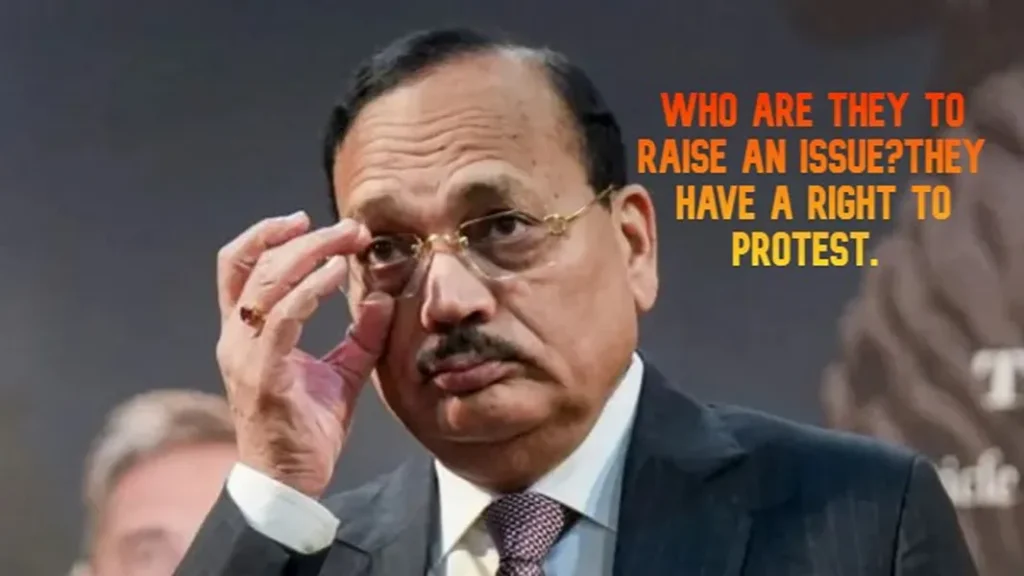
The court’s observations highlighted a broader constitutional principle:
Peaceful disagreement and criticism cannot automatically be treated as misconduct.
Legal Issues Involved
1. Scope of BCI’s Disciplinary Powers
One of the biggest legal questions is whether the BCI has authority to take disciplinary action against law students who are not yet enrolled as advocates.
The BCI derives powers mainly from the Advocates Act, 1961, which allows it to regulate the legal profession and legal education standards.
However, critics argued that regulating legal education is different from punishing students for campus-related expressions or protests.
The controversy has therefore brought attention to the boundary between:
- professional regulation,
- university autonomy,
- student rights, and
- constitutional freedoms.
2. Right to Protest and Freedom of Expression
The Indian Constitution protects freedom of speech and expression under Article 19(1)(a), subject to reasonable restrictions. Students have historically played a major role in public debates and democratic movements. Courts have repeatedly recognised that peaceful protest is an important part of democratic participation.
The NALSAR controversy has revived the debate over whether institutions should distinguish between:
- unlawful disruption, and
- peaceful dissent.
3. Proportionality of Regulatory Action
Another legal question is whether restricting professional enrolment was a proportionate response.
Critics argued that blocking young law graduates from entering the profession could have serious consequences, including:
- delay in career opportunities,
- financial uncertainty,
- reputational impact, and
- uncertainty about future employment.
The principle of proportionality requires authorities to ensure that punishment or restrictions are not excessive compared with the alleged violation.
Impact on Law Students
For law graduates, enrolment with a State Bar Council is a crucial step towards entering the legal profession. Without completing the required enrolment process, a graduate cannot smoothly begin practising as an advocate. Therefore, any regulatory restriction or delay can create immediate uncertainty for students who have already completed years of legal education.
The BCI-NALSAR controversy brought this concern into sharp focus. A restriction affecting an entire graduating batch could potentially disrupt plans to join law firms, litigation chambers, corporate legal teams or begin independent legal practice. For students preparing for competitive legal careers, even a temporary delay can create difficulties with joining dates, internships, examinations and other professional commitments.
The issue is particularly significant because fresh law graduates are at an important transition point. They move from an academic environment into a profession governed by strict regulatory requirements. Any uncertainty at this stage can affect not only their immediate employment plans but also their confidence in the professional system.
Another important concern is collective responsibility. If allegations or objections involve only a section of students, questions arise over whether an entire graduating batch should face professional consequences. Treating all students alike could potentially affect graduates who had no involvement in the disputed campaign or protest.
The controversy therefore goes beyond the immediate disagreement between the BCI and NALSAR. It raises a larger question about how regulatory authorities should respond when student activism intersects with professional eligibility. For law students, the episode also highlights the importance of understanding the boundaries between freedom of expression, institutional discipline and professional regulation. Universities can provide space for disagreement and debate, but students entering regulated professions may also face additional professional expectations.
Student Voice and the Larger Institutional Debate
The BCI-NALSAR controversy has sparked a broader debate about the role of student voice in law schools and the limits of regulatory authority. Law schools are traditionally spaces for debate, discussion and constitutional learning, where students are expected to engage with social and institutional issues.
The episode raises questions about whether future lawyers should be encouraged to express disagreement or face professional consequences for doing so. Many legal academics view democratic debate as an essential part of legal education, particularly for students preparing to enter the legal profession.
At the same time, regulatory bodies such as the BCI have a responsibility to maintain professional standards. However, their actions must also remain consistent with constitutional principles and established legal processes. This creates a larger institutional question: How should professional discipline coexist with democratic freedoms?
The long-term significance of the BCI-NALSAR controversy may depend on whether it results in clearer guidelines governing the relationship between law regulators, universities and student expression.
Conclusion
The BCI-NALSAR dispute has moved beyond a campus controversy and become a debate over constitutional rights, regulatory authority, and the future of legal education in India.
While professional bodies have a duty to protect standards in the legal profession, the episode has highlighted the importance of ensuring that disciplinary mechanisms do not unintentionally restrict legitimate democratic expression.
For thousands of law students across India, the controversy serves as a reminder that the journey from law school to courtroom involves not only professional training but also engagement with constitutional values.
Why did BCI take action against NALSAR students?
The BCI action reportedly followed protests by NALSAR graduating students regarding the invitation of CJI Surya Kant as convocation chief guest.
Were NALSAR students stopped from becoming advocates?
The restriction on enrolment was later withdrawn, allowing graduates to continue the enrolment process.
What constitutional right is involved in this controversy?
The issue primarily involves the right to freedom of speech and peaceful protest under Article 19 of the Indian Constitution.
What is the role of the Bar Council of India?
The BCI regulates legal education standards and the legal profession under the Advocates Act, 1961.