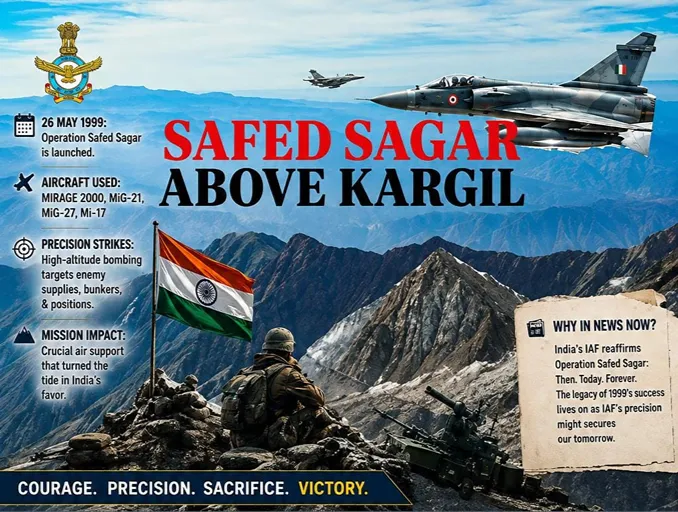

High in the mountains, air power was forced to operate under extraordinary restrictions. In 1999, the Safed Sagar Operation became one of India’s most demanding high-altitude air campaigns. The mission was not simply about dropping bombs. Instead, it required precision, restraint and rapid adaptation.
Moreover, every strike had to support troops fighting for control of strategically important heights. Twenty-seven years later, the operation remains relevant. Its lessons now extend beyond the Kargil battlefield and into India’s evolving approach to air power.
What Was the Safed Sagar Operation?
The Safed Sagar Operation was the Indian Air Force’s air campaign during the 1999 Kargil War. It supported the Army’s Operation Vijay, which sought to recapture positions occupied by Pakistani forces. The IAF joined the campaign on 26 May 1999. Offensive air operations were then conducted against positions across the Kargil sector.
The operation presented an unusual challenge. Indian aircraft had to attack targets at extreme altitudes while remaining on India’s side of the Line of Control. The Indian government had specifically directed that the LoC must not be crossed. Therefore, pilots had to achieve their objectives without expanding the conflict geographically.
Why the Kargil Air War Was So Difficult
The terrain fundamentally changed the nature of air operations. Many enemy positions were located on steep mountain slopes. Several stood at altitudes above 16,000 feet. Consequently, conventional attack patterns became far more difficult. Thin air also affected aircraft performance. Meanwhile, pilots faced concealed targets and difficult approaches. Furthermore, the LoC restriction removed an important tactical option.
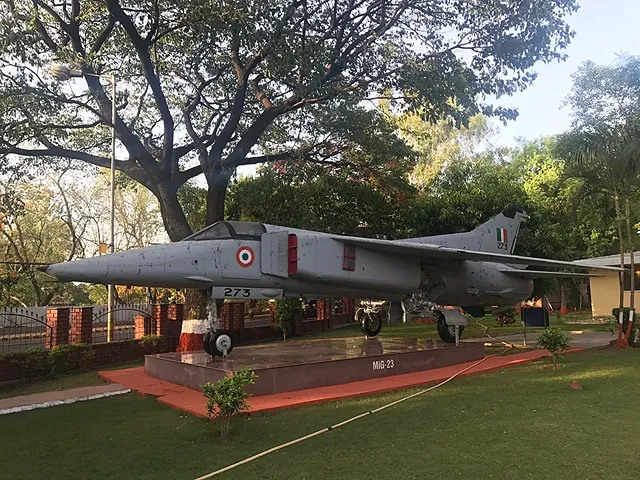
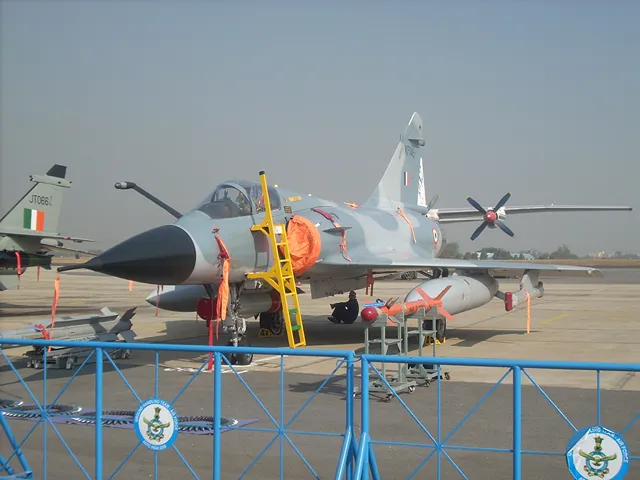
Aircraft could not simply cross the boundary to attack from another direction. As a result, precision became increasingly important. The IAF employed several aircraft during the campaign. These included MiG-21s, MiG-23s, MiG-27s, Jaguars, Mirage 2000s and MiG-29s. Mi-17 helicopters were also deployed.
The Mirage 2000 became particularly significant. It conducted precision strikes using laser-guided bombs and laser-designation systems. Therefore, the operation demonstrated how technology could compensate for severe geographical limitations.
The Human Cost Behind Safed Sagar
Military technology, however, cannot explain the entire story. The Safed Sagar Operation also carried a heavy human cost. On 28 May 1999, an IAF Mi-17 helicopter was hit by an enemy Stinger missile. Four air warriors were killed during the mission. They were Squadron Leader R. Pundir, Flight Lieutenant S. Muhilan, Sergeant PVNR Prasad and Sergeant RK Sahu.
Their sacrifice highlighted the risks involved in low-level helicopter operations. The loss also influenced subsequent operational tactics. Helicopter employment was adjusted as the threat from shoulder-fired missiles became clearer. Thus, the campaign was shaped by battlefield learning as much as by planning.
How Safed Sagar Changed the Kargil Battlefield
The Safed Sagar Operation was not a standalone air campaign. It was closely integrated with the Army’s ground offensive, with air power being used to weaken enemy positions and disrupt their ability to sustain them. The challenge was particularly severe because Indian troops were attacking entrenched positions from lower ground. Air strikes provided an additional layer of pressure, while reconnaissance and transport missions supported operations across the difficult terrain.
The campaign also demonstrated the growing importance of precision air power. Mirage 2000 aircraft were used for accurate strikes against strategically important targets, including positions that were difficult to reach through conventional bombing. At the same time, the IAF operated under a strict political constraint: aircraft were not permitted to cross the Line of Control. This limited attack options and forced commanders and pilots to adapt their tactics to the mountainous battlefield.
That combination of precision, coordination and restraint became one of the defining features of the operation. The experience also showed that modern air power is most effective when it is closely linked to ground intelligence and battlefield objectives. More than two decades later, the lesson remains relevant. Advanced aircraft and weapons can provide a major advantage, but their effectiveness still depends on accurate intelligence, difficult terrain and the strategic limits imposed on their use.
The Kargil battlefield therefore offered a lasting lesson: air power can change the balance on the ground, but its impact depends on how precisely and strategically it is employed.
Why Safed Sagar Is Back in the Spotlight in 2026
The operation has gained fresh public attention this August. Netflix released Operation Safed Sagar on 7 August 2026. The six-part series explores the Indian Air Force’s role during the Kargil War. The production was developed with research and consultations involving IAF veterans. It was also filmed at operational Air Force locations and used access to real aircraft and infrastructure. That renewed attention is significant.
For years, the public memory of Kargil has largely focused on soldiers fighting on the mountains. The air campaign was important, but it received comparatively less popular attention. The new series could therefore broaden how the conflict is remembered. However, historical storytelling also creates a responsibility. Military drama should not replace historical context.
The real Safed Sagar Operation involved tactical uncertainty, casualties, technological challenges and strict political limitations. Those realities are more complex than any scripted battlefield narrative.
The Geopolitical Legacy of Safed Sagar
The Safed Sagar Operation left a legacy that extended beyond the Kargil battlefield. It demonstrated how military action could be conducted under strict political limits while avoiding a wider escalation. India’s decision to keep its aircraft on its side of the Line of Control was strategically significant. It allowed the IAF to support ground operations without deliberately expanding the conflict across the LoC. This restraint mattered because India and Pakistan were already nuclear-armed states. Therefore, the Kargil conflict showed that battlefield objectives had to be balanced with careful escalation management.
The operation also changed how air power was viewed in extreme terrain. High-altitude warfare required specialised tactics, accurate intelligence and weapons capable of striking difficult targets. The experience further demonstrated that military plans must remain flexible as battlefield conditions change. Today, warfare has become more dependent on drones, satellites, precision weapons and real-time surveillance. However, the fundamental lessons from Kargil remain relevant.
Technology can provide greater reach and accuracy, but geography, political constraints and human judgment continue to shape military outcomes. That is the lasting geopolitical lesson of Safed Sagar: effective military power is not only about what a country can strike, but also about how far it can act without triggering a larger conflict.
A Legacy Above the Mountains
Twenty-seven years later, Safed Sagar Operation remains more than a chapter in the Kargil War. It represents a difficult combination of air power, political restraint and battlefield adaptation. Its significance also lies in the sacrifices made by those who carried out dangerous missions under extraordinary conditions.
As the operation returns to public attention in 2026, its history deserves more than a dramatic retelling. It deserves examination as a case study in modern warfare. The mountains of Kargil demonstrated a simple truth: air power can shape a battlefield, but strategy determines how that power is used.
FAQ
What was the Safed Sagar Operation?
The Safed Sagar Operation was the Indian Air Force’s air campaign during the 1999 Kargil War. It supported the Army’s Operation Vijay.
When did Operation Safed Sagar begin?
The IAF joined the Kargil campaign on 26 May 1999, according to the Press Information Bureau.
Which aircraft were used during Safed Sagar?
The IAF used MiG-21, MiG-23, MiG-27, Jaguar, Mirage 2000 and MiG-29 aircraft. Mi-17 helicopters were also used.
Why was Mirage 2000 important in Kargil?
Mirage 2000 aircraft conducted precision strikes using laser-guided bombs. This capability was valuable against difficult mountain targets.
Why is Safed Sagar being discussed in 2026?
Netflix released Operation Safed Sagar on 7 August 2026. The series has renewed public interest in the IAF’s role during the Kargil War.