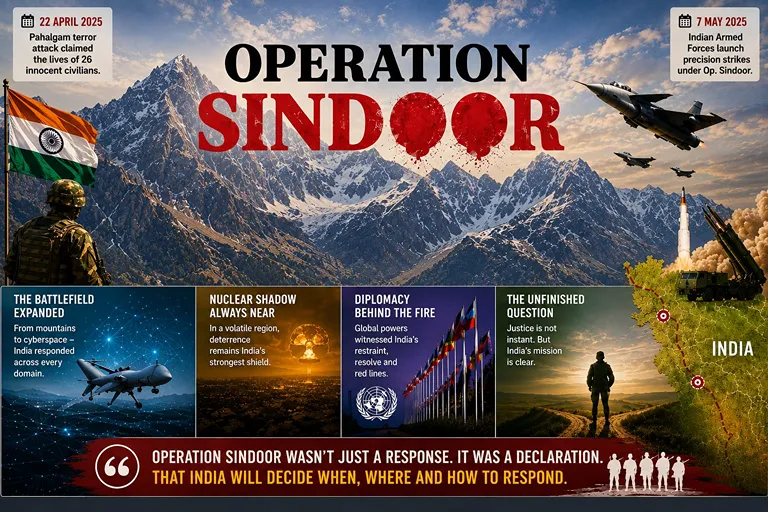

For years, India and Pakistan managed crises through limited retaliation and diplomatic restraint. Operation Sindoor changed that calculation by taking the confrontation deeper across the border.
The May 2025 conflict also showed how quickly a terrorist attack could become a multidomain military crisis. One year later, the central question remains whether those strikes created lasting deterrence or simply raised the stakes.
From Pahalgam to Operation Sindoor
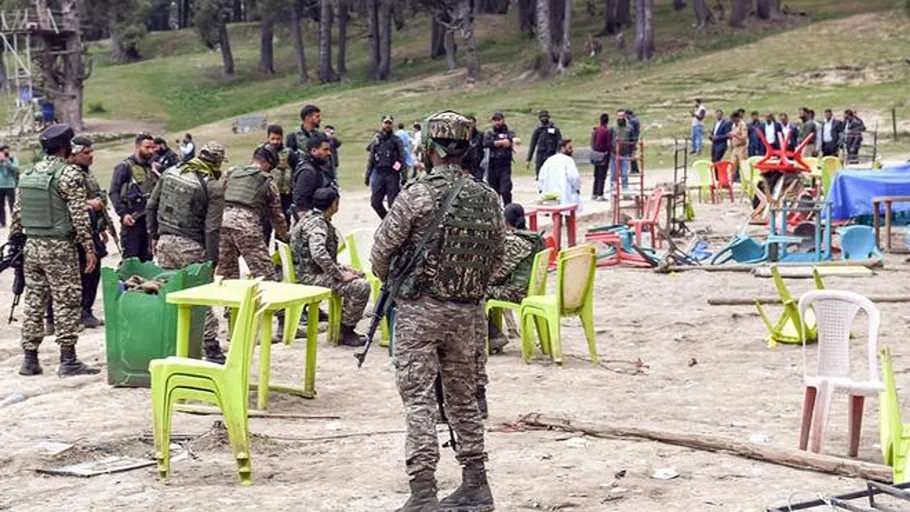
The immediate trigger was the April 22, 2025 Pahalgam terrorist attack in Jammu and Kashmir. Twenty-six people were killed, including 25 Indian citizens and one Nepali citizen. India blamed Pakistan-based militant networks, while Pakistan denied involvement and called for an independent investigation. India then announced several diplomatic and economic measures. These included suspending the Indus Waters Treaty and reducing diplomatic engagement with Pakistan.
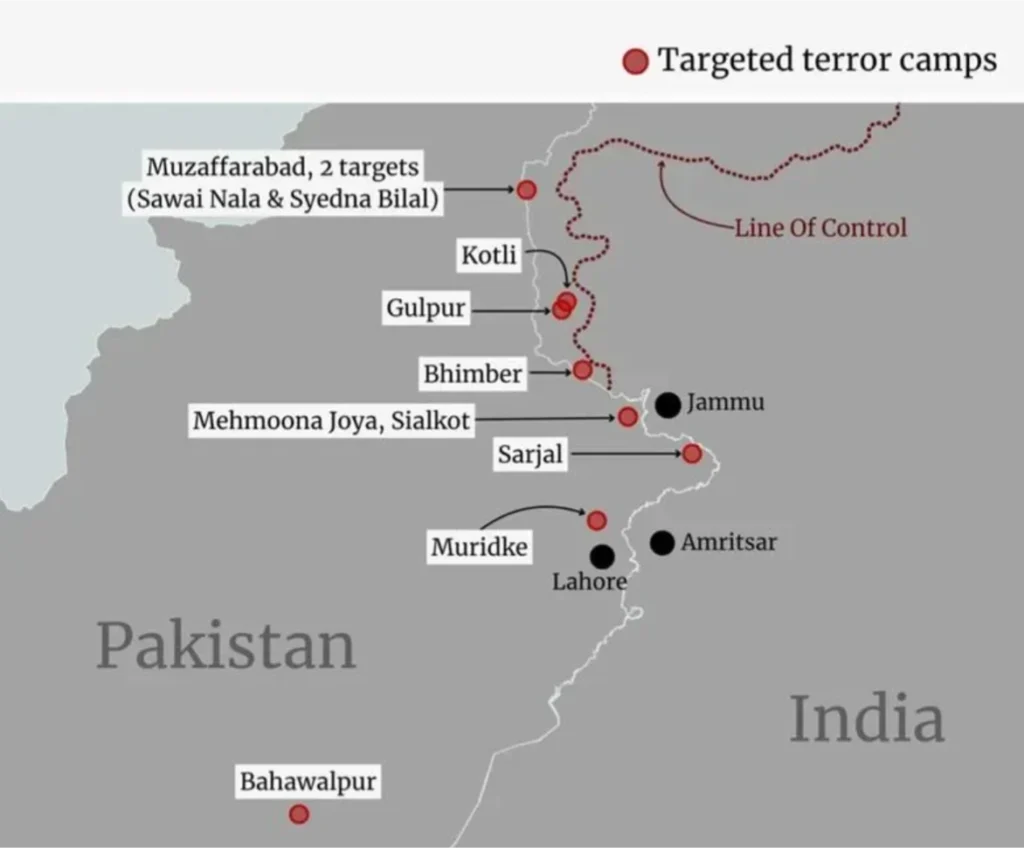
Two weeks later, the military response followed. On the intervening night of May 6 and 7, 2025, India launched Operation Sindoor. According to India’s Defence Ministry, nine terrorist infrastructure sites were targeted in Pakistan and Pakistan-occupied Jammu and Kashmir. The initial strikes were described as focused and measured. Pakistani military facilities were not targeted during the first phase.
How the Four-Day Conflict Escalated
May 7: The first strikes
The first phase focused on what India described as terrorist infrastructure. Nine sites were hit across Pakistan and Pakistan-occupied Jammu and Kashmir. India said the locations had been linked to planning and directing attacks against India. The operation, however, did not end with those strikes. Pakistan responded with drones, missiles and artillery fire. As a result, the conflict quickly moved beyond counter-terror operations.
May 8: Air defence enters the battle
During the night of May 7-8, Pakistan attempted attacks against several Indian military locations. Indian officials listed locations including Srinagar, Jammu, Pathankot, Amritsar, Udhampur and Bhuj. Drones and missiles were reportedly used during these attempts. India said its integrated air-defence network intercepted the incoming threats. It subsequently targeted Pakistani air-defence systems. Sixteen civilians were reported killed by Pakistani firing along the Line of Control. The victims included three women and five children, according to India’s Defence Ministry.
May 9-10: The conflict reaches military bases
The confrontation then entered a more dangerous phase. India struck Pakistani military infrastructure during the night of May 9-10. Indian officials said airbases, command centres and air-defence systems were targeted. Pakistan also launched missiles, drones and other long-range weapons against Indian military locations. India said its air-defence systems prevented major damage. The fighting was therefore no longer limited to terrorist infrastructure. Military installations had become part of the exchange. That shift was strategically significant because both countries possess nuclear weapons.
May 10: The ceasefire
On May 10, India and Pakistan agreed to stop military operations from 5 p.m. Indian time. The agreement followed four days of intense fighting. Reuters reported that the confrontation had become the most serious India-Pakistan military crisis in nearly three decades. However, the ceasefire was not immediately smooth. Explosions and drone activity were reported after the agreement. Both sides accused the other of violating the understanding.
Did Operation Sindoor Create Deterrence?
This is where the strategic debate becomes more complicated. India’s argument is that Operation Sindoor established a new response model. A major terrorist attack could now produce direct military consequences beyond the Line of Control. That message was reinforced after the conflict.
In May 2025, Defence Minister Rajnath Singh described counter-terrorism as part of India’s national defence doctrine. By 2026, that position had become even more explicit. On the first anniversary, Indian military leadership warned that future acts of terrorism would have consequences. The emphasis was placed on sustained military overmatch and readiness. Therefore, Operation Sindoor appears to have strengthened India’s declaratory deterrence.
Yet deterrence has another test. It must influence the adversary’s future behaviour.
The Pakistan Factor Remains Uncertain
The bigger question is whether Pakistan’s security establishment changed its calculations permanently. The May 2025 conflict demonstrated that India’s response could extend beyond conventional border exchanges. It also showed that nuclear weapons did not prevent conventional military action. At the same time, the conflict stopped short of full-scale war.
That creates a complicated deterrence equation. India demonstrated escalation capacity. Pakistan demonstrated its ability to retaliate. Both sides then accepted a ceasefire. Consequently, the crisis produced deterrence and instability at the same time.
Technology Changed the Battlefield
Another major lesson involved technology. Drones, missiles, electronic warfare and layered air defence became central to the confrontation. India’s response relied on a combination of older systems and newer indigenous platforms. The conflict also accelerated India’s focus on counter-drone systems, air defence and hardened military infrastructure.
A year later, Indian military planners were reportedly prioritising underground command infrastructure and stronger air-defence networks. The lesson is clear. Future India-Pakistan crises may be shorter, faster and more technology-intensive. They may also produce greater risks because decision-makers will have less time to assess incoming threats.
What Changed One Year Later?
By May 2026, India was openly presenting Operation Sindoor as a long-term shift in its security doctrine. Prime Minister Narendra Modi marked its first anniversary by praising the armed forces’ precision, preparedness and jointness. The Defence Ministry also highlighted increased emphasis on artificial intelligence, autonomous systems, data analytics and secure communications.
More recently, in July 2026, Rajnath Singh again described Operation Sindoor as evidence of India’s ability to respond decisively to future Pakistani “misadventures.” That suggests the operation has moved beyond being remembered as a single military episode. It has become part of India’s broader strategic messaging.
The Real Test of Deterrence Is Still Ahead
Operation Sindoor clearly changed India’s declared approach to cross-border terrorism. It also demonstrated that nuclear deterrence does not automatically prevent conventional escalation. However, claiming that deterrence has been permanently established would be premature.
The real test will come with the next major crisis. If another terrorist attack occurs and Pakistan avoids escalation, India’s deterrence argument will become stronger. If violence returns and another military confrontation follows, the operation may instead be remembered as another stage in a recurring cycle. For now, the evidence points to a significant strategic shift.
Operation Sindoor changed the threshold for India’s response. Whether it changed Pakistan’s behaviour permanently remains the unanswered question.
FAQ
What was Operation Sindoor?
Operation Sindoor was India’s military operation launched on May 7, 2025, following the Pahalgam terrorist attack. India targeted nine terrorist infrastructure sites in Pakistan and Pakistan-occupied Jammu and Kashmir.
How long did Operation Sindoor last?
The main military confrontation lasted about 88 hours, from May 7 to the ceasefire on May 10, 2025.
How many people died during the India-Pakistan conflict?
Casualty figures varied between the two sides. Pakistan later reported 51 deaths, including 11 military personnel and 40 civilians. Reuters reported a combined civilian death toll of 66 by May 10.
Did Operation Sindoor create deterrence?
It strengthened India’s declared deterrence posture and demonstrated its willingness to respond militarily. However, its long-term effect depends on Pakistan’s future behaviour.
Why was Operation Sindoor strategically important?
It expanded the scope of India’s response to cross-border terrorism. It also demonstrated the importance of drones, missiles, electronic warfare and layered air defence.