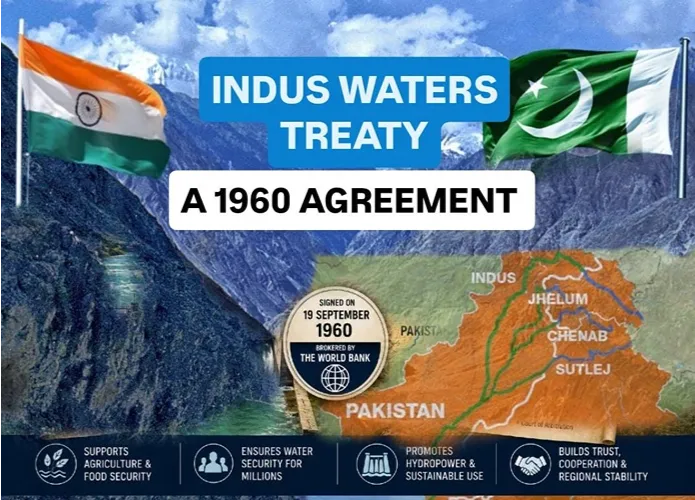

Water has rarely been treated as a weapon in India-Pakistan relations, but the Indus Waters Treaty is increasingly at the centre of that debate. For more than six decades, the agreement survived wars, military crises and repeated diplomatic breakdowns between the two nuclear-armed neighbours.
Signed in 1960 with World Bank assistance, the Indus Waters Treaty created a detailed system for sharing the waters of six major rivers. It gave India unrestricted use of the eastern rivers while allowing Pakistan the primary use of the western rivers, subject to specified rights for India.
That arrangement worked despite deep political hostility. But after the April 2025 Pahalgam terror attack, India announced that it was putting the Indus Waters Treaty in abeyance, adding a new and highly sensitive dimension to the India-Pakistan conflict. The question is no longer simply who gets which river. It is whether a treaty that survived decades of confrontation can continue to function when water itself has become part of a broader national-security dispute.
- India Independence Day: 79 Years of Freedom, Progress and Challenges
- BCI-NALSAR Crisis: What the Supreme Court Questioned
- Bulldozer Justice: The Alarming Question Behind Demolitions
- Pahalgam Attack 2025: The Attack That Challenged Kashmir’s Security Narrative
- Uttarakhand Cloudburst: How Extreme Weather Threatens India-China Border Infrastructure
How the Indus Waters Treaty Divided the Six Rivers
The roots of the Indus Waters Treaty go back to the difficult relationship that followed the Partition of British India in 1947.
The Indus river system was divided by an international border, but the rivers did not follow political boundaries. Several important headwaters and irrigation systems were located in India, while much of the agricultural area dependent on those waters was in Pakistan. This created an immediate problem. Pakistan was concerned that India, as the upstream country, could potentially interfere with water supplies flowing downstream. India, meanwhile, wanted greater control over rivers flowing through its territory.
After years of negotiations, the Indus Waters Treaty was signed in Karachi on September 19, 1960. It was signed by Indian Prime Minister Jawaharlal Nehru on behalf of India and President Ayub Khan on behalf of Pakistan. Eugene R. Black, President of the World Bank, signed the agreement on behalf of the World Bank, which had played a central role in facilitating the negotiations.
The treaty divided the six rivers into two groups.
| River group | Rivers | Primary allocation |
|---|---|---|
| Eastern Rivers | Ravi, Beas, Sutlej | India |
| Western Rivers | Indus, Jhelum, Chenab | Pakistan |
The arrangement is often simplified as a division in which India received around 20 percent and Pakistan around 80 percent of the waters of the Indus river system. But the actual treaty is considerably more complicated.

India received unrestricted use of the eastern rivers. Pakistan received the primary use of the western rivers. However, India was not completely prohibited from using the western rivers. The Indus Waters Treaty permits India certain uses of the western rivers, including domestic consumption, limited irrigation and hydroelectric generation under specific conditions.
This distinction is crucial. The treaty did not simply say that India could never touch the Indus, Jhelum or Chenab. Instead, it established technical rules governing how India could use them.
Why Pakistan Depends So Heavily on the Indus
The strategic importance of the Indus Waters Treaty becomes clearer when Pakistan’s dependence on the Indus river system is considered. The Indus basin supports a huge agricultural region across Pakistan. Irrigation from the river system is essential for crops, rural livelihoods and food production. The rivers also contribute significantly to drinking water supplies and electricity generation.
For Pakistan, therefore, the Indus is much more than a geographical feature. It is part of the country’s economic and food-security infrastructure. This explains why any change in India’s approach to the Indus Waters Treaty creates anxiety in Islamabad.
India, on the other hand, has long argued that the treaty imposes an unusual degree of restraint on an upstream country and limits the full development of water resources in Jammu and Kashmir. The disagreement is particularly visible in hydropower. India has sought to develop run-of-the-river hydroelectric projects on the western rivers. Pakistan has repeatedly objected to certain designs, arguing that these projects could potentially affect the timing or quantity of downstream water flows.
India has maintained that its projects are permitted under the treaty. That disagreement has produced some of the most important legal battles surrounding the Indus Waters Treaty.
Kishanganga and Ratle: The Disputes Behind the Headlines
Two projects are central to understanding why the Indus Waters Treaty has become so controversial: Kishanganga and Ratle. The Kishanganga Hydroelectric Project is located in Jammu and Kashmir. The project involves the diversion of water from the Kishanganga River, known as the Neelum River in Pakistan, for power generation before the water eventually returns to the river system.
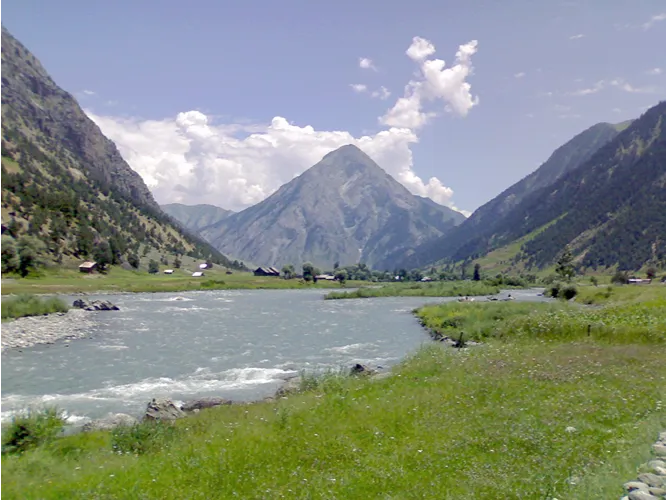
Pakistan challenged the project, arguing that the diversion could affect its downstream Neelum-Jhelum project. The dispute eventually went before the Permanent Court of Arbitration. In its 2013 decision, the tribunal allowed India to proceed with the project while imposing conditions, including requirements concerning downstream flows. The Kishanganga case became significant because it tested how the treaty’s provisions should apply to modern hydropower development.
The Ratle Hydroelectric Project, located on the Chenab River, generated another major disagreement. Pakistan objected to aspects of India’s proposed project design and argued that some features were inconsistent with the treaty. These disputes demonstrated a fundamental problem. The treaty was negotiated in 1960, but the two countries now operate in a very different technological, environmental and geopolitical environment. Hydropower technology has evolved. Climate change is altering water patterns. Electricity demand has increased. And the Kashmir dispute remains unresolved.
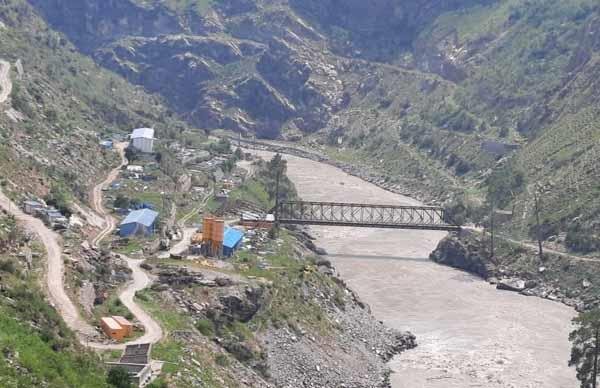
As a result, technical disagreements over dams can quickly become political disputes. The Indus Waters Treaty was designed to manage water disagreements, but it now operates within a much broader strategic rivalry.
India’s 2025 Decision and the New Water Politics
The biggest political shock to the Indus Waters Treaty came after the Pahalgam terror attack in April 2025. Following the attack, India announced several measures against Pakistan, including placing the treaty in abeyance. New Delhi linked the decision to its broader response to terrorism and Pakistan’s alleged support for cross-border militant groups. Pakistan rejected India’s position and argued that India could not unilaterally suspend the treaty. This created a major legal and diplomatic confrontation.
It is important to understand the language carefully. India’s announcement was described as placing the treaty “in abeyance”, rather than formally terminating it. That distinction matters because the treaty itself does not contain a straightforward provision allowing either side to unilaterally suspend the agreement for political reasons. Pakistan has therefore challenged India’s interpretation and warned about the consequences of changing the established water-sharing framework.
For India, however, the issue is no longer limited to treaty law. The government’s position reflects a broader argument that cross-border terrorism and water cooperation cannot be separated indefinitely. This has transformed the Indus Waters Treaty into an instrument of strategic pressure. But there is an important reality that often gets lost in political rhetoric.
India cannot simply turn off the Indus rivers flowing into Pakistan overnight. The physical geography of the basin, existing infrastructure and engineering limitations mean that India’s immediate ability to dramatically alter downstream flows is limited. India can, however, potentially increase its use of water resources within the rights available to it, accelerate hydropower development and reconsider how it manages water infrastructure in the basin. That is where the longer-term strategic consequences could become significant.
What the Treaty Means for India-Pakistan Relations
The future of the Indus Waters Treaty is closely connected to the future of India-Pakistan relations. For decades, the treaty provided one of the few functioning channels of institutional cooperation between the two countries. The Permanent Indus Commission allowed officials from both sides to exchange information, inspect certain projects and discuss disagreements. That mechanism was valuable precisely because it continued to operate even when political relations deteriorated.
But the 2025 crisis has raised a difficult question:
Can technical water cooperation survive when the broader relationship is dominated by terrorism, military confrontation and strategic mistrust?
India’s supporters argue that Pakistan cannot expect uninterrupted water cooperation while allegedly supporting terrorism against India. Critics, meanwhile, warn that turning water into a tool of geopolitical retaliation could destabilise an already fragile region.
There is also an environmental dimension. The Indus basin faces growing pressure from population growth, agricultural demand, groundwater depletion and climate change. Glacial changes in the Himalayas could also affect the long-term availability and timing of water. This means both countries have an interest in maintaining predictable water management. The Indus Waters Treaty therefore represents a contradiction at the heart of South Asian geopolitics. It is simultaneously a symbol of cooperation and a source of strategic competition.
The Future: Water, Power and Geopolitical Pressure
The future of the Indus Waters Treaty will depend not only on India and Pakistan but also on how the two countries interpret their broader national interests. For Pakistan, maintaining predictable access to the western rivers remains critical to food security, agriculture and economic stability. For India, greater development of water and hydropower resources in Jammu and Kashmir has strategic, economic and energy-security value. This does not mean that India can immediately divert the entire western-river system. The geography and engineering realities make such claims unrealistic.
Instead, the more important issue is the cumulative effect of India’s potential actions. Greater reservoir capacity, additional hydropower projects, improved water storage and increased utilisation of permitted resources could gradually change the strategic balance. Climate change makes the issue even more complicated. The Himalayan region is warming rapidly, while changes in snowfall, glacier behaviour and extreme rainfall can make river flows less predictable. Future water management will therefore require greater technical cooperation, not less.
Yet cooperation becomes difficult when trust has collapsed. That is why the Indus Waters Treaty has become one of the most important geopolitical questions in South Asia. Its story is no longer simply about six rivers divided between two countries. It is about how India and Pakistan manage the intersection of water security, terrorism, Kashmir, energy, agriculture and national sovereignty. The treaty survived the wars of 1965 and 1971, the Kargil conflict and numerous diplomatic crises. Whether it can survive the current era of strategic confrontation remains uncertain.
One thing, however, is clear: water will remain a powerful strategic issue in India-Pakistan relations, and the Indus basin will continue to influence the security and economic future of both countries.
What is the Indus Waters Treaty?
The Indus Waters Treaty is a 1960 water-sharing agreement between India and Pakistan, negotiated with assistance from the World Bank. It governs the use of six rivers of the Indus river system.
Who signed the Indus Waters Treaty?
The treaty was signed on September 19, 1960, by Indian Prime Minister Jawaharlal Nehru and Pakistani President Ayub Khan, with the World Bank facilitating the agreement.
Which rivers were given to India?
India received primary and unrestricted rights over the eastern rivers — Ravi, Beas and Sutlej.
Which rivers were given to Pakistan?
Pakistan received the primary use of the western rivers — Indus, Jhelum and Chenab — while India retained specified rights to use these rivers.
Why is the Indus Waters Treaty important for India and Pakistan?
Pakistan’s agriculture, food security, irrigation network, hydropower and livelihoods depend heavily on the Indus river system, making predictable water flows extremely important to its economy. Indus Waters Treaty
Did India terminate the Indus Waters Treaty?
India announced in 2025 that it was putting the treaty in abeyance following the Pahalgam terror attack. “Abeyance” and formal termination are not necessarily the same legal action, and Pakistan has rejected India’s position.