
From Kashmir to the Himalayas: The Wars That Shaped India’s Security
From the icy Himalayas to the Arabian Sea, India’s modern history has been shaped by wars, military confrontations and unresolved borders. India Wars and Border Conflicts have influenced defence policy, military modernisation, foreign relations and strategic partnerships. Since independence, India’s security story has involved disputed territories, difficult geography, changing alliances and the constant challenge of protecting national interests while keeping diplomacy alive.
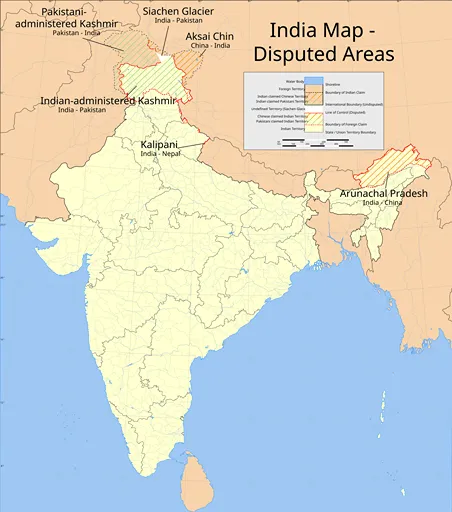
Pakistan has remained India’s most persistent military challenge, particularly along the Line of Control and western frontier, while China has emerged as India’s most significant strategic competitor because of its disputed Himalayan boundary. India’s geography makes this environment even more complicated, as the country shares land borders with several neighbours while also overlooking the Arabian Sea, Bay of Bengal and wider Indian Ocean. The armed forces must therefore prepare for conventional warfare, high-altitude combat, border confrontations, maritime security challenges, terrorism-related threats and rapidly developing military technologies.
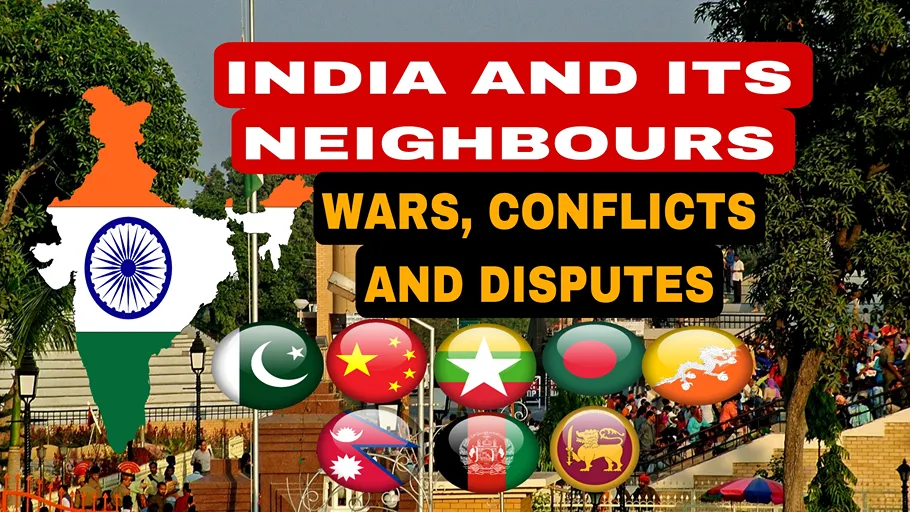
The story of India Wars and Border Conflicts extends beyond individual battles and includes India’s relationships with Pakistan, China, Bangladesh, Nepal, Bhutan, Myanmar and Sri Lanka. Geography and geopolitics remain closely connected: Pakistan occupies the western frontier, China stretches across the northern Himalayan boundary, while critical maritime routes surround India’s southern coastline. The 1947–48 India-Pakistan war over Jammu and Kashmir established a security challenge that continued through the 1965 war, the 1971 conflict and the 1999 Kargil War.
China created a different strategic challenge. The 1962 Sino-Indian War exposed major weaknesses in India’s military preparedness, infrastructure and high-altitude logistics at the time. Yet tensions continued through the Nathu La and Cho La clashes in 1967, the Sumdorong Chu standoff, the Doklam confrontation in 2017 and the Eastern Ladakh crisis beginning in 2020. These developments pushed India to strengthen roads, bridges, airfields, surveillance, logistics and military infrastructure along the northern frontier.
Today, India Wars and Border Conflicts continue to influence the country’s defence strategy even without a full-scale war. India must maintain military readiness across multiple theatres while strengthening diplomatic relationships and strategic partnerships. The experience of past conflicts has also encouraged greater investment in domestic defence production, advanced surveillance, air power, naval capabilities, missiles and high-altitude infrastructure. India’s challenge is not simply preparing to fight a war, but maintaining credible deterrence while using diplomacy to prevent conflicts from escalating.
Why China-Pakistan Partnership Makes India’s Defence More Difficult
The biggest strategic challenge for India is not necessarily fighting two countries simultaneously. It is the possibility that China and Pakistan could create pressure on India’s military resources across different theatres. Their long-standing strategic, economic and defence cooperation includes military equipment, infrastructure projects and diplomatic coordination. Pakistan also operates several Chinese-origin platforms, including fighter aircraft, air-defence systems and drones. For India, this creates a difficult strategic calculation.
Pakistan remains a major concern along the western frontier, while China presents a challenge across the northern and northeastern borders. The India Wars and Border Conflicts experience shows how developments on one front can influence India’s planning on another. The 2020 Ladakh crisis further highlighted this challenge, as India faced China along the LAC while continuing to monitor security risks from Pakistan. This is why the India Wars and Border Conflicts remain central to India’s defence planning and the wider India Wars and Border Conflicts debate over a potential two-front challenge. Ultimately, India Wars and Border Conflicts demonstrate why India must maintain strong military preparedness, strategic partnerships and diplomatic flexibility across both fronts.
| Country/Front | Major strategic issue | Major conflict or crisis | Approx. border with India* |
|---|---|---|---|
| Pakistan | Kashmir, LoC, terrorism | 1947–48, 1965, 1971, Kargil | 3,323 km |
| China | LAC and territorial disputes | 1962, 1967, 2017, 2020 | 3,488 km |
| Bangladesh | Border management | No post-1971 war | 4,096.7 km |
| Nepal | Boundary questions | No modern war | 1,751 km |
| Bhutan | Strategic Himalayan security | No war | 699 km |
| Myanmar | Insurgency and border security | Cross-border operations | 1,643 km |
| Sri Lanka | Regional security | IPKF intervention, 1987–90 | Maritime |
India Wars and Border Conflicts have encouraged India to diversify its military capabilities. The Indian Army needs strong mountain-warfare and high-altitude capabilities, while the Indian Air Force must remain prepared for multiple fronts. The Indian Navy is equally important because India’s economic security depends heavily on maritime trade. India Wars and Border Conflicts have also highlighted the need for stronger surveillance, missiles, air power, cyber capabilities and unmanned systems as China rapidly modernises its military.
China’s larger defence-industrial base and growing military strength add another strategic challenge. Pakistan’s close military relationship with China means India cannot view Pakistani capabilities only through a bilateral lens. However, India Wars and Border Conflicts should not be reduced to a simple China-Pakistan military bloc, as both countries have their own interests. India has therefore focused on strategic partnerships, defence modernisation and diplomatic flexibility. Ultimately, India Wars and Border Conflicts show why India needs both military preparedness and balanced foreign policy to protect its interests.
How India Maintains Balance Among Major Powers and Neighbours
India’s answer to its complicated security environment has been strategic balancing. New Delhi maintains defence and strategic relationships with the United States, France, Russia, Japan, Australia and other important partners while preserving independent decision-making. India’s participation in the Quad with the United States, Japan and Australia reflects this approach, while its continued defence relationship with Russia shows that Indian foreign policy remains focused on national interests rather than dependence on a single bloc. This approach is commonly described as strategic autonomy, meaning India can cooperate with different powers without becoming excessively dependent on any one partner.
This strategy is particularly visible in defence procurement. India has historically operated large numbers of Russian-origin military platforms while increasingly acquiring or jointly developing systems with the United States, France, Israel and other partners. The experience of India Wars and Border Conflicts has strengthened India’s focus on defence self-reliance. During a major crisis, dependence on foreign supply chains can create serious vulnerabilities. India is therefore expanding domestic production of aircraft, missiles, artillery systems, naval vessels, drones, electronic warfare equipment and ammunition to build a stronger defence-industrial base.
The comparison with India’s neighbours highlights the scale of the strategic challenge. China possesses a substantially larger economy and defence-industrial base than India, giving Beijing significant advantages in military production, technology and long-term modernisation. Pakistan presents a different but serious challenge, with a sizeable military establishment and extensive defence cooperation with China. Bangladesh, meanwhile, does not currently represent the same conventional military challenge as China or Pakistan, with India’s relationship focused more strongly on border management, regional stability, trade and wider neighbourhood cooperation.
Nepal and Bhutan remain strategically important because of their Himalayan geography, although neither represents a conventional military adversary for India. Myanmar presents a different security challenge, with concerns centred on instability, insurgency, border security and connectivity across India’s northeastern region. Sri Lanka is primarily viewed as a maritime and regional-security partner rather than a conventional military opponent. However, India’s experience with the Indian Peace Keeping Force between 1987 and 1990 demonstrated the risks and complexities involved when military intervention takes place in a neighbouring country.
Ultimately, India Wars and Border Conflicts have taught New Delhi that military strength alone cannot guarantee national security. The history of India Wars and Border Conflicts shows that India needs capable armed forces, secure supply chains, domestic defence production and strong diplomatic relationships with multiple countries. As future India Wars and Border Conflicts could emerge in different forms, this balancing strategy allows New Delhi to cooperate with major powers while maintaining flexibility in foreign policy. As India’s security environment continues to evolve, strategic autonomy, regional partnerships and the ability to respond to threats across multiple fronts will remain central to the country’s defence strategy.
India Compared With Its Neighbours: What the Wars Have Taught New Delhi
The history of India Wars and Border Conflicts shows how every major confrontation has shaped India’s military strategy. The 1947–48 war highlighted the Kashmir issue, while the 1962 China war exposed weaknesses in high-altitude preparedness. The 1965 and 1971 wars strengthened India’s conventional military planning, and the 1999 Kargil War highlighted the importance of intelligence, surveillance and mountain warfare. The 2020 Ladakh crisis again demonstrated the importance of roads, logistics, surveillance and rapid mobilisation. Together, these India Wars and Border Conflicts have continuously influenced India’s defence priorities.
Today, India’s defence strategy extends beyond traditional warfare. China has a much larger defence-industrial base and military budget, while Pakistan remains a major security concern because of its proximity, missile capabilities and nuclear arsenal. The lessons from India Wars and Border Conflicts have encouraged India to strengthen its Army, Air Force and Navy while expanding domestic defence production, modernising infrastructure and developing capabilities across land, sea, air, space and cyberspace.
The experience of India Wars and Border Conflicts has also increased the importance of joint military operations and rapid mobilisation. India is investing in surveillance systems, drones, precision weapons, air defence, maritime capabilities and improved border infrastructure to respond more effectively to emerging threats. At the same time, India Wars and Border Conflicts have taught New Delhi that military power alone cannot guarantee long-term security. India maintains strategic partnerships with countries including the United States, France, Japan, Australia and Russia while continuing diplomatic engagement with Bangladesh, Nepal, Bhutan, Myanmar and Sri Lanka. This approach allows India to strengthen its security without becoming dependent on a single major power.
Ultimately, India Wars and Border Conflicts demonstrate why India’s regional strategy must combine military preparedness with diplomacy and economic strength. Strategic autonomy remains central to New Delhi’s approach, allowing India to cooperate with multiple powers while making independent decisions based on national interests. As geopolitical competition intensifies, the lessons of India Wars and Border Conflicts will continue to shape India’s defence planning and its role as a major power in the Indo-Pacific.
How many major wars has India fought with Pakistan?
India and Pakistan have fought four major conventional wars: 1947–48, 1965, 1971 and the 1999 Kargil War. The Siachen conflict and other military crises are generally treated separately from these four wars.
Did India and China fight a war after 1962?
India and China have not fought another full-scale war since 1962. However, serious military confrontations and standoffs occurred at Nathu La and Cho La in 1967, Sumdorong Chu in 1986–87, Doklam in 2017 and along the Ladakh frontier from 2020.
Does India face a two-front war possibility?
The possibility of simultaneous military pressure from China and Pakistan is an important concern in Indian strategic planning. However, a simultaneous two-front war is a contingency rather than an established inevitability.
Has India fought a war with Bangladesh after 1971?
No. India fought alongside Bangladeshi forces during the 1971 Bangladesh Liberation War against Pakistan. India and Bangladesh have not fought a conventional war against each other since Bangladesh became independent.
Why is China considered India’s biggest military challenge?
China has a much larger economy and defence-industrial base, significant military modernisation, nuclear weapons, advanced missile capabilities and a long disputed Himalayan boundary with India. These factors make China India’s most significant conventional strategic competitor.
By Sahil Koul | National Affairs Analyst covering Indian politics, governance, public policy, and major developments shaping the nation.