Pakistan Tanks Near Indian Border: Why Islamabad’s Latest Military Move Has Raised Fresh Security Concerns

Just months after military tensions between India and Pakistan dominated global headlines, another major development has caught the attention of defence experts. Reports claiming that Pakistan has positioned heavy military equipment near the Indian border have once again intensified discussions about regional security and the future of India-Pakistan relations.
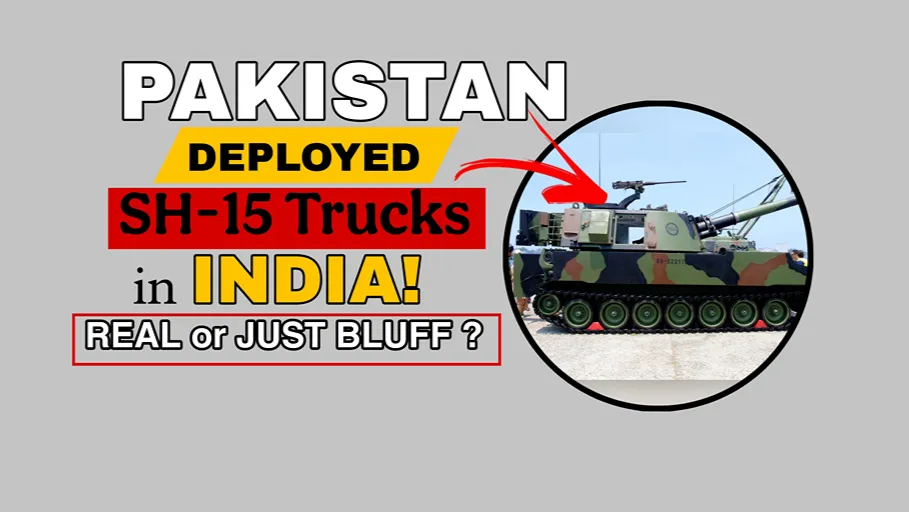
Although many social media posts describe the deployment as Pakistan Tanks Near Indian Border, intelligence reports indicate that the Pakistani Army has actually deployed nearly 250 Chinese-made SH-15 self-propelled artillery systems across several sectors of its eastern frontier. These highly mobile artillery guns are designed for rapid deployment and long-range precision strikes, making them one of Pakistan’s most significant military upgrades in recent years.
For readers searching for Pakistan Tanks Near Indian Border, it is important to understand that while the term “tanks” is widely used online, the reported deployment primarily involves self-propelled artillery rather than main battle tanks.
Latest Border Deployment at a Glance
| Category | Details |
|---|---|
| Country | Pakistan |
| Equipment | Chinese SH-15 Self-Propelled Howitzers |
| Reported Quantity | Around 250 |
| Manufacturer | NORINCO (China) |
| Calibre | 155 mm |
| Estimated Range | Up to 72 km with specialized ammunition |
| Purpose | Long-range artillery support and rapid deployment |
| Current Concern | Increased military preparedness along the eastern frontier |
Why Is Pakistan Deploying Heavy Weapons Near the Indian Border?
Military analysts believe several strategic reasons could explain Pakistan’s latest deployment. The first and most immediate reason is deterrence. Since India’s military modernization accelerated over the past few years, Pakistan has been investing heavily in advanced Chinese defence platforms. The induction of SH-15 artillery systems significantly improves Islamabad’s ability to conduct long-range precision strikes while maintaining mobility across different terrains. Another reason is psychological signalling. Deploying advanced artillery close to sensitive sectors sends a message that Pakistan is prepared for any future escalation.
Such deployments are often intended to influence military calculations without necessarily indicating an imminent conflict. A third factor is Pakistan’s growing defence cooperation with China. Beijing has become Pakistan’s largest supplier of advanced military equipment, ranging from fighter aircraft to missile systems and artillery platforms. The SH-15 is considered one of the most capable wheeled artillery systems currently in Pakistan’s inventory.
Is This a New Sign of an India-Pakistan War?
The Pakistan Tanks Near Indian Border reports have naturally raised concerns among citizens on both sides of the border. However, defence experts caution against interpreting every military movement as preparation for war. Large-scale deployments can serve multiple strategic purposes, including deterrence, training, modernization, and strategic signalling. Countries frequently reposition forces to improve operational readiness or respond to perceived security challenges, and the Pakistan Tanks Near Indian Border development is being closely assessed within this broader military context.
At present, there is no official confirmation from either India or Pakistan indicating that war is imminent. Nevertheless, increased military deployments always raise the risk of miscalculation, especially in sensitive border areas where even small incidents can escalate quickly. For India, maintaining vigilance without overreacting remains the preferred strategic approach as the Pakistan Tanks Near Indian Border situation continues to be monitored by defence experts and security agencies.
Is the POK Crisis Behind This Deployment?
One of the biggest questions being discussed among strategic observers is whether unrest in Pakistan-occupied Kashmir (POK) has influenced Islamabad’s latest military posture. Over the past year, reports of political dissatisfaction, economic challenges and security concerns in parts of POK have continued to attract attention. While Pakistan has not officially linked the deployment to developments in POK, analysts suggest that strengthening military assets along the eastern frontier allows Islamabad greater flexibility in responding to multiple security scenarios.
It is also possible that the deployment is intended to reassure domestic audiences about Pakistan’s military preparedness amid internal and regional pressures. However, without official confirmation, any direct connection between the POK situation and the artillery deployment remains speculative rather than established fact.
Why the SH-15 Matters More Than Traditional Tanks
The phrase Pakistan Tanks Near Indian Border has become popular online, but the reported SH-15 systems represent a different type of military capability. Unlike conventional battle tanks, self-propelled howitzers are designed to provide long-range artillery support. Their mobility enables rapid deployment, quick firing, and swift relocation, reducing vulnerability to counter-battery attacks.
Military experts believe such systems could significantly improve Pakistan’s ability to deliver precision artillery fire while operating across varied terrain. As the Pakistan Tanks Near Indian Border reports continue to attract global attention, defence analysts emphasize the importance of distinguishing between artillery systems and main battle tanks. Understanding the Pakistan Tanks Near Indian Border development in its proper military context helps provide a clearer picture of the evolving security situation along the India-Pakistan border.
What Action Will India Take If Pakistan Tries to Attack?
India has consistently maintained that it does not seek conflict with any country, but it reserves the right to respond decisively to any aggression. If Pakistan initiates an attack or violates the ceasefire along the Line of Control (LoC) or the International Border, India’s response would likely follow its established military doctrine of calibrated but firm retaliation. The Indian Army, supported by the Indian Air Force and Indian Navy, maintains a high level of operational readiness along the western front. Advanced surveillance systems, drones, satellites, integrated air defence networks, and rapid-reaction forces continuously monitor border activities. Any unusual troop movement or deployment of heavy weapons is closely tracked by Indian intelligence agencies.
In recent years, India has significantly strengthened its border infrastructure by improving roads, bridges, logistics hubs, and forward military bases. These developments allow troops and equipment to be mobilized much faster than before, reducing response times in the event of a security challenge. If Pakistan were to launch an attack, India’s likely response would depend on the nature and scale of the aggression. A limited ceasefire violation would likely invite a proportionate military response, while a larger offensive could lead to coordinated action involving artillery, air power, precision missiles, and special forces. India’s emphasis remains on protecting its territorial integrity while preventing unnecessary escalation.
Is India Ready for War If Pakistan Violates the Rules?
The question of whether India is prepared for a potential conflict inevitably arises whenever tensions increase. Defence analysts generally agree that India has substantially modernized its military capabilities over the last decade. The Indian Army continues to induct modern artillery systems, advanced assault rifles, surveillance drones, and electronic warfare capabilities. Simultaneously, the Indian Air Force has strengthened its fleet with modern fighter aircraft, including the Rafale, while indigenous systems such as the Light Combat Aircraft Tejas continue to expand India’s defence capabilities.
The Indian Navy has also increased its operational reach in the Indian Ocean Region through aircraft carriers, destroyers, submarines, and maritime surveillance assets. Equally important is India’s integrated command and intelligence network, which allows multiple branches of the armed forces to coordinate effectively during emergencies.
Defence experts also point out that India’s military preparedness extends beyond conventional weapons. Cyber security, space-based surveillance, artificial intelligence, and indigenous missile development have become critical components of India’s evolving defence strategy. However, military readiness does not necessarily indicate a desire for war. India’s official policy continues to emphasize peace, diplomacy, and stability while maintaining the capability to respond decisively if national security is threatened.
Does Pakistan’s Military Deployment Mean War Is Inevitable?
The Pakistan Tanks Near Indian Border reports have understandably triggered concern among citizens. Nevertheless, history shows that military deployments do not always translate into armed conflict. Countries frequently reposition military assets for exercises, strategic signalling, modernization, or deterrence. Pakistan Tanks Near Indian Border reports indicate that the deployment of SH-15 self-propelled artillery systems could be interpreted as an effort to strengthen Pakistan’s defensive posture while demonstrating military capability.
Similarly, India routinely upgrades its border infrastructure and deploys modern equipment in sensitive sectors. Such actions are part of long-term defence planning rather than immediate preparations for war. The key concern for both countries is avoiding accidental escalation. Miscalculations during periods of heightened military activity have historically increased regional tensions. Therefore, diplomatic communication and military hotlines remain essential for preventing misunderstandings as the Pakistan Tanks Near Indian Border situation continues to be closely monitored by defence analysts and policymakers.
India vs Pakistan Military Snapshot
| Category | India | Pakistan |
|---|---|---|
| Active Military Personnel | Approximately 1.45 million | Approximately 650,000 |
| Defence Budget | Significantly higher | Lower than India |
| Air Force Strength | Rafale, Su-30MKI, Tejas, Mirage 2000 | JF-17, F-16, J-10C |
| Navy | Aircraft carriers, nuclear submarines, destroyers | Frigates, submarines, missile boats |
| Ballistic Missiles | Agni Series, Prithvi | Shaheen Series, Ghaznavi |
| Nuclear Capability | Yes | Yes |
| Border Surveillance | Extensive satellite, drone and radar network | Modernizing surveillance systems |
Figures are approximate and based on publicly available defence assessments.
What Does This Mean for Regional Security?
The Pakistan Tanks Near Indian Border reports, involving the deployment of Chinese-made SH-15 artillery systems, reflect Pakistan’s ongoing efforts to modernize its armed forces. At the same time, they highlight China’s growing role in supplying advanced defence equipment to Pakistan. For India, the development reinforces the importance of maintaining operational readiness and continuing investments in indigenous defence manufacturing under initiatives such as Atmanirbhar Bharat.
Regional security experts believe the priority for both nations should remain preventing escalation while ensuring robust deterrence. Diplomatic engagement, confidence-building measures, and adherence to ceasefire agreements remain critical to maintaining peace in South Asia as the Pakistan Tanks Near Indian Border situation continues to be closely monitored by defence and strategic experts.
Conclusion
The Pakistan Tanks Near Indian Border reports have generated significant public interest and renewed debate about security along one of the world’s most sensitive frontiers. Although the deployment primarily involves Chinese-made SH-15 self-propelled artillery systems rather than main battle tanks, the strategic implications are noteworthy. The Pakistan Tanks Near Indian Border development has also prompted defence analysts to closely examine the changing military balance and evolving security dynamics in the region.
At present, there is no official evidence that war between India and Pakistan is imminent. However, increased deployment of heavy military equipment naturally prompts closer monitoring by defence agencies and policymakers. India remains well prepared to safeguard its borders through a combination of modern military capabilities, advanced surveillance, and coordinated defence planning. At the same time, diplomacy continues to be the preferred path for maintaining regional stability.
The coming weeks will be closely watched by strategic analysts, as any further military movements or official statements from either side could shape the future security environment in South Asia. As the Pakistan Tanks Near Indian Border situation continues to evolve, official updates and verified intelligence assessments will remain crucial for understanding the broader implications. Ultimately, the Pakistan Tanks Near Indian Border issue highlights the importance of balancing military preparedness with diplomatic engagement to preserve peace and stability in the region.
Has Pakistan deployed tanks near the Indian border?
Current reports indicate that Pakistan has deployed Chinese-made SH-15 self-propelled artillery systems, which are often incorrectly described as tanks on social media.
Does this mean India and Pakistan are going to war?
No. Military deployments alone do not confirm that war is imminent. Governments often reposition forces for deterrence, training, or strategic preparedness.
Why is Pakistan strengthening its border deployment?
Analysts suggest the reasons may include military modernization, strategic deterrence, regional security concerns, and closer defence cooperation with China.
Is India prepared if tensions increase?
India maintains a high state of military readiness with modern equipment, integrated surveillance systems, and rapid-response capabilities to address potential threats.
Is the POK situation linked to the deployment?
There is no official confirmation linking the deployment directly to developments in Pakistan-occupied Kashmir. Any such connection remains analytical rather than established fact.
By Sahil Koul | National Affairs Analyst covering Indian politics, governance, public policy, and major developments shaping the nation.