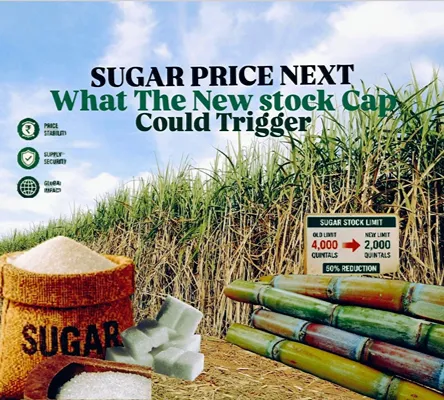

A sugar price shock could become more than a domestic inflation problem for India. With retail prices already significantly above last year’s levels, the government has halved the sugar stock limit for dealers from 4,000 quintals to 2,000 quintals. The move comes as New Delhi seeks to protect domestic supplies while navigating a wider global sugar market shaped by production, trade flows and volatile commodity prices.
The new ceiling will take effect from September 15 and remain in force until November 30, 2026. By restricting dealer inventories, the government aims to curb hoarding and speculative buying before festive demand accelerates. At the same time, India’s decisions on sugar imports and exports can influence global supply chains, making domestic price management increasingly linked to the country’s broader trade and food-security strategy.
The timing is particularly significant. Average retail sugar prices reached ₹63.28 per kg on August 31, compared with ₹46.02 a year earlier. With festive consumption expected to rise, the latest sugar stock limit could test India’s ability to balance consumer prices, farmer interests, industry stability, and international market pressures. If domestic supplies tighten further, India may face greater pressure to adjust its trade strategy, with consequences extending beyond its own sugar market.
Why Did the Government Cut the Sugar Stock Limit?

The government has halved the sugar stock limit for dealers, reducing it from 4,000 quintals to 2,000 quintals to curb hoarding and speculative buying ahead of the festive season. The move comes as sugar demand is expected to increase in the coming months. Dealers must also follow the existing 30-day stock-holding rule, which limits how long sugar can be retained after receipt. Authorities are conducting physical verification and closely monitoring stocks held by sugar mills, traders and dealers to ensure compliance.
The measure is intended to keep sugar moving through the supply chain and prevent excessive stock accumulation from adding to price pressure. It is part of the government’s broader effort to maintain domestic availability and support price stability during the high-demand period.
Sugar Stock Limit: New Rule and Price Impact
The new policy does not apply equally to every location. Most dealers will face the 2,000-quintal ceiling, while Kolkata and its extended metropolitan areas will retain the 4,000-quintal limit. The government has provided this exemption because Kolkata plays an important role in supplying eastern and northeastern markets. Its sugar supply comes from major producing states, including Uttar Pradesh and Maharashtra, making the region an important distribution point.
| Date / Period | Sugar Stock Limit | What It Means |
|---|---|---|
| August 1, 2026 | 4,000 quintals | Earlier dealer limit introduced |
| September 15, 2026 | 2,000 quintals | New limit begins |
| Sept. 15–Nov. 30, 2026 | 2,000 quintals | Reduced limit remains effective |
| November 30, 2026 | Policy period ends | Government reviews the temporary measure |
| Kolkata region | 4,000 quintals | Exemption continues |
| Stock holding | 30 days | Existing holding restriction remains |
The lower ceiling is therefore a temporary supply-management measure rather than a permanent restructuring of the sugar trade.
Festive Season Demand: Why Timing Matters
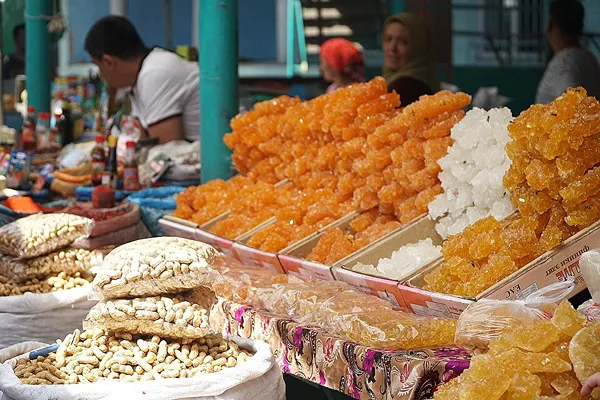
The timing is important because sugar consumption normally increases during India’s festive season. Ganesh Chaturthi, Dussehra and Diwali increase demand for sweets, confectionery and other products that use sugar. This creates additional pressure on the supply chain. Traders need sufficient inventory to meet demand, but excessive stockpiling can contribute to price increases. The government is trying to prevent the second problem without creating the first.
The policy also comes as the government is taking steps to increase supply. Applications have been opened for the remaining 202,550 tonnes under a one-million-tonne duty-free raw sugar import quota. The quota is intended to improve domestic availability before festive demand becomes stronger.
This combination is significant. India is simultaneously restricting excessive inventories and bringing additional sugar into the country. The approach shows that the government is focusing on both demand-side market behaviour and physical supply.
Will the New Rule Bring Sugar Prices Down?
The lower sugar stock limit could reduce speculative pressure, but it does not guarantee cheaper sugar for consumers. Retail prices depend on sugarcane production, mill stocks, wholesale prices, imports, exports, transport costs and seasonal demand. For farmers, sugarcane yields and procurement prices are equally important because they determine the supply reaching sugar mills. Weather conditions, irrigation and crop productivity can therefore influence both farm incomes and sugar prices.

India produced about 27.9 million tonnes of sugar in the current marketing year, while industry estimates put domestic consumption at around 28–28.5 million tonnes. Around three million tonnes have also been used for ethanol production. This makes efficient sugarcane production and timely harvesting important for maintaining supplies. Higher farm productivity can help mills secure enough cane while reducing pressure on domestic sugar availability.
The government is balancing domestic consumption, ethanol production, exports and opening stocks. If imports arrive quickly and sugarcane supplies remain stable, the measures could help moderate prices. However, weak cane production or higher festive demand could keep prices elevated despite tighter inventory controls.
Sugar Traders and the Price Outlook
The lower sugar stock limit will require dealers to manage inventories more closely and move stocks through wholesale and retail channels more efficiently. The revised sugar stock limit may also discourage speculative buying, where traders hold sugar expecting higher prices. However, legitimate distributors will still need adequate stocks to meet local demand, making effective implementation and regular physical verification important.
The new sugar stock limit does not guarantee an immediate fall in retail prices. The outlook will depend on domestic production, available stocks, festive demand and the speed at which imported sugar reaches the market. If supplies remain adequate, prices could stabilise. If demand rises faster than supply, prices may remain elevated, increasing the likelihood of further government action through imports, export adjustments or closer monitoring.
India’s Sugar Policy and Global Impact
India’s sugar stock limit can influence international markets because the country is a major producer and an important participant in global sugar trade. Larger imports can increase global demand, while tighter exports can reduce international availability. Production and weather conditions in major producers such as Brazil and Thailand will also shape the global price outlook.
The government is balancing several interests, including consumer prices, farmer incomes, sugar mill finances, ethanol production and food security. The current sugar stock limit, along with duty-free imports and market monitoring, reflects this broader strategy. The impact of the sugar stock limit will ultimately depend on whether India can maintain domestic supplies and contain prices without disrupting legitimate trade or creating additional pressure in global markets.
What is the new sugar stock limit?
From September 15, 2026, sugar dealers will generally be allowed to hold a maximum of 2,000 quintals, or 200 tonnes.
Why has the government reduced the limit?
The government wants to prevent hoarding, speculative trading and excessive accumulation while ensuring adequate domestic availability.
How long will the new limit remain?
The 2,000-quintal limit will remain effective from September 15 through November 30, 2026.
Is there an exemption to the new limit?
Yes. Kolkata and its extended metropolitan areas will retain the 4,000-quintal limit because of their regional supply-chain requirements.
Will sugar prices definitely fall?
Not necessarily. The policy aims to reduce speculative pressure and improve availability. Final prices will still depend on production, demand, imports, stocks and market conditions.