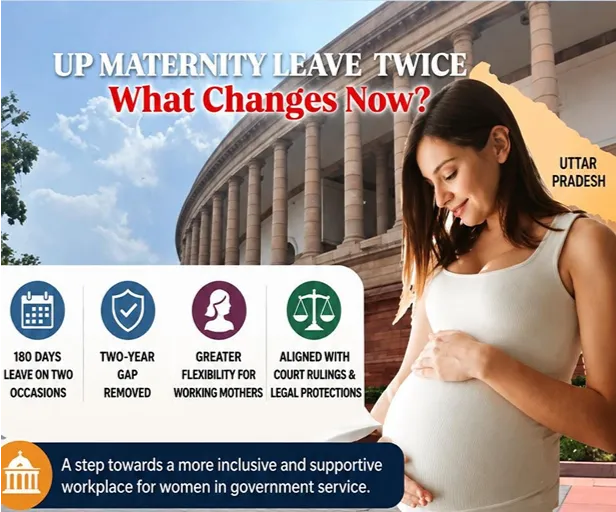

Uttar Pradesh’s decision to remove the two-year gap between two leave periods marks a significant change for women government employees. Eligible women can still avail themselves of 180 days of leave on two occasions, but they no longer need to wait two years before seeking the second one. The move follows an Allahabad High Court ruling that such a benefit could not be denied solely because the second request was made within two years of the first. It also aligns with the broader Central Government push to promote workplace inclusion, childcare support and women’s wellbeing.
According to a 2025 Rajya Sabha reply, Central Government measures include 730 days of Child Care Leave, reducing the minimum CCL period from 15 to five days, LTC during CCL, and 180 days of Maternity Leave. Benefits have also been extended to childbirth through surrogacy, while 60 days of Special Maternity Leave is available in cases of stillbirth or death of a child soon after birth.
Other measures include childcare support for women employees with disabilities, up to 90 days of leave in sexual-harassment cases, gender-sensitisation training, husband-wife posting provisions, and crèches at government workplaces. Together, these measures show a broader shift: Maternity Leave is increasingly being treated as part of workplace inclusion, childcare support and women’s long-term participation in government service.
From Two-Year Gap to Greater Flexibility
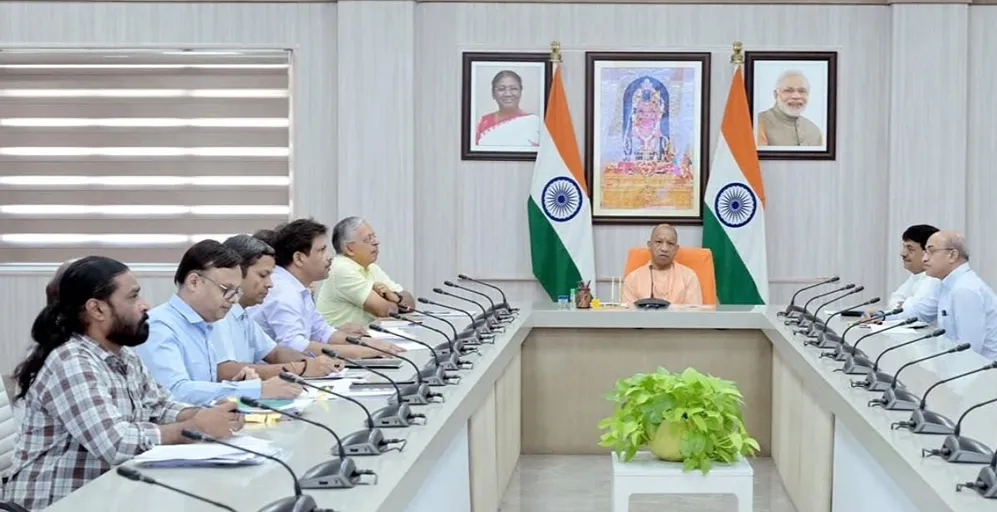
The Uttar Pradesh Cabinet has approved an amendment to Rule 153(1) of the Uttar Pradesh Financial Handbook, Volume II, Parts 2 to 4, removing the earlier two-year gap requirement between two maternity leave periods. The change means an eligible woman government employee can avail herself of 180 days of maternity leave on two separate occasions, even if the second pregnancy occurs within two years of the first. It does not create 360 days of continuous leave for a single pregnancy.
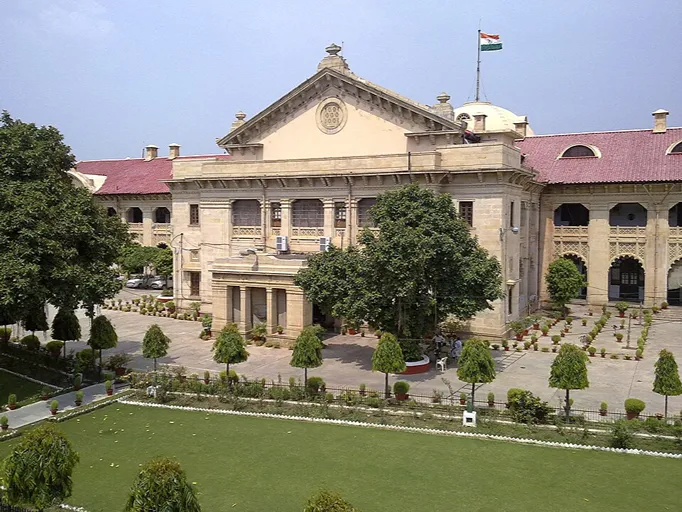
The issue gained legal attention after the Allahabad High Court ruled that a second maternity leave could not be denied merely because it was sought within two years of the first. The court also examined the relationship between the Financial Handbook and statutory maternity protections, helping pave the way for greater clarity in the state’s rules.
Rules: Before and After
| Period | Rule/Development | What It Meant |
|---|---|---|
| Earlier rule | Two-year gap condition | A second maternity leave within two years could face restrictions. |
| 2026 – Court ruling | Allahabad High Court intervention | The court ruled that no law barred eligible women employees from taking a second 180-day Maternity Leave within two years of their first leave. |
| 2026 – Cabinet decision | Two-year gap removed | Eligible women can seek a second 180-day maternity leave without waiting two years. |
| Current position | 180 days × two occasions | The benefit remains separate for two eligible maternity leave periods; it is not 360 days for one pregnancy. |
Why UP Changed the Maternity Leave Two-Year Rule
The Uttar Pradesh Cabinet, chaired by Chief Minister Yogi Adityanath, approved 11 proposals through circulation, including the removal of the two-year gap between two leave periods. The move aims to provide greater legal clarity and flexibility for women government employees when a second pregnancy occurs within a shorter interval.
The earlier restriction could create uncertainty because pregnancies do not follow a fixed administrative timeline. Recent Allahabad High Court rulings also highlighted concerns over limiting maternity benefits through provisions in the Financial Handbook when statutory protections applied.
Under the revised framework, eligible women can seek a second 180-day leave without the previous waiting condition. The change can simplify departmental approvals, reduce legal disputes and support a better work-life balance. It also strengthens workplace inclusivity by bringing the state’s administrative rules closer to evolving judicial interpretations.
Paternity Leave: Supporting Fathers and Families
Credit: Wikimedia Commons
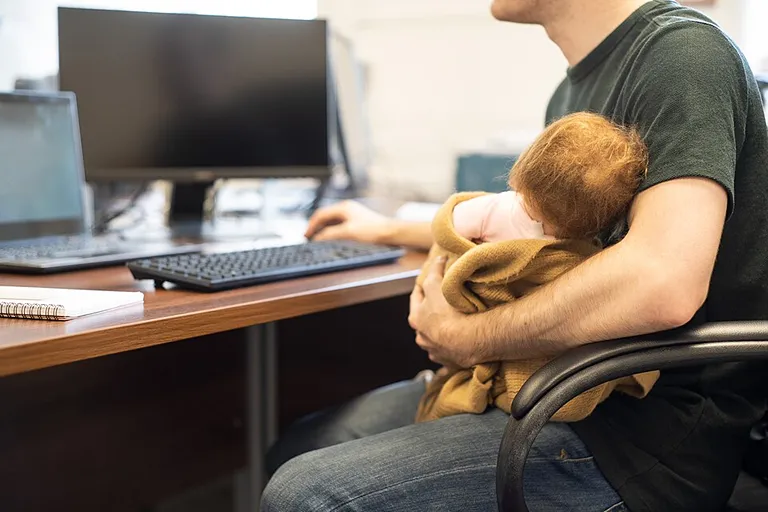
Paternity Leave is another important part of the government’s family-support framework. Eligible male government employees can take leave following the birth of a child to support the mother and participate in early childcare. The provision promotes shared parenting and work-life balance, while reducing the pressure placed solely on mothers during the early stages of a child’s life. The government has also extended paternity-related provisions to childbirth through surrogacy, subject to applicable service rules. Together, maternity, paternity and childcare provisions reflect a broader approach to creating a more family-friendly and inclusive government workplace.
Impact and Key Takeaway
UP’s decision to remove the two-year gap between maternity leaves goes beyond a routine administrative change. It gives women government employees greater flexibility around a second pregnancy and can support a better work-life balance. The key point is that 180 days twice means two separate ML periods, not 360 days for one pregnancy. Eligible employees can seek a second 180-day leave within two years of the first, subject to applicable service rules.
The reform also reflects a wider shift towards workplace policies that support maternity, childcare and women’s workforce participation. For government employees, it could make balancing career and family responsibilities easier while reducing disputes over second maternity leave applications.
Is Maternity Leave now 360 days in Uttar Pradesh?
No. The rule does not provide 360 days for one pregnancy. It allows eligible women to avail themselves of 180 days on two separate maternity leave occasions.
Can a woman take the second ML within two years?
Yes. The key change is that the earlier two-year gap requirement between two maternity leave periods has been removed for eligible UP government employees.
Why was the two-year ML condition removed?
The condition became legally contentious. The Allahabad High Court held that maternity leave benefits could not be denied merely because a second pregnancy occurred within two years.
Does this apply to all working women in India?
No. The Cabinet decision concerns the applicable rules for Uttar Pradesh government employees. It should not be presented as a new nationwide maternity leave rule.
What other support does the Central Government provide?
The Central Government has listed measures including 730 days of Child Care Leave, 180 days of maternity leave, special maternity leave in certain circumstances, workplace safety measures, crèches and gender-sensitisation programmes.