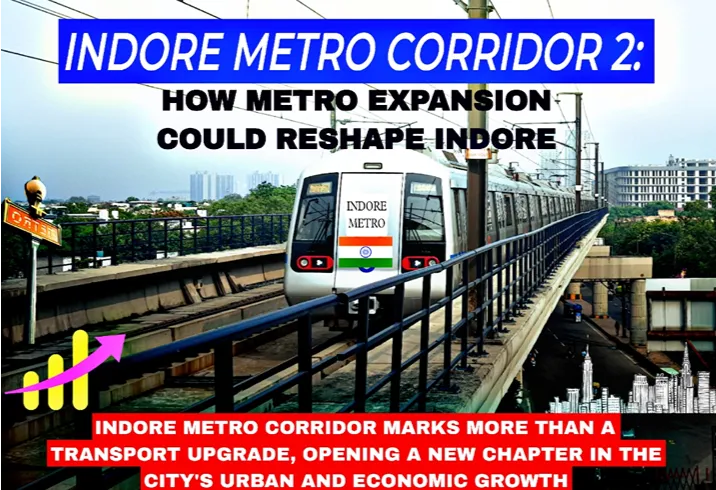

A new chapter has opened in Indore’s urban mobility story. Indore Metro Corrido r 2 has been inaugurated, adding a major stretch to the city’s developing metro network. The 11-kilometre corridor connects Super Corridor-3 with Malviya Nagar Chauraha. It includes 11 stations and was developed at an estimated cost of ₹2,850 crore.
However, its significance goes beyond another infrastructure inauguration. The corridor could influence how Indore grows, commutes and attracts investment. The development also comes as Indian cities increasingly turn toward mass transit. Therefore, Indore’s metro expansion needs to be viewed within India’s wider urban transformation.
What Opened, Where It Connects and Why It Matters
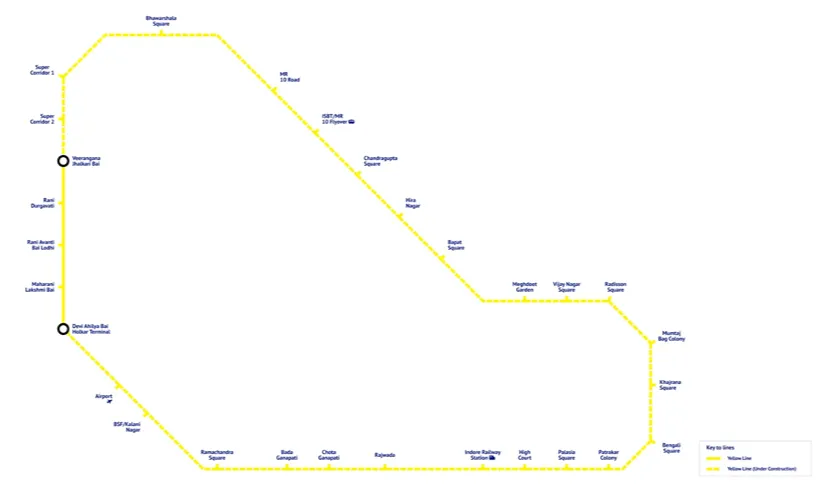
The newly inaugurated Phase-I Reach-II section of Indore Metro Corridor 2 connects Super Corridor-3 with Malviya Nagar Chauraha. The approximately 11-kilometre stretch has 11 stations and was developed at an estimated cost of ₹2,850 crore. The 11 stations are Super Corridor-3, Super Corridor-2, Super Corridor-1, Bhawarsala Chauraha, MR-10 Road, ISBT/MR-10 Flyover, Chandragupta Square, Hira Nagar, Bapat Square, Meghdoot Garden and Vijay Nagar Square, leading toward Malviya Nagar Chauraha.
This alignment is significant because it links several important residential, commercial and transport zones. Super Corridor connects the metro with a rapidly developing urban area. Meanwhile, MR-10 and ISBT strengthen access to major transport corridors. Further along the route, Chandragupta Square, Hira Nagar, Bapat Square, Meghdoot Garden and Vijay Nagar serve important residential and commercial areas. Consequently, the corridor could make daily travel more predictable for workers, students and business communities.
The route could also become an urban development spine over time. Better metro access can encourage commercial activity around stations. It may also support more organised residential and mixed-use development. With the inauguration, the Indore Metro network has expanded to 16 operational stations covering approximately 17 kilometres. The cumulative project cost has reached about ₹4,370 crore. Therefore, it should not be viewed only as an 11-kilometre transport extension. It represents a step toward connecting Indore’s growing residential, commercial and employment centres through a larger mass-transit network.
Credit: Wikimedia commons/Dilip kabiraj
Why Indore Needs Better Urban Connectivity
Indore has expanded rapidly as a commercial, educational and industrial centre. Such growth inevitably creates pressure on roads. As populations rise, private vehicle use can increase. Consequently, road congestion can become a persistent urban challenge. A functioning metro can offer a different mobility model. Passengers can shift some daily journeys from cars and two-wheelers. That shift could reduce pressure on major roads. It could also make commuting more predictable during peak periods.
Credit: Ministry of Power
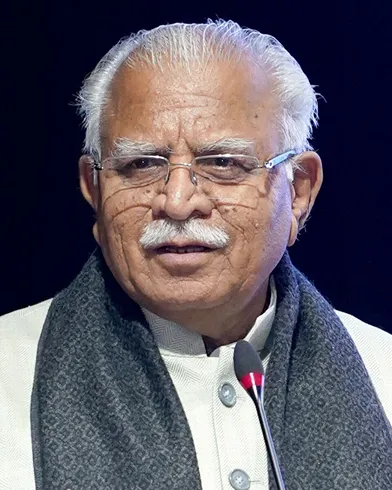
Furthermore, public transport can provide better access for people without private vehicles. Students, workers and other daily commuters can benefit from improved connectivity. Union Housing and Urban Affairs Minister Manohar Lal highlighted these wider benefits. He said the metro would strengthen links between residential, commercial and employment centres. The government also expects greater public transport use to reduce congestion, fuel consumption and emissions. Therefore, Indore Metro Corridor 2 should be assessed through both mobility and sustainability.
From Project Approval to a New Urban Growth Spine
Indore’s metro journey began well before the latest inauguration. The Union Cabinet approved the Indore Metro Rail Project in October 2018, with an original plan for a 31.55-kilometre ring line and 30 stations. The project aimed to connect major urban clusters while integrating railways, buses and other transport systems. Funding was planned through central and state participation, supported by international financing from institutions such as the Asian Development Bank and New Development Bank. The project then progressed through construction, systems installation and operational preparations.
Passenger services on the Yellow Line Super Priority Corridor began in May 2025. On September 5, 2026, Union Minister Manohar Lal inaugurated Priority Corridor-2 in the presence of Madhya Pradesh Chief Minister Mohan Yadav and Minister of State Tokhan Sahu. The latest opening strengthens Indore’s emerging urban transit network. More importantly, it could influence how the city develops around its metro stations. Better connectivity can increase the attractiveness of station areas for businesses, offices, retail outlets and service providers. Residential and commercial projects could also gain from easier access to public transport.
However, such economic effects are not automatic. They depend on ridership, station accessibility, land-use planning and last-mile connectivity. Indore’s original metro framework had already recognised this potential through provisions for transit-oriented development and value capture mechanisms. Therefore, Indore Metro Corridor 2 could eventually become more than a transport extension. With coordinated planning, Indore Metro Corridor 2 stations could develop into new commercial and residential activity centres, giving the metro a larger role in Indore’s long-term economic growth.
Indore’s Wider Metro Expansion and Madhya Pradesh’s Urban Future
The latest corridor should not be viewed in isolation. Indore’s metro project was originally planned as a larger network serving densely populated and emerging parts of the city. The broader plan included integration with railway stations, BRTS and other public transport systems. Its long-term value will depend on how effectively future sections are developed as one network.
A larger metro system can do more than reduce travel times. It can influence where people live, work and conduct business. However, convenient station access and last-mile services will remain important for sustained ridership. Indore’s expansion also fits Madhya Pradesh’s wider urban infrastructure strategy. Bhopal’s metro network has similarly entered its operational phase, giving the state experience with modern mass transportation in its two largest cities.
The trend reflects a wider national transformation. The Ministry of Housing and Urban Affairs reported that metro services had reached 26 Indian cities by the end of 2025. Mass transit is increasingly being treated as economic infrastructure. It can support employment, improve urban productivity and reduce dependence on private vehicles. It can also contribute to lower fuel consumption and emissions.
For Madhya Pradesh, stronger metro systems could improve the competitiveness of major urban centres. They can support the movement of workers, students and consumers while making cities more attractive to businesses and investment. There is also a wider strategic dimension. Cities increasingly compete for investment, skilled workers and commercial activity. Reliable public transport can strengthen their position within regional business networks.
Indore is already an important commercial centre in central India. A stronger metro system could reinforce that role by making urban movement more efficient. The project also highlights the importance of coordinated public investment. Central and state governments must work with specialised infrastructure agencies to expand networks efficiently. Thus, Indore Metro Corridor 2 is part of a broader infrastructure-led transformation. Its success will depend on how well the metro supports Indore’s economic growth and long-term urban planning.
The Real Test Begins After the Inauguration
The inauguration marks an important milestone, but the real test begins with daily operations. Ridership will show whether the corridor meets commuter needs, while passenger experience will indicate its practical value. Station-area development will also matter. If businesses and residential projects grow around key stations, the metro could generate wider economic benefits. Future expansion will determine whether the corridor becomes part of a truly integrated urban transport system. Therefore, the success of Indore Metro Corridor 2 should not be measured only by kilometres completed. It should also be judged by passengers served, travel time saved and economic activity generated.
For Madhya Pradesh, the corridor represents more than another infrastructure project. Indore Metro Corridor offers an opportunity to align urban transport with long-term economic planning. If that opportunity is used effectively, Indore could strengthen its position as a major commercial centre in central India. The growth story, therefore, has only begun. The next chapter will depend on how effectively Indore operates, expands and builds around its new metro network.
FAQs
What is Indore Metro Corridor 2?
Indore Metro Corridor 2 is an approximately 11-kilometre Phase-I Reach-II section connecting Super Corridor-3 with Malviya Nagar Chauraha.
How many stations are included in Indore Metro Corridor 2?
The newly inaugurated section has 11 stations and was developed at an estimated cost of ₹2,850 crore.
When was Indore Metro Corridor 2 inaugurated?
The corridor was inaugurated on September 5, 2026, by Union Minister Manohar Lal.
How can Indore Metro Corridor 2 support the city’s growth?
It can improve urban mobility while encouraging commercial activity, property development and investment around metro stations.
What is the future of Indore Metro?
Future expansion, better integration with other public transport and effective last-mile services will determine the metro’s long-term impact on Indore’s urban development.