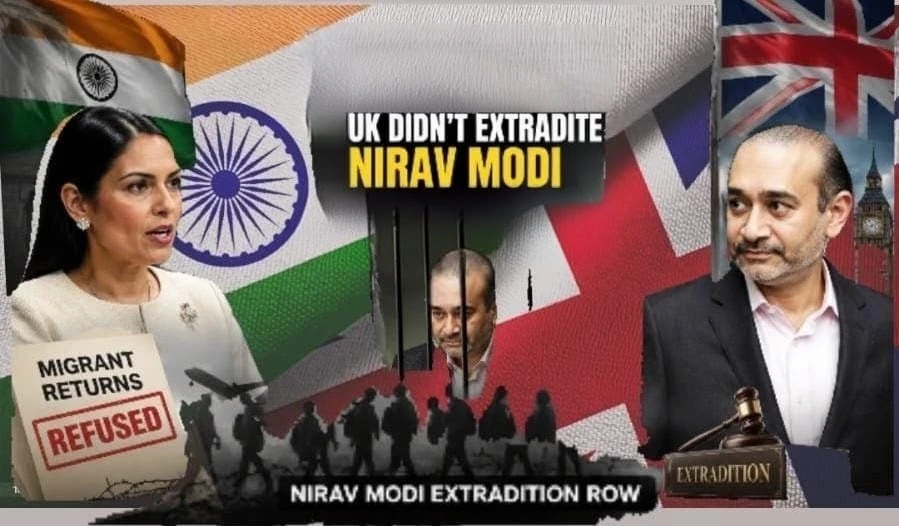

A diplomatic disagreement between India and the United Kingdom has brought an old controversy back into focus — the unresolved extradition of fugitive businessman Nirav Modi. The issue gained fresh attention after former UK Home Secretary Priti Patel claimed that India refused to accept the return of some illegal migrants from the UK because Britain had not extradited Nirav Modi. While migration cooperation has remained an important part of India-UK relations, questions over migrant returns and delays in extraditing high-profile economic offenders have created fresh friction.
The Nirav Modi case has become more than a criminal investigation. For India, it represents a wider challenge: how to bring back economic fugitives who leave the country and seek protection through lengthy foreign legal processes. Patel’s remarks have triggered debate over whether extradition cooperation is becoming a factor in broader bilateral negotiations. According to the UK government, extradition decisions follow independent legal procedures, while India has consistently maintained that individuals accused of major financial crimes should face trial within the Indian judicial system.
Who Is Nirav Modi?
Born in 1971 in Gujarat, Nirav Modi belongs to a family with a background in the diamond industry. He entered the jewellery business and eventually built a global luxury brand with stores in major cities, including London, New York, Hong Kong, and Mumbai. Nirav Modi is an Indian diamond businessman and the founder of the luxury jewellery brand Nirav Modi. Once considered one of India’s most successful jewellery entrepreneurs, he became internationally known after being accused of involvement in the Punjab National Bank (PNB) fraud case, one of India’s biggest banking scandals.
His designs received international attention, and his brand was promoted among high-profile customers. However, his business empire collapsed after allegations emerged that companies linked to him had obtained fraudulent banking guarantees from PNB. India’s investigating agencies — including the Central Bureau of Investigation (CBI) and the Enforcement Directorate (ED) — accused him of financial fraud, money laundering, and cheating.
- Lashkar-e-Taiba: How It Became a Global Terror Network .
- Sonam Wangchuk Reality: Facts Behind the Fame, Influence and Controversies
- From CJP Protest to Reservation Row: The Full Timeline
- E20 Janta Party: Can Ethanol Politics Spark India’s Next Protest?
- Can India Restore Trust After NEET-UG Controversy?
Nirav Modi’s Fraud Case
Nirav Modi’s downfall began with the Punjab National Bank (PNB) fraud case, where he and entities linked to him were accused of obtaining fraudulent Letters of Undertaking (LoUs) from PNB’s Brady House branch in Mumbai. These LoUs were allegedly used to secure overseas credit, resulting in a reported fraud of over ₹13,000 crore.
The case, which surfaced in 2018, triggered investigations by the CBI and Enforcement Directorate (ED) and raised concerns about banking loopholes, corporate accountability, and India’s challenges in extraditing economic offenders from foreign countries.
Nirav Modi’s Political Links
Nirav Modi’s luxury jewellery business brought him in contact with several influential figures, including business leaders, celebrities, and politicians. His presence at high-profile events and interactions with public personalities later became a subject of political debate after the PNB fraud case emerged in 2018.
Opposition parties, particularly the Congress, questioned whether Nirav Modi had received favourable treatment due to his alleged proximity to influential circles. Congress leaders also targeted Prime Minister Narendra Modi over photographs of Nirav Modi attending events such as the World Economic Forum (WEF) in Davos in 2018, where he was seen alongside Indian business delegates. The party used these images to question how Nirav Modi was able to leave India before the fraud became public.
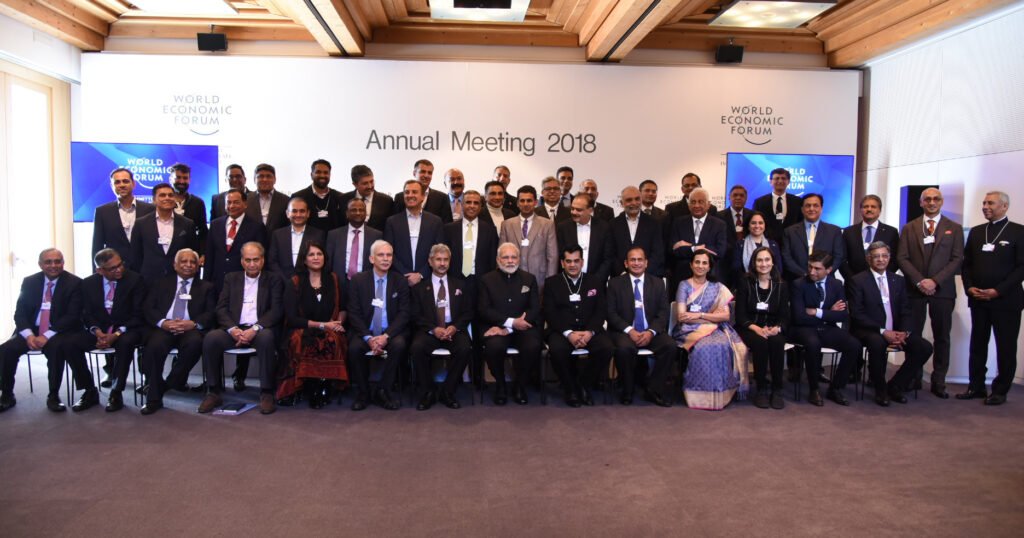
The government rejected allegations of political protection and maintained that investigative agencies acted after the fraud was detected. No Indian politician has been convicted or legally found involved in the Nirav Modi fraud case. The controversy remains part of a wider debate over corporate influence, banking oversight, and accountability of powerful business figures.
India’s Long Extradition Battle
The Indian government has been attempting to bring Nirav Modi back from the UK for several years.
| Year | Development |
| January 2018 | Nirav Modi left India before the PNB fraud became public |
| February 2018 | PNB fraud allegations became public |
| 2019 | Nirav Modi was arrested in London following India’s extradition request |
| 2021 | UK Westminster Magistrates’ Court ruled in favour of extradition |
| 2022 | UK Home Secretary approved extradition order |
| 2022–2025 | Legal challenges continued in UK courts |
| 2026 | Extradition remains unresolved |
India has argued that Nirav Modi should return to face trial in India, while his legal team has challenged extradition on various grounds, including concerns about prison conditions and legal procedures. The long delay has become a symbol of the difficulties India faces while pursuing economic offenders who take shelter in foreign jurisdictions.
The UK Migration-Nirav Modi Link
Migration and extradition are technically separate issues handled through different legal frameworks. However, diplomatic negotiations often involve multiple areas of cooperation, including illegal migration, legal migration routes, student mobility, trade and investment, security cooperation, and the extradition of wanted individuals.
India has long raised concerns about economic fugitives living abroad. Cases involving Nirav Modi, Vijay Mallya, and others have increased pressure on foreign governments to cooperate with Indian agencies. The disagreement over migrant returns has therefore been viewed by some analysts as part of a broader diplomatic conversation about trust and reciprocity. The central question remains: should countries cooperate on migration issues when legal cooperation on extradition remains unresolved?
India-UK Ties Under Strain
India and the UK share deep economic and strategic ties. The two countries have worked together on trade, defense, technology, and education. However, extradition cases have occasionally created tensions. India has repeatedly criticised delays in returning high-profile fugitives, arguing that lengthy legal battles weaken accountability.
The UK, meanwhile, maintains that its courts must independently examine extradition requests according to British law. The Nirav Modi case highlights a larger global challenge: wealthy individuals accused of financial crimes can often use international legal systems to delay proceedings.
Conclusion
The Nirav Modi extradition delay has become a test of India’s ability to pursue economic offenders beyond its borders. While migration cooperation remains an independent issue, the controversy reflects a larger diplomatic concern — whether countries can maintain trust when cooperation on justice and accountability moves slowly.
For India, bringing back fugitives accused of major financial crimes has become a priority. For the UK, extradition decisions must pass through its legal system. The outcome of this long-running case could influence how both countries approach future cooperation on migration, trade, and law enforcement.
1. Why is Nirav Modi wanted by India?
Nirav Modi is wanted by Indian agencies in connection with allegations related to the Punjab National Bank fraud case involving thousands of crores.
2. When did India start seeking Nirav Modi’s extradition?
India began pursuing his extradition after the PNB fraud surfaced in 2018. He was arrested in London in 2019 following India’s request.
3. Has Nirav Modi been extradited to India?
No. Despite favourable decisions from some UK authorities, legal challenges have delayed his extradition.
4. Is the UK migrant return dispute officially linked to Nirav Modi?
Migration returns and extradition are separate matters. However, diplomatic discussions between countries often involve multiple issues, and Nirav Modi’s case has been raised as a concern by India.
5. What was the amount involved in the PNB fraud case?
Investigators estimated the alleged fraud connected to Nirav Modi and associated entities at more than ₹13,000 cror