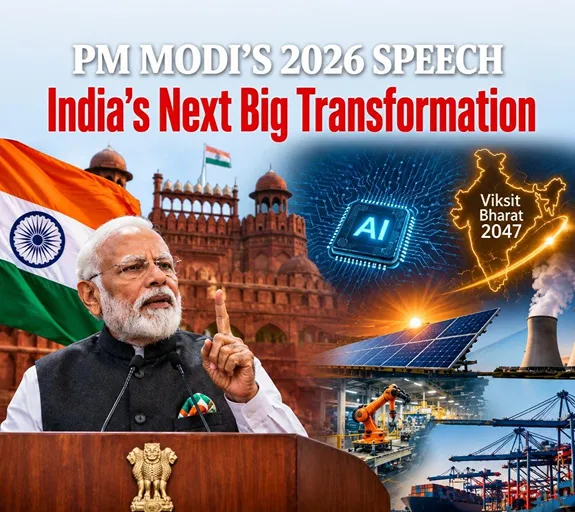

India’s 80th Independence Day address was more than a reflection on the country’s past. PM Modi’s 2026 Speech outlined an ambitious roadmap for strengthening India’s economic, technological and strategic capabilities ahead of 2047. From the Red Fort, Prime Minister Narendra Modi linked reforms, manufacturing, artificial intelligence, semiconductors, nuclear energy and global trade to his vision of a developed India. He also placed electricity and energy security at the centre of future growth, recognising their importance for AI, data centres, advanced manufacturing and other emerging industries.
The message was clear, India wants to evolve from a fast-growing economy into a more self-reliant, technologically advanced and globally influential power. But turning this vision into reality will depend on execution, investment and policy continuity. The key question is whether India can convert these ambitious targets into measurable results by 2047.
India’s 2047 Roadmap
Prime Minister Narendra Modi delivered his 13th consecutive Independence Day address from the Red Fort on August 15, 2026, at a crucial stage in India’s journey toward 2047. With less than two decades remaining before the centenary of independence, the speech linked the government’s Viksit Bharat 2047 vision with manufacturing, technology, infrastructure, energy security, innovation and youth. Rather than focusing on one flagship programme, PM Modi’s 2026 Speech presented these areas as interconnected pillars of national transformation.
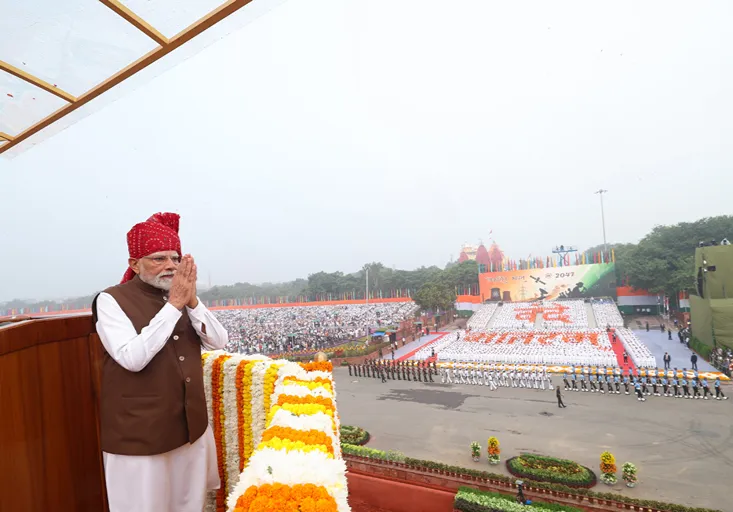
The deeper message was that India’s future growth will depend on connecting technology, energy, manufacturing, trade and skilled workers. AI and semiconductors require reliable electricity, while competitive industries need technology, critical minerals and global market access. However, implementation remains the biggest challenge. Achieving Viksit Bharat 2047 will require faster project execution, stronger research, skilled workers and stable policies. Ultimately, India’s progress will be measured by results rather than ambitious targets.
Modi’s Big Push: Technology, Power and 2047
The central message of PM Modi’s 2026 Speech was that India’s transformation cannot depend on one sector alone. Under “Shakti Ki Saptadhara”, Modi linked manufacturing, agriculture, technology, infrastructure, defence, the green and blue economy, and soft power to the broader goal of building national strength. He also stressed the need for faster reforms and greater self-reliance as India moves toward Viksit Bharat 2047. The real challenge, however, is implementation. India will need sustained investment, skilled workers, competitive industries and stronger institutions to turn ambitious targets into lasting results. This becomes even more important as AI, semiconductors and advanced manufacturing demand greater capital, specialised talent and reliable infrastructure.
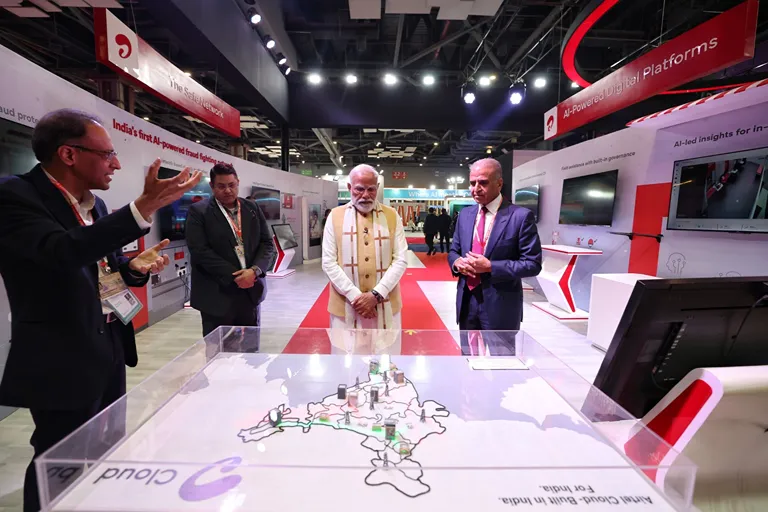
Technology was central to the speech, with Modi announcing plans to train one crore young Indians in AI and expand semiconductor manufacturing. Critical minerals were also highlighted as vital to secure future technology supply chains. At the same time, electricity emerged as a strategic foundation, as AI, semiconductor plants and data centres require reliable and affordable power. India is therefore pursuing a diversified energy strategy involving nuclear power, solar, gas, domestic exploration and wider electrification to support future industrial growth.
India’s Energy Roadmap to 2047
| Year/Period | Key development | Why it matters |
|---|---|---|
| 2014 | Solar capacity was around 2 GW | Established the starting point for India’s solar expansion |
| 2026 | Solar capacity reached around 160 GW | Shows the scale of renewable-energy growth |
| 2026 | PM Surya Ghar crossed 50 lakh households | Expands distributed electricity generation |
| 2026 | City gas network reached around 700 cities | Broadens access to cleaner gas-based energy |
| 2026 | Nearly 1.75 crore households gained piped gas access | Supports a wider household energy transition |
| 2047 target | Nuclear capacity targeted at 100 GW | Provides long-term firm power for a growing economy |
| By 2047 | Greater domestic energy exploration and diversification | Aims to strengthen energy security and reduce external vulnerabilities |
Energy Security and Global Trade
Nuclear energy emerged as a key pillar of India’s long-term energy strategy. Modi highlighted the SHANTI Act, fast breeder reactor technology and the ambitious 100 GW nuclear capacity target by 2047. The plan aims to meet rising power demand from industry, EVs, AI and data centres. As explored in From Struggle to Global Power, this reflects India’s broader shift toward greater economic and strategic strength. However, achieving the target will require major investment, faster execution and strong regulation.
The speech also highlighted India’s expanding solar sector, with capacity rising from around 2 GW in 2014 to nearly 160 GW, while PM Surya Ghar has reached more than 50 lakh households. India is also expanding oil and gas exploration to strengthen domestic energy security, showing that its strategy is based on diversifying energy sources rather than immediately abandoning hydrocarbons. Trade was another important theme, with Modi highlighting FTAs as a way to expand opportunities for farmers, MSMEs and exporters.
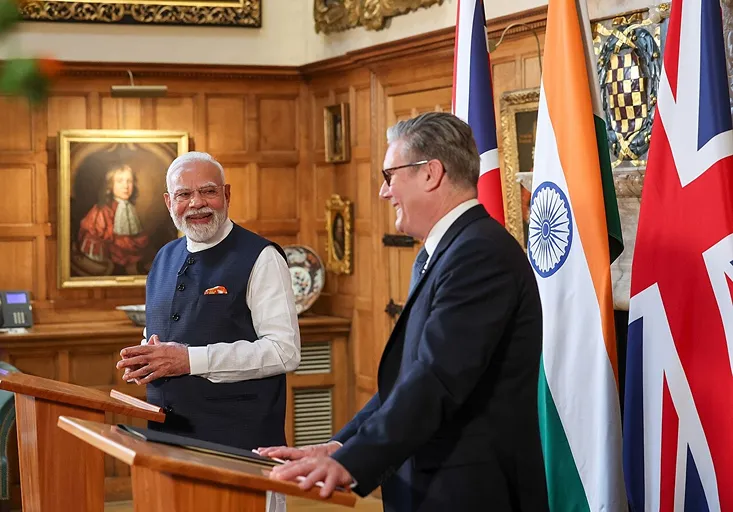
The India–UK CETA, which entered into force on July 15, 2026, provides zero-duty access for nearly 99% of India’s exports to the UK. It was not announced in the speech but fits into India’s broader trade strategy of diversifying markets and strengthening economic partnerships.
Conclusion
PM Modi’s 2026 Speech presented a broad vision for India’s next phase of development, bringing together Viksit Bharat 2047, reforms, AI, semiconductors, manufacturing, energy and trade. One of the strongest messages was the connection between technology and electricity. India’s ambitions in AI, semiconductors and advanced manufacturing will require reliable and affordable power, while stronger trade ties can help Indian businesses reach global markets.
The ambition is clear, but implementation will determine its success. India will need faster project execution, skilled workers, strong infrastructure and stable policies to meet its 2047 goals. Ultimately, progress will be measured not by promises made from the Red Fort, but by factories built, electricity generated, technologies developed, exports increased and jobs created.
What was the main message of PM Modi’s 2026 Independence Day speech?
The central message was to accelerate India’s transformation toward Viksit Bharat 2047 through reforms, manufacturing, technology, energy security, defence production and global trade.
What did Modi announce about AI?
Modi announced a plan to train one crore young Indians in artificial intelligence. He also announced free online coaching initiatives for competitive examinations.
What did Modi say about electricity and energy?
He linked reliable electricity directly with India’s future technology ambitions. AI, semiconductor plants and data centres will require much greater power availability.
What is India’s nuclear energy target for 2047?
India is targeting 100 GW of nuclear power capacity by 2047. Modi also highlighted the SHANTI Act and fast breeder nuclear technology.
Which trade agreement is important in the 2026 context?
The India–UK CETA is particularly relevant. It entered into force on July 15, 2026, and provides major tariff and market-access opportunities for Indian exporters.