Jharkhand Protest: Why Thousands of Students Are on the Streets and What It Means for India’s Recruitment System

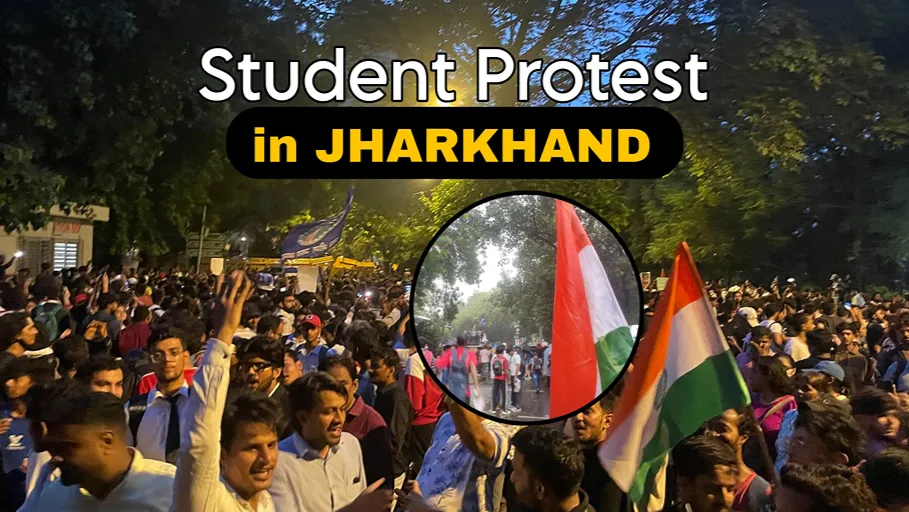
Student movements have historically shaped India’s policy landscape, but the Jharkhand Protest has emerged as one of the most significant youth-led demonstrations in recent years. Thousands of students and government job aspirants have gathered in Ranchi demanding transparency, accountability, and justice after alleging serious irregularities in state recruitment examinations. What began as a campaign against examination malpractice has now evolved into a larger debate over the credibility of public recruitment systems across India.
The Jharkhand Protest is no longer just a state issue. It has attracted national attention because it reflects growing frustration among educated youth who spend years preparing for competitive examinations with the hope of securing stable government employment. As the movement continues to gain momentum, political parties, civil society organizations, and education experts are closely watching how the state government responds.
What is the Jharkhand Protest?
The Jharkhand Protest is a statewide movement led primarily by students and government job aspirants alleging irregularities in recruitment examinations conducted by the Jharkhand Public Service Commission (JPSC) and the Jharkhand Staff Selection Commission (JSSC). According to the protesters, multiple recruitment processes have suffered from allegations ranging from paper leaks and evaluation discrepancies to lack of transparency in merit preparation. Many candidates claim they invested several years preparing for these examinations only to lose confidence in the recruitment process.
The demonstrations are centered mainly in Ranchi, where thousands of aspirants have organized peaceful protests, sit-ins, and an indefinite Satyagraha. Some protest leaders have also undertaken hunger strikes to press their demands. The Jharkhand Protest has become a symbol of wider concerns about recruitment integrity in India, where examination controversies have increasingly affected both state and national recruitment processes.
Why Did the Jharkhand Protest Begin?
The central reason behind the Jharkhand Protest is the growing dissatisfaction among students regarding the fairness of state recruitment examinations. Several aspirants have alleged that:
- Recruitment examinations lacked transparency.
- Evaluation procedures were not adequately explained.
- There were allegations of paper leaks and examination malpractice.
- Recruitment processes were delayed repeatedly.
- Genuine candidates suffered because of administrative failures.
For many aspirants, government jobs represent years of preparation, financial sacrifice, and family expectations. Therefore, any perceived irregularity directly affects their careers and future prospects. Students argue that recruitment agencies must maintain the highest standards of integrity because government employment impacts thousands of families across the state. The Jharkhand Protest has therefore become more than a demand for one investigation—it represents a demand for structural reforms in recruitment.
Main Demands of the Students
The protesters have put forward several demands that they believe are essential to restore confidence in the recruitment process.
Independent Investigation
Students have demanded either:
- A CBI inquiry, or
- An investigation supervised by retired High Court judges from outside Jharkhand.
They argue that an independent agency would inspire greater public confidence.
Transparent Recruitment
Candidates want authorities to publicly explain evaluation methods, merit preparation, and recruitment timelines.
Strict Action Against the Guilty
Students have demanded that any officials found responsible for irregularities should face strict legal action.
Faster Recruitment
Many vacancies have remained unfilled for years. Students say timely recruitment benefits both unemployed youth and government departments facing staff shortages.
Fair Opportunity
The Jharkhand Protest also seeks assurances that deserving candidates will not lose employment opportunities because of alleged administrative lapses.
Government’s Response
The Jharkhand government has acknowledged the concerns raised by students. Chief Minister Hemant Soren has stated that the government is aware of the situation and appropriate decisions will be taken after reviewing the matter. However, the administration has not officially accepted the protesters’ demand for an external investigation. Government representatives have appealed for peace while assuring that recruitment-related concerns are under examination.
Despite these assurances, many student organizations believe stronger and more transparent action is necessary to restore confidence. The outcome of discussions between student leaders and government officials is likely to determine the future direction of the Jharkhand Protest.
Why Has the Protest Gained National Attention?
The Jharkhand Protest has resonated far beyond the state’s borders because examination controversies have increasingly become a national issue. The Jharkhand Protest has sparked widespread discussions about the credibility of government recruitment systems and the need for greater transparency in competitive examinations. Several states have witnessed recruitment delays, paper leak allegations, or legal disputes in recent years. These recurring issues have raised concerns among students and parents across the country about the fairness of public recruitment processes.
For students preparing for competitive examinations, transparency is not simply an administrative issue, it determines their careers, financial security, and social mobility. Education experts argue that repeated recruitment controversies discourage talented youth from trusting public institutions. As the Jharkhand Protest continues to gain momentum, many believe it could become a catalyst for broader reforms aimed at strengthening recruitment integrity and restoring confidence in government examinations nationwide.
Jharkhand Protest vs Latest Jantar Mantar Protest
Although both demonstrations reflect the democratic right to peaceful protest and demand greater accountability from authorities, the Jharkhand Protest and the latest Jantar Mantar protest differ significantly in their objectives, participants, and scope. The Jharkhand Protest is primarily centered on alleged irregularities in recruitment examinations conducted by the Jharkhand Public Service Commission (JPSC) and the Jharkhand Staff Selection Commission (JSSC). It is largely driven by students and government job aspirants seeking transparent recruitment, an independent investigation into the alleged irregularities, and timely appointments.
In contrast, the latest Jantar Mantar protest represents a broader platform where civil society groups, activists, trade unions, and issue-based organizations gather to raise concerns over various national policies and public-interest matters. Unlike the Jharkhand Protest, which focuses specifically on employment and recruitment transparency within a single state, protests at Jantar Mantar generally address wider governance, social justice, economic, or political issues affecting different sections of society across the country.
Another key difference lies in their geographical and organizational nature. The Jharkhand Protest has been concentrated mainly in Ranchi and other parts of Jharkhand, with students organizing peaceful sit-ins, Satyagraha, and hunger strikes to press for recruitment reforms. On the other hand, Jantar Mantar in New Delhi serves as a nationally recognized venue for democratic demonstrations, where multiple organizations and citizens assemble to voice diverse concerns before the central government.
Overall, the Jharkhand Protest remains a focused movement aimed at ensuring fairness, transparency, and accountability in government recruitment, while the latest Jantar Mantar protest reflects a much broader spectrum of public policy and governance issues. The comparison highlights how the Jharkhand Protest has become a symbol of students’ demand for fair employment opportunities, whereas Jantar Mantar continues to function as India’s most prominent public platform for democratic expression on a wide range of national issues.
What Could Be the Long-Term Impact?
If the concerns raised during the Jharkhand Protest lead to institutional reforms, the movement could improve recruitment systems not only in Jharkhand but also in other states. Possible reforms include:
- Stronger digital examination security.
- Faster recruitment schedules.
- Independent monitoring.
- Greater transparency in merit lists.
- Better grievance redressal mechanisms.
Such reforms could restore public confidence while protecting deserving candidates.
Why Recruitment Transparency Matters
Government recruitment represents one of the largest employment opportunities in India. Every examination involves thousands of candidates investing years of preparation. When allegations of irregularities emerge, trust in public institutions suffers. Experts believe technology, transparent communication, stronger cybersecurity, and independent oversight are becoming increasingly important in ensuring fair examinations. The Jharkhand Protest demonstrates that today’s youth expect not only employment opportunities but also complete fairness throughout the recruitment process.
Conclusion
The Jharkhand Protest has become much more than a student movement. It reflects broader concerns over transparency, accountability, and fairness in public recruitment across India. While the state government has assured that it is examining the issue, students continue to demand stronger institutional action, including an independent investigation and comprehensive reforms.
Whether the movement results in immediate policy changes remains uncertain, but it has already sparked a nationwide conversation about protecting the integrity of competitive examinations. As discussions continue, the way authorities address the Jharkhand Protest could influence public confidence in recruitment systems far beyond Jharkhand.
Why is the Jharkhand Protest happening?
Students allege irregularities in recruitment examinations conducted by JPSC and JSSC and are demanding greater transparency and accountability.
Who is participating in the Jharkhand Protest?
The movement is primarily led by government job aspirants, students, and youth organizations in Jharkhand.
What are the protesters demanding?
Their key demands include an independent investigation, transparent recruitment procedures, action against those responsible for alleged irregularities, and timely recruitment.
Has the Jharkhand government accepted the demands?
The government has acknowledged the concerns and said it is reviewing the matter, but it has not formally agreed to all major demands, including an external probe.
Why is the Jharkhand Protest important nationally?
The protest has reignited debate over the credibility of public recruitment systems and examination integrity across India.
By Sahil Koul | National Affairs Analyst covering Indian politics, governance, public policy, and major developments shaping the nation.