
The Kashmir question has remained one of South Asia’s most sensitive geopolitical disputes for nearly eight decades. However, the latest developments surrounding POK Crisis 2026 have once again brought international attention toward Pakistan-administered Kashmir, where political tensions, governance concerns, and public dissatisfaction are creating new challenges for Islamabad.
The growing unrest in Pakistan-occupied Kashmir (PoK) is not only a domestic issue for Pakistan but also a strategic concern for India and China because of the region’s geographical importance, security value, and connection to major infrastructure projects.
What Is Happening in POK Right Now?
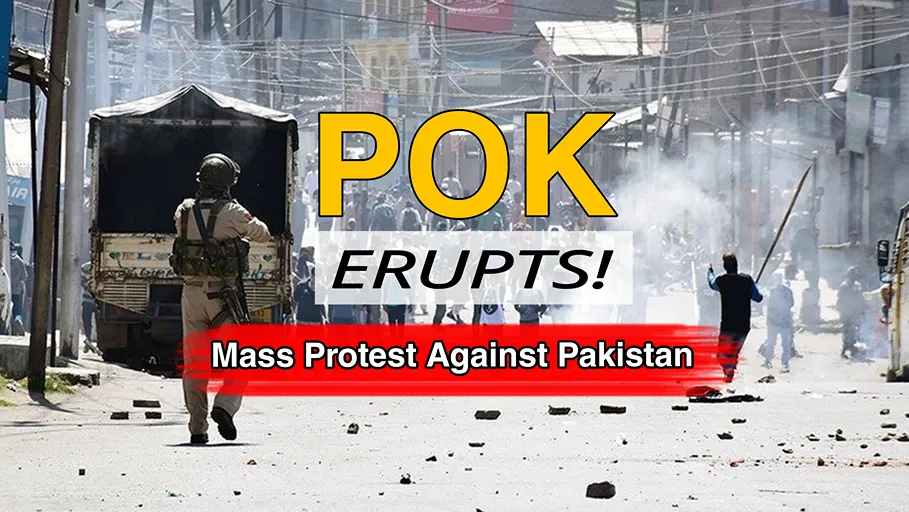
The current POK Crisis 2026 is largely driven by political instability, public dissatisfaction, and allegations of poor governance. Recent unrest has highlighted concerns over economic hardships, political representation, and the relationship between Islamabad and the local population.
Reports surrounding recent political developments indicate that protests and clashes have increased tensions between local groups and authorities. The situation has created questions about whether Pakistan’s existing administrative structure in the region can effectively address public demands.
Key Issues Behind the Current Situation
| Issue | Impact on POK |
|---|---|
| Political dissatisfaction | Growing criticism of government policies |
| Economic challenges | Public frustration over development and employment |
| Governance concerns | Questions over decision-making authority |
| Security measures | Increased tension between authorities and protesters |
| India-Pakistan rivalry | Greater geopolitical attention |
The POK Crisis 2026 has also intensified discussions about whether the people living in the region have sufficient political autonomy or whether major decisions continue to be influenced by Islamabad.
Understanding the History of POK
To understand the current crisis, it is necessary to examine the historical roots of the Kashmir dispute. In 1947, following the partition of British India, the princely state of Jammu and Kashmir became the centre of conflict between India and Pakistan. The accession of Jammu and Kashmir to India led to the first India-Pakistan war, after which the territory was divided by a ceasefire line, later known as the Line of Control (LoC). Pakistan currently administers areas commonly referred to as Azad Jammu and Kashmir and Gilgit-Baltistan, while India maintains that these territories are legally part of the former princely state of Jammu and Kashmir.
China also became involved in the broader Kashmir dispute after gaining control over Aksai Chin and receiving territory from Pakistan through the 1963 China-Pakistan boundary agreement, which India does not recognize. For decades, Kashmir has remained a major point of rivalry between India and Pakistan, involving wars, military tensions, diplomatic conflicts, and international debates.
Why Is the Public Going Against the Government?
The growing anger in POK is linked to several social, economic, and political factors.
Economic Difficulties
Many residents have expressed concerns about unemployment, inflation, limited industrial growth, and inadequate infrastructure development. Despite the region’s strategic importance, critics argue that economic opportunities have not matched public expectations. Young people in particular have raised concerns about job availability and migration opportunities.
Political Representation Concerns
A major issue behind the POK Crisis 2026 is the debate over political autonomy. Many local voices argue that decisions affecting the region should involve greater participation from residents. Critics claim that Islamabad maintains significant influence over political affairs, limiting local decision-making power.
Development Imbalance
The region has immense natural resources, including water resources and tourism potential. However, residents often argue that the benefits of these resources do not sufficiently reach local communities.
What Actions Are Being Taken by the Pakistan Government?
The Pakistan government has responded through administrative and security measures aimed at maintaining stability. Authorities have increased security deployment and attempted negotiations with protest groups. However, critics argue that excessive reliance on security responses may deepen public dissatisfaction instead of addressing the underlying causes of unrest. The government faces a difficult challenge:
- Restoring political confidence
- Addressing economic grievances
- Maintaining security
- Managing international criticism
The way Islamabad handles the situation could influence Pakistan’s broader Kashmir narrative internationally.
How Can POK Crisis 2026 Impact India’s Strategy?
From India’s perspective, instability in Pakistan-administered Kashmir strengthens its argument that Pakistan has failed to provide effective governance in the region. New Delhi has consistently maintained that POK is an integral part of India and has rejected Pakistan’s administrative control over the territory. However, reclaiming POK through military action remains a complex issue because the region involves:
- A nuclear-armed Pakistan
- China’s strategic interests
- International diplomatic pressure
- Risk of regional escalation
India’s current approach focuses heavily on diplomacy, infrastructure development, military preparedness, and strengthening its position internationally. The POK Crisis 2026 may provide India with additional diplomatic opportunities to highlight governance concerns in Pakistan-administered areas, but any territorial change would require major geopolitical shifts.
If India Reclaims POK, What Could Be China’s Reaction?
China is one of the biggest external factors in the Kashmir equation. Beijing has strong strategic interests in the region because of connectivity projects linked to the China-Pakistan Economic Corridor (CPEC). China also controls Aksai Chin and maintains close strategic ties with Pakistan. If India attempted to reclaim POK, China’s possible reactions could include:
| Possible Chinese Response | Explanation |
|---|---|
| Diplomatic opposition | China may criticize India internationally |
| Support for Pakistan | Beijing could strengthen political backing for Islamabad |
| Military pressure | China may increase activity near disputed borders |
| Economic measures | China could use trade and investment tools |
However, a direct military confrontation would carry significant risks for all three countries. China’s primary interest remains maintaining regional stability while protecting its strategic investments.
Human Rights Perspective on the POK Situation
Human rights concerns remain an important part of discussions surrounding Kashmir. International observers have repeatedly emphasized the importance of protecting:
- Freedom of expression
- Political participation
- Civil liberties
- Safety of civilians
The recent unrest has increased calls for transparent investigations, peaceful dialogue, and protection of civilian rights. Human rights organizations generally argue that political disputes should not result in restrictions on basic freedoms. For Pakistan, improving governance and addressing public concerns in POK could strengthen its international credibility. For India, highlighting governance issues in POK forms part of its diplomatic argument regarding Pakistan’s control over the territory.
Global Geopolitical Impact of POK Crisis 2026
The developments in POK have implications beyond India and Pakistan. A prolonged crisis could affect:
- South Asian security
- China’s regional strategy
- International diplomatic relations
- Border stability
Major powers including the United States and European countries are likely to encourage dialogue and stability because any escalation between India and Pakistan carries global security implications.
Conclusion
The POK Crisis 2026 represents another important chapter in the decades-old Kashmir dispute. While the immediate challenge for Pakistan is addressing public dissatisfaction and restoring political stability, India views developments in POK through a larger strategic and territorial framework.
The future of the region will depend on governance reforms, diplomatic negotiations, and the ability of all stakeholders to prevent escalation. For now, POK remains one of the most sensitive geopolitical flashpoints in Asia — where domestic politics, regional ambitions, and international interests continue to collide.
What is the POK Crisis 2026?
The POK Crisis 2026 refers to growing political tensions, public dissatisfaction, and governance challenges in Pakistan-administered Kashmir.
Why is POK important for India?
India considers POK part of the former state of Jammu and Kashmir and maintains that Pakistan’s control over the region is illegal.
Why is China interested in POK?
China has strategic interests because of regional connectivity projects and its broader security relationship with Pakistan.
Can India reclaim POK?
Any attempt to change territorial control would involve major military and diplomatic challenges due to Pakistan’s nuclear capability and China’s involvement.
What are the major concerns of people in POK?
Economic development, political representation, employment opportunities, and governance remain major concerns.
By Sahil Koul | National Affairs Analyst covering Indian politics, governance, public policy, and major developments shaping the nation.