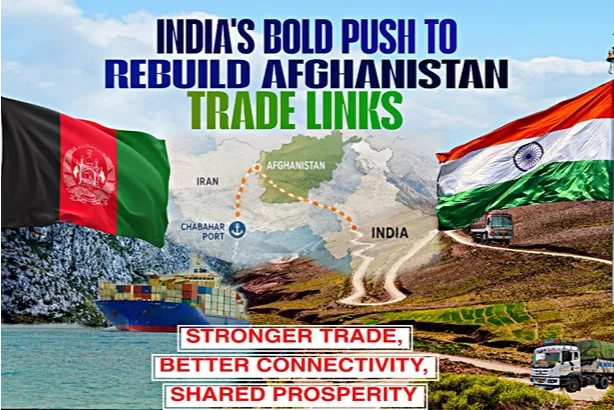

India and Afghanistan are giving their economic relationship renewed attention. The latest talks focus on practical issues that have long shaped the flow of goods and investment between the two countries. The India Afghanistan trade relationship has survived major political and logistical disruptions. Now, both sides are looking to improve customs cooperation, connectivity, banking, investment and sectoral trade.
The development is important for another reason. Afghanistan is not only a bilateral market for India. Its location gives it potential importance in India’s wider connectivity strategy toward Iran and Central Asia.
From Historical Links to a New Trade Push
India and Afghanistan share centuries of historical, cultural and commercial connections. Long before modern borders emerged, trade routes linked the Indian subcontinent with Afghanistan and Central Asia. Those historical links later evolved into a modern development partnership. India became a major contributor to Afghanistan’s reconstruction after 2001. Its engagement covered infrastructure, education, healthcare, capacity building and humanitarian assistance. The Ministry of External Affairs has described the relationship as being rooted in historical and civilisational ties.
Credits : Wikimedia commons
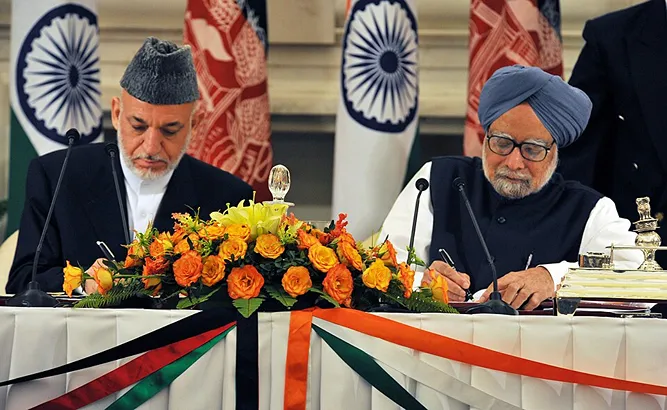
A major institutional milestone came in October 2011. India and Afghanistan established a Strategic Partnership Agreement. It covered political and security cooperation, trade and economic cooperation, capacity development, education and social and cultural relations. The agreement also reflected a wider Indian objective. India wanted Afghanistan to become more integrated into the regional economy. It also supported Afghanistan’s reconstruction and encouraged greater investment and commercial engagement.
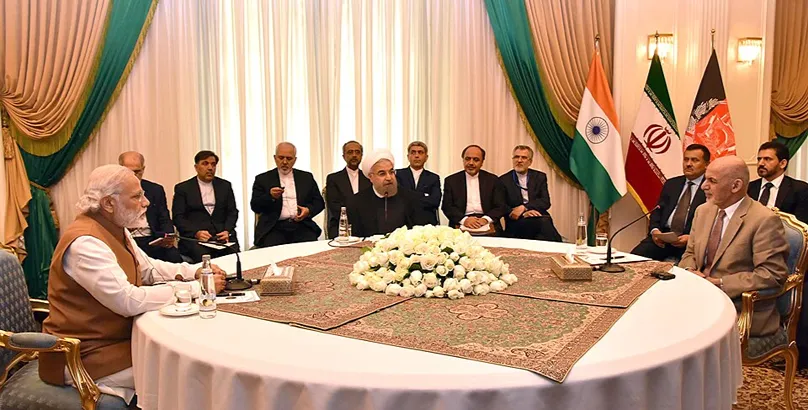
Trade and connectivity were therefore closely connected to the broader relationship. That became particularly important because Afghanistan is landlocked. Its economic prospects depend heavily on access to reliable external transport corridors. India’s engagement with Chabahar Port in Iran emerged from this challenge. The India-Iran-Afghanistan trilateral Chabahar agreement created a framework for transport and transit cooperation. It was intended to provide Afghanistan with access to the sea while strengthening regional trade connectivity. The relationship later faced significant disruption after the Taliban returned to power in August 2021.
Credits : Wikimedia commons
Political uncertainty, security concerns and transportation constraints have affected the pace of economic engagement between India and Afghanistan. Despite these challenges, bilateral trade has remained active. In FY2024–25, India-Afghanistan trade reached approximately US$1.0087 billion, with Afghanistan’s exports to India at around US$689.8 million and India’s exports to Afghanistan at nearly US$318.9 million. The figures indicate that commercial ties have continued despite broader regional disruptions. The current focus is now shifting toward improving connectivity, easing trade procedures and making bilateral commerce more efficient.
India Afghanistan Trade Gets a Fresh Push
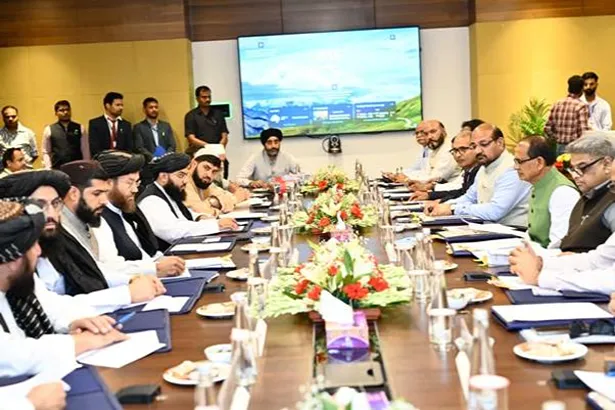
The latest step came on September 1, 2026, when the India-Afghanistan Joint Working Group on Trade, Commerce and Investment held a virtual meeting. Officials from commerce, industry, customs, regulatory authorities and diplomatic missions discussed measures to strengthen bilateral trade and economic cooperation. The agenda covered customs cooperation, trader visas, banking and financial services, pharmaceutical and agricultural trade, energy, investment, tariff concessions, cargo connectivity and port-related issues.
Both sides also agreed to improve customs and data sharing, regulatory coordination, trade connectivity and business-to-business engagement. These measures target some of the practical barriers facing bilateral commerce. Faster customs procedures can reduce delays, while better data sharing can make cross-border trade more predictable. Improved banking arrangements could also make payments easier for businesses, while trader visas may encourage greater direct engagement between companies.
Credits : PIB
The renewed economic engagement also follows a July 2026 bilateral meeting focused on agricultural cooperation, where India offered support in seeds, research, irrigation, technology and capacity building. Together, these engagements point to renewed institutional attention on economic ties. However, the latest meeting should not be viewed as a complete reset. Instead, it represents a practical effort to strengthen existing commercial channels and create conditions for greater trade and investment.
Why Afghanistan Matters to India’s Regional Strategy
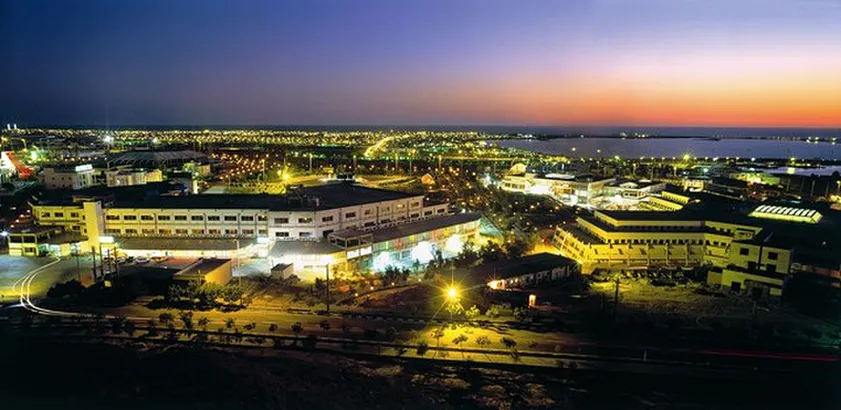
Afghanistan’s importance to India goes beyond the value of bilateral trade. Its geography gives it a strategic position between South Asia, Iran and Central Asia. For India, this creates both an opportunity and a challenge. India does not have direct land access to Afghanistan or Central Asia through Pakistan. Consequently, alternative connectivity routes have long been important to New Delhi’s regional economic strategy. This is where Chabahar becomes significant.
Credits : Wikimedia commons
The Chabahar framework was designed to give Afghanistan an alternative route to the sea. It also creates a potential pathway for India toward markets in Afghanistan and Central Asia. India has repeatedly highlighted Chabahar as part of its broader regional connectivity approach. In its engagement with Central Asian countries, India has described Chabahar as a potential link between the markets of Central and South Asia. Therefore, stronger India-Afghanistan trade can support a larger strategic objective.
Indian companies can potentially access Afghan demand in areas such as pharmaceuticals, agriculture, healthcare and consumer goods. Afghanistan, meanwhile, has products such as dry fruits, agricultural commodities and other goods that have established markets in India. The relationship can also create opportunities for investment. Agriculture is particularly relevant because both sides have discussed agricultural trade and regulatory cooperation. Pharmaceuticals are another area where Indian manufacturing capabilities could have commercial significance. However, geography remains the central challenge.
Goods still need to move through complex regional routes. Transport costs, customs procedures and political uncertainty can affect commercial viability. This means connectivity is not simply an infrastructure issue. It is a trade competitiveness issue. If transport becomes cheaper and more predictable, more companies can participate. If customs procedures become faster, smaller businesses can enter the market. If banking channels become more reliable, transactions become easier. The broader objective is therefore clear. India is not merely seeking to increase bilateral trade figures. It is also trying to strengthen the infrastructure and institutions that could make regional trade more sustainable.
Can India’s Bold Trade Push Deliver?
The latest initiatives create an opportunity, but implementation will determine their success. Several challenges remain. The first is connectivity. Afghanistan’s landlocked geography makes it dependent on transit routes through neighbouring countries. Alternative corridors can reduce vulnerability, but they must also be commercially competitive. The second challenge is financial connectivity. Businesses need reliable mechanisms for payments, settlements and financial transactions. Without these, even strong demand may not translate into higher trade.
The third is regulatory coordination. Pharmaceutical and agricultural trade requires certification, quality standards and customs clearance. Differences in procedures can create delays and raise costs. The fourth challenge is investment confidence. Afghanistan has potential in agriculture, mining, energy, healthcare and infrastructure. Yet investors will consider security conditions, regulations, infrastructure and financial risks before making long-term commitments. That means trade and investment must advance together.
Greater business-to-business engagement could help identify commercially viable opportunities. Government-level mechanisms can then address the regulatory and logistical barriers that businesses face. There is also a wider geopolitical calculation. India has maintained engagement with Afghanistan despite the difficult political environment that followed 2021. Economic cooperation provides a channel for practical engagement without automatically implying a wider political realignment. That distinction is important.
Trade discussions should therefore be viewed primarily through the lens of economic and connectivity interests, rather than as evidence of a sweeping diplomatic shift. If customs systems improve, traders gain easier access and connectivity becomes more reliable, bilateral commerce could gradually expand. That could also strengthen India’s position in Central Asia. The opportunity is larger than the current trade value suggests. Afghanistan could become a more useful commercial link between South Asia and Central Asian markets. Chabahar could support that connection by providing an alternative maritime gateway. However, none of this will happen automatically.
The latest Joint Working Group meeting is only one step in a longer process. Its significance will ultimately be measured by what happens next: whether customs cooperation improves, whether banking channels become more functional, whether cargo connectivity becomes more efficient and whether businesses actually increase their participation. For India, Afghanistan is therefore becoming relevant again not simply as a neighbouring geopolitical issue, but as part of a broader trade and connectivity strategy. The bold push is underway. The bigger question is whether it can turn renewed official engagement into durable commercial links.
FAQs
Why is Afghanistan important to India’s strategy?
Afghanistan’s location gives India potential access to wider markets in Central Asia. Its connectivity with Iran and Chabahar also makes it relevant to India’s regional trade strategy.
What was discussed at the September 2026 meeting?
The Joint Working Group discussed customs cooperation, trader visas, banking, pharmaceuticals, agriculture, energy, investment, tariff concessions, cargo connectivity and port-related issues.
How much is India-Afghanistan bilateral trade?
Bilateral trade reached approximately US$1.0087 billion in FY2024–25, according to figures reported from India’s Ministry of Commerce and Industry.
What role does Chabahar play?
Chabahar provides a potential alternative access route for landlocked Afghanistan and can support wider connectivity between India, Afghanistan and Central Asia.
When did India and Afghanistan establish their Strategic Partnership?
India and Afghanistan established their Strategic Partnership Agreement in October 2011. It covers political, security, economic, trade, development, educational and cultural cooperation.