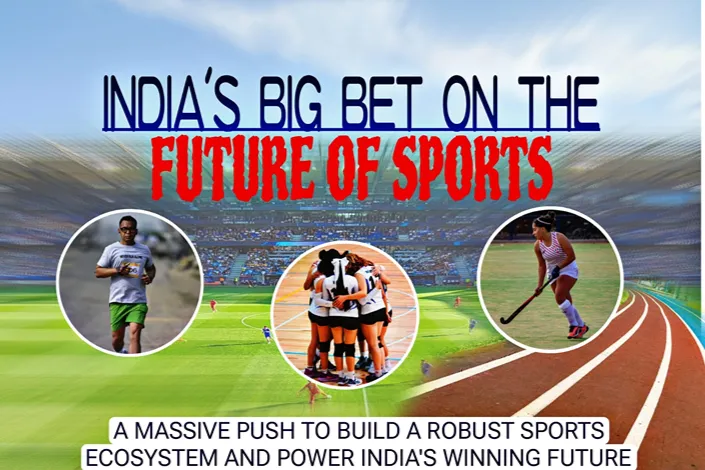

For decades, Indian athletes have often faced a familiar problem: talent existed, but the system around it was uneven. A promising athlete could struggle to find quality coaching, proper equipment or regular competition. In some cases, even existing facilities could not be fully used because supporting staff and resources were missing. Now, the Centre is trying to address that gap through a much larger investment. Sports Minister Dr. Mansukh Mandaviya said the government has sanctioned ₹36000 crore to build a stronger sports ecosystem and infrastructure nationwide.
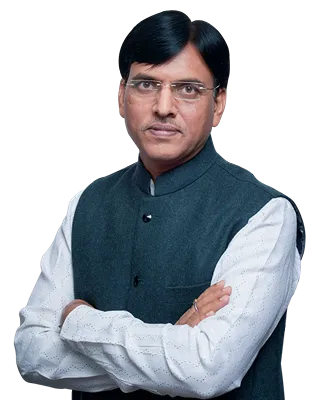
Credit: Wikimedia Commons
The figure refers to the government’s expanded sports push under the revamped Khelo India framework. The Union Cabinet approved a combined ₹36,441 crore for Khelo India and enhanced assistance to National Sports Federations. The funding covers 2026–27 to 2030–31. That distinction matters because the investment is not meant only for stadium construction. Instead, it is being positioned as a broader athlete-development system. The government wants stronger talent identification, coaching, sports science, competitions and high-performance support.
From Athlete Struggles to a Complete Sporting Pipeline
The biggest question is how the ₹36000 crore investment will change an athlete’s journey. India already has a substantial sports network. As of July 2026, 1,067 Khelo India Centres had been established. Another 267 academies were being supported. Also, 349 sports infrastructure projects had been approved. However, building a facility has never been the entire solution. A government assessment had earlier highlighted an important problem. Several sports facilities were not being fully utilised because they lacked coaches, physiotherapists, equipment and other support services. Recurring funding was also identified as a challenge. That is where the new approach becomes important.
The revamped programme is designed to connect talent identification, training, competition and high-performance preparation. It also places greater emphasis on coaches, support staff, sports technology and infrastructure. For athletes, that could mean fewer breaks in their development. A young player could be identified through school or district-level competition. That athlete could then receive structured coaching and access to better facilities. Later, competition exposure could prepare the athlete for national and international events.
Khelo India Dialogue and the Bigger National Strategy
The Khelo India Dialogue adds another dimension to the investment. The programme is being used to bring young athletes and the wider sporting community into conversations about India’s sporting future. On August 27, Prime Minister Narendra Modi addressed athletes during the Khelo India Dialogue. He stressed that sport should become part of everyday life rather than remaining only a school activity. That message fits into a broader strategy.
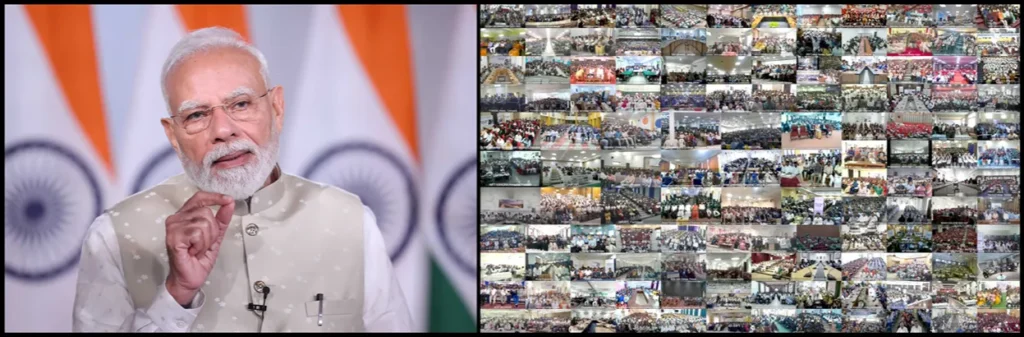
Credit: PIB
The government increasingly views sports as a tool for youth development, social participation and national development. The financial expansion also comes after the launch of the Khelo Bharat Niti 2025, which seeks to build a more inclusive and performance-driven sports ecosystem. The policy specifically addresses grassroots infrastructure and early talent identification. Therefore, the ₹36000 crore investment should be viewed as one part of a longer policy shift. The goal is gradually moving from simply encouraging participation towards building a sustainable pathway to elite sport.
What Could India’s Sports Infrastructure Look Like Next?
The real transformation will be visible if infrastructure becomes more connected and usable. Today, India’s sports facilities range from local grounds and Khelo India Centres to specialised academies and high-performance centres. The next phase could create stronger links between these levels. A school athlete could move into a district centre. A promising performer could then reach a specialised academy. Eventually, the best athletes could enter national high-performance programmes. Sports science could support this progression through performance analysis, injury prevention and rehabilitation.
The importance of this approach can already be seen in new athlete-focused facilities. In February 2026, facilities were inaugurated at the National Institute of Sports in Patiala. These included a centralised kitchen and a sports science and conditioning centre. The latter supports performance analysis, rehabilitation and recovery. This illustrates an important point. The future of Indian sports infrastructure cannot be measured only in stadiums and playing fields. It must also include nutrition, medical care, recovery, sports science, qualified coaches and technology. If the ₹36000 crore programme delivers across these areas, the athlete’s experience could change considerably.
Why This Matters Beyond India’s Medal Count
India’s sporting ambitions also have a wider international dimension. The government has spoken about positioning India among the world’s leading sporting nations by 2036. Mandaviya has previously linked infrastructure development with the ambition of reaching the top 10 sporting nations by that period. That makes the current investment strategically important. A larger talent pool could increase India’s competitiveness across more Olympic disciplines.
Prime Minister Modi also highlighted another challenge on August 27. India needs to participate in more Olympic sports if it wants to substantially increase its medal potential. That is significant because India’s sporting strength remains concentrated in selected disciplines. A wider ecosystem could therefore help the country explore sports where it has traditionally had limited participation. There could also be economic consequences.
Better facilities can create demand for sports equipment, technology, coaching and sports science. International training partnerships could expand as India’s sporting market grows. Furthermore, successful athletes can strengthen India’s soft power. Major sporting performances create global visibility. They can also reinforce a country’s image as a confident and increasingly capable power.
The Money Is Only the Beginning
The ₹36000 crore investment gives India an opportunity to address problems that have affected athletes for years. However, money alone will not create champions. The real test will be whether facilities remain functional, coaches are available and athletes receive support throughout their careers. Talent identification must also reach schools, villages, tribal communities and smaller cities. Most importantly, athletes should not have to stop developing because they cannot afford equipment, nutrition or competition travel.
If the new system connects grassroots discovery with scientific training and international exposure, India’s sports landscape could change significantly. The strongest outcome would not simply be more stadiums. It would be a system where a talented child can be identified early, trained properly, supported financially and eventually prepared for the global stage. That is ultimately where India’s ₹36000 crore sports bet will be judged.
FAQs
What is the ₹36000 crore sports investment?
The ₹36000 crore figure refers to the government’s expanded sports investment. The approved combined outlay is ₹36,441 crore for 2026–27 to 2030–31.
How can the ₹36000 crore investment help athletes?
It can strengthen coaching, infrastructure, equipment, competition exposure, sports science and broader athlete support.
What problems faced Indian athletes earlier?
Athletes could face gaps in coaching, equipment, nutrition, competition exposure and sports-science support. Some facilities also lacked adequate support staff and recurring funding.
What is the role of Khelo India Dialogue?
Khelo India Dialogue provides a platform for discussions involving young people and athletes. It also promotes a broader sporting culture and India’s long-term sports ambitions.
Will the ₹36000 crore investment guarantee more Olympic medals?
No. It can strengthen the development system, but medal success will depend on implementation, talent identification, coaching and long-term athlete preparation.