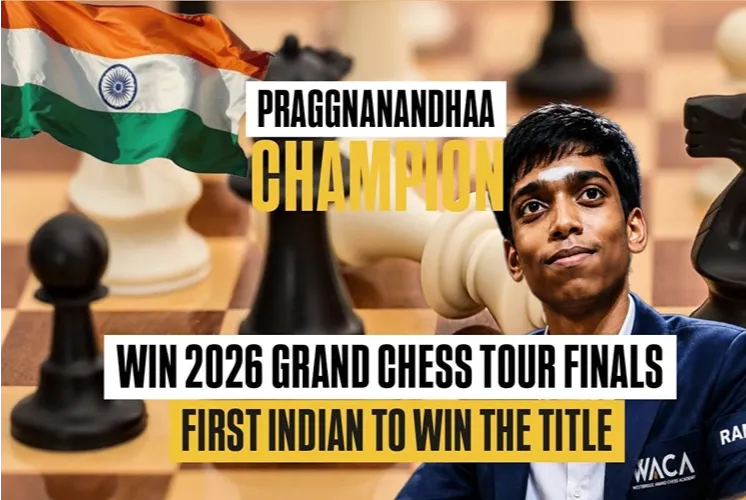

R Praggnanandhaa has added one of the biggest titles of his young career to his growing list of achievements, becoming the first Indian to win the Grand Chess Tour Finals. The 21-year-old Indian Grandmaster produced a remarkable comeback against Fabiano Caruana in the 2026 final, turning a six-point deficit into a 15-13 victory and securing the prestigious title along with a $200,000 prize.
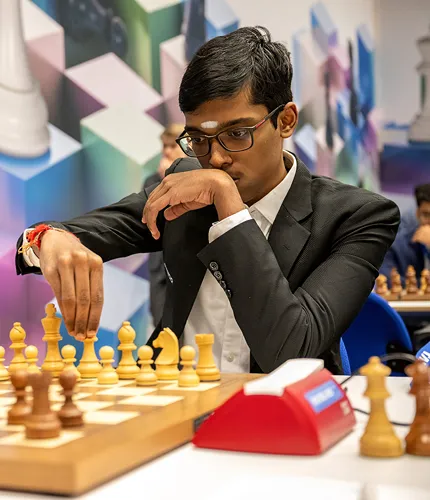
Photo: Frans Peeters/Wikimedia Commons. Licensed under CC BY-SA 2.0
The victory is another major chapter in a chess journey that began when Praggnanandhaa was still a child in Chennai. From winning world youth titles and becoming one of the youngest Grandmasters in history to defeating Magnus Carlsen and reaching the World Cup final, his career has been defined by rapid progress. The Grand Chess Tour triumph, however, carries a different weight because it came against one of the world’s established elite players in a high-pressure final.
From a Young Chess Talent to Grandmaster
Praggnanandhaa’s relationship with chess began at a very young age in Chennai. His natural ability quickly became evident, and he began making his mark in international junior competitions while still a child. In 2013, he won the World Youth Chess Championship in the Under-8 category, giving an early indication that he could compete successfully beyond India’s domestic chess circuit.
He followed that success with another world youth title in 2015, winning the Under-10 category. By then, Praggnanandhaa was no longer simply another talented junior. His rapid improvement was being closely followed in the chess world, particularly because of how quickly he was progressing through the international title system.
In 2016, he became an International Master at 10 years, 10 months and 19 days, placing him among the youngest players ever to achieve the title. Just two years later, he completed an even bigger step by becoming a Grandmaster at 12 years, 10 months and 13 days. At the time, he was the second-youngest player ever to earn the Grandmaster title, behind Sergey Karjakin.
- Kanpur Training Aircraft Crash: What It Reveals About India’s Pilot Training Safety
- Undersea Cables: The Silent Battlefield of the Next Digital War
- Census 2027: The Powerful Count That Could Change India
- India-EU CBAM: 5 Critical Risks and Trade Safeguards
- Semicon India 2.0: Can India Become a Chip Powerhouse?
Building a Career Through Major Wins
Praggnanandhaa continued to collect important titles as he moved beyond junior chess. His 2019 World Youth Championship Under-18 title was another indication of his consistency at the highest level of youth competition. In 2022, he added the Asian Continental Championship to his resume, giving him an important senior title and further establishing himself as one of India’s leading young players.
His rise became even more visible in 2022 because of his encounters with Magnus Carlsen. Praggnanandhaa defeated the then-world champion in rapid chess, including a memorable victory at the Airthings Masters. He also produced another notable win over Carlsen at the FTX Crypto Cup. These were individual game and match victories rather than tournament titles won from Carlsen, but they carried enormous significance because Carlsen had been the dominant force in elite chess for years.
For Praggnanandhaa, those results offered more than publicity. They showed that he could remain composed against opponents with much greater experience and reputations built over decades. His ability to challenge Carlsen also helped shift the perception around him. He was increasingly being seen not just as a promising teenager, but as a player capable of troubling the very best.
Praggnanandhaa’s Major Titles
| Year | Tournament / Title | Achievement |
|---|---|---|
| 2013 | World Youth Championship U8 | Champion |
| 2015 | World Youth Championship U10 | Champion |
| 2019 | World Youth Championship U18 | Champion |
| 2022 | Asian Continental Championship | Champion |
| 2026 | Grand Chess Tour Finals | Champion |
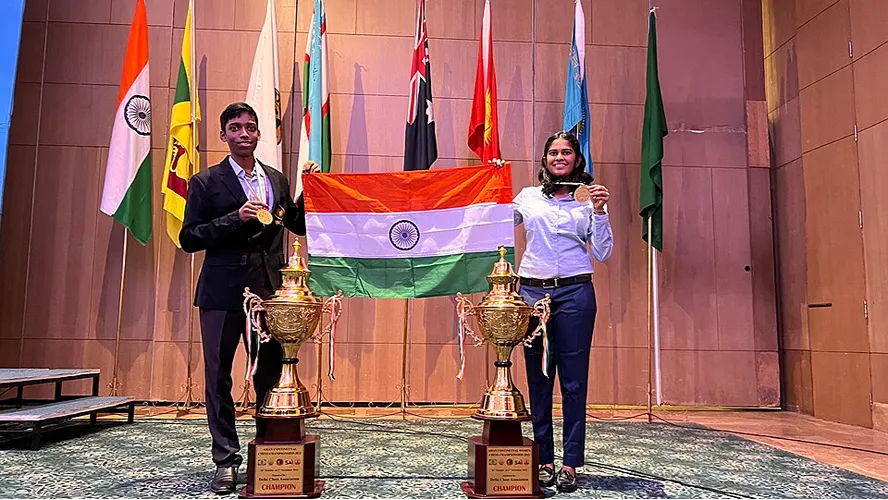
Photo: NOVKILOSIERRA/Wikimedia Commons
The World Cup Final and Candidates Breakthrough
The biggest classical breakthrough of Praggnanandhaa’s career before 2026 came at the 2023 FIDE World Cup. He produced a series of strong performances against some of the world’s leading players and reached the final, where he faced Carlsen once again.
Although Carlsen won the final, Praggnanandhaa’s run was historic. He became the youngest player to reach a World Cup final, and the performance demonstrated that his success was not limited to rapid or online chess. He could also navigate the long, demanding classical format of a major knockout tournament.
The World Cup result also helped Praggnanandhaa qualify for the 2024 Candidates Tournament, putting him into one of the most important competitions in the chess calendar. The Candidates brings together the world’s strongest challengers for the World Championship, meaning his participation represented another step into the highest level of professional chess.
His career was now moving beyond the question of whether he could become a great player someday. The focus was increasingly on whether he could consistently compete for major titles against established super-grandmasters. That distinction is important because elite chess is not built around one spectacular result. It requires the ability to reproduce high-level performances across different formats, opponents and tournament conditions.
Praggnanandhaa and the Rise of Indian Chess
Praggnanandhaa’s rise has coincided with an extraordinary period for Indian chess. For many years, Viswanathan Anand was India’s dominant figure on the international stage and the player most closely associated with the country’s chess ambitions. The situation has changed dramatically with the emergence of a deeper generation of young Indian grandmasters.
Alongside Praggnanandhaa, players such as Gukesh, Arjun Erigaisi, Vidit Gujrathi and Nihal Sarin have helped make India a much stronger presence in elite international chess. Their achievements have created a new competitive environment in which Indian players are no longer simply trying to break into the world’s top tournaments. They are increasingly arriving with realistic ambitions of winning them.
That makes Praggnanandhaa’s latest achievement particularly significant. His 2026 Grand Chess Tour victory means that India now has another young player with a major elite title to his name. More importantly, he has achieved it in a tournament involving some of the strongest names in world chess.
A Stunning Comeback Against Caruana
The 2026 Grand Chess Tour Finals presented Praggnanandhaa with a completely different challenge from his earlier breakthrough victories. He faced Fabiano Caruana, one of the most accomplished players of his generation, in the championship match. Caruana entered the final day with a six-point advantage, leaving Praggnanandhaa with a substantial deficit to overcome.
Instead of allowing the gap to dictate the match, Praggnanandhaa produced his strongest response in the rapid section. He won both rapid games, dramatically changing the balance of the final and moving ahead of Caruana. The comeback was important not only for the points but also for the momentum it created going into the faster games.
The blitz portion then became a test of whether Praggnanandhaa could hold his nerve. The two players finished that part of the contest level, meaning Praggnanandhaa retained the advantage he had built earlier in the day. He eventually secured a 15-13 overall victory, completing the comeback and becoming the champion.
The manner of the win makes the title particularly memorable. Praggnanandhaa did not simply lead from the opening game and control the final. He had to recover from a significant disadvantage against one of the world’s strongest players and then protect his lead when the pressure was at its highest. That combination of fighting spirit and composure is an important part of what makes the victory stand out.
Why the Grand Chess Tour Title Matters
The biggest distinction is simple: Praggnanandhaa is the first Indian to win the Grand Chess Tour Finals. It gives him a title that sits alongside his junior world championships, Asian Continental Championship and his historic World Cup final appearance, while also marking another stage in his development as an elite player.
The $200,000 prize is also significant, but the bigger reward is the status that comes with winning a major event featuring established super-grandmasters. Beating Caruana in a direct final after falling six points behind shows that Praggnanandhaa can perform when the tournament is on the line and the margin for error is extremely small.
The victory also guarantees Praggnanandhaa a place in the 2027 Grand Chess Tour, with the top three finishers in the 2026 Finals earning direct qualification. Caruana and Wesley So also secured their places after their respective performances. For Praggnanandhaa, that means the next edition will offer a chance not only to return as a champion but also to test whether he can maintain the consistency that brought him the title.
At 21, there is still plenty of room for his career to develop. His journey has already moved through several remarkable stages: a world youth champion, a teenage Grandmaster, a player capable of beating Magnus Carlsen, a World Cup finalist, a Candidates participant and now a Grand Chess Tour Finals champion.
Who did Praggnanandhaa defeat in the 2026 Grand Chess Tour Finals?
Praggnanandhaa defeated Fabiano Caruana in the final, winning the match 15-13 after recovering from a six-point deficit.
How much did Praggnanandhaa win from the Grand Chess Tour Finals?
He earned a $200,000 prize for winning the 2026 Grand Chess Tour Finals.
When did Praggnanandhaa become a Grandmaster?
He became a Grandmaster in 2018 at the age of 12 years, 10 months and 13 days.
Has Praggnanandhaa beaten Magnus Carlsen?
Yes. Praggnanandhaa has defeated Carlsen in several rapid and online encounters. He also reached the 2023 World Cup final against Carlsen.
What is Praggnanandhaa’s next major opportunity?
His 2026 Grand Chess Tour victory gives him direct qualification for the 2027 Grand Chess Tour, where he will return as one of the leading players.