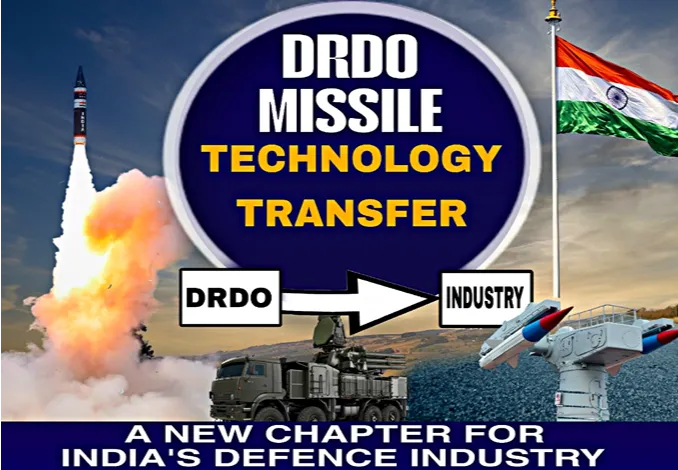

India is moving its DRDO missile ecosystem closer to large-scale industrial production. The decision could change how indigenous missile technologies move from laboratories to factories. Raksha Mantri Rajnath Singh has approved the transfer of technology for all conventional missile systems developed by the Defence Research and Development Organisation (DRDO). Indian defence companies that meet the required criteria can take up their domestic production, subject to applicable qualifications, certifications and regulatory requirements.
Credit: Wikimedia Commons
The decision matters because developing a missile is only one part of defence self-reliance. India must also build manufacturing capacity, resilient supply chains and specialised industrial expertise. Therefore, the move targets a crucial gap between indigenous technology development and production at scale.
What Has Been Approved and What Does ToT Mean?
The approval covers DRDO-developed technologies for all conventional missile systems, which will be transferred to Indian defence companies for domestic production. The move is intended to accelerate the transition from missile development to industrial manufacturing while expanding private-sector participation in the defence ecosystem. However, technology transfer does not mean immediate mass production. Under DRDO’s Transfer of Technology (ToT) framework, companies must complete the required technical assessments and meet applicable licensing, certification and regulatory requirements before production can begin.
The process follows the development and validation of a missile system by DRDO. Suitable industrial partners can then receive relevant technical documentation and manufacturing know-how through licensing arrangements. They must also establish production facilities, develop supply chains and complete the required testing and quality checks. Therefore, the decision is better understood as a structured pathway from DRDO research to industrial-scale manufacturing, rather than a simple transfer of missile designs.
Why Indian Industry and MSMEs Matter
The biggest change could be the expanded role of Indian industry in missile manufacturing. Large defence companies can provide production capacity and system-integration expertise. Meanwhile, Micro, Small and Medium Enterprises (MSMEs) can supply specialised components and subsystems. Start-ups can also contribute software, sensors, electronics and advanced manufacturing capabilities. Together, these companies can create a broader industrial network around the DRDO missile ecosystem. A wider supplier base can also improve production resilience and reduce dependence on a limited number of manufacturers.
The government has already been expanding DRDO’s engagement with industry. By March 2026, more than 2,200 industries were part of DRDO’s production network, while 2,180 technology-transfer agreements had been signed. This distinction is important because the two figures represent different aspects of industry participation. The government has also encouraged greater industry access to DRDO testing facilities and intellectual property.
From Missile Development to Factory Production
Moving a missile from development to large-scale manufacturing involves several stages:
| Stage | What happens | Main challenge |
|---|---|---|
| Development | DRDO develops and validates the system | Technical maturity |
| Technology transfer | Technology moves to an industrial partner | Technology absorption |
| Production setup | Companies establish manufacturing lines | Investment and infrastructure |
| Qualification | Systems undergo required checks and certification | Reliability and compliance |
| Scale-up | Production expands for military requirements | Capacity and supply chains |
This process shows why the latest approval is strategically significant. India has developed several advanced missile capabilities, but sustained production requires industrial depth. The Long Range Land Attack Cruise Missile (LRLACM) provides one example of this growing cooperation. Its subsystems were developed by DRDO laboratories and Indian industry partners. The missile successfully completed a flight test in June 2026.
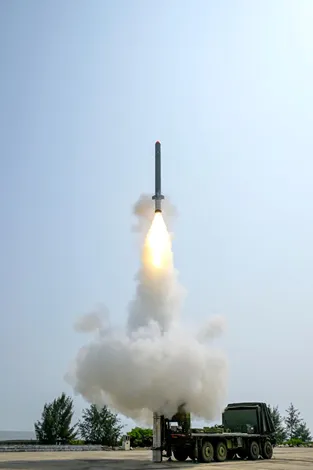
Credit: PIB
The Tactical Advanced Range Augmentation (TARA) glide weapon programme also demonstrates the growing role of Indian industry in defence development and production. Developed by DRDO’s Research Centre Imarat and other laboratories with Development-cum-Production Partners and Indian industries, TARA had already entered production activity before its maiden flight trial in May 2026. These developments show that industry participation is already expanding across indigenous weapons programmes. The latest ToT decision could now extend this model across a wider range of conventional missile systems.
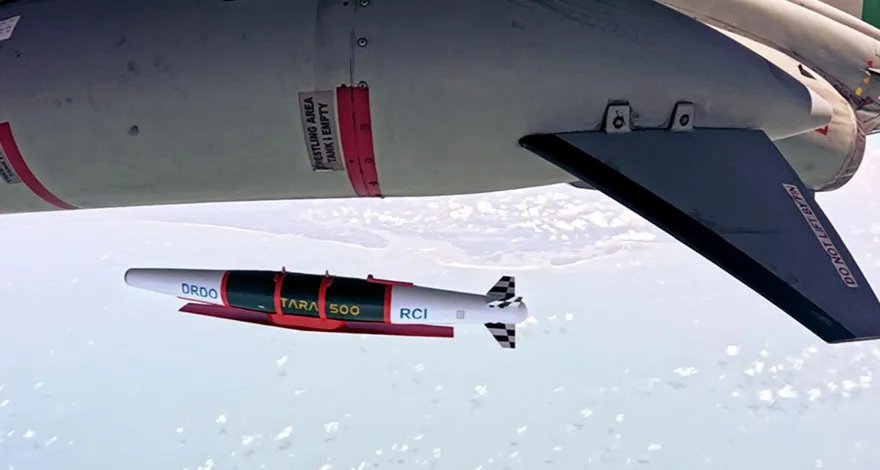
Credit: PIB
What Challenges Remain for India?
The biggest challenge will be scaling production. A missile can complete development trials successfully, yet high-volume manufacturing requires consistent quality, reliable suppliers and specialised industrial capabilities. Technology absorption will be equally important. Companies must develop the skills, infrastructure and manufacturing processes needed to produce complex systems while maintaining strict performance standards. At the same time, resilient domestic supply chains will be needed to reduce exposure to disruptions involving critical components.
Cost and procurement certainty will also influence the outcome. Indian companies will need sustained orders to justify investment in production facilities while keeping systems competitively priced. These challenges give the decision wider geopolitical significance. A stronger DRDO missile manufacturing base could improve India’s ability to replenish inventories during prolonged security crises. It could also reduce dependence on vulnerable foreign supply chains.
Greater production capacity could support India’s defence-export ambitions as well. However, exports will depend on government approvals, international regulations, customer requirements and the competitiveness of Indian systems. Ultimately, the success of the move will depend on how effectively India converts DRDO research into reliable, scalable and resilient industrial capacity.
Why the DRDO Missile Decision Matters Now
The latest DRDO missile technology-transfer decision could mark a shift in how India approaches defence production. The focus is moving beyond developing indigenous weapons toward building the industrial capacity needed to manufacture them consistently and at scale. The decision could also strengthen the division between DRDO’s research role and industry’s manufacturing role. Once mature technologies are absorbed by companies, greater responsibility can be placed on industry for production, supply chains and capacity expansion. DRDO, meanwhile, can devote more resources to next-generation capabilities in areas such as guidance, propulsion and advanced sensors.
The strategic importance extends beyond manufacturing. A broader domestic production base could give India greater flexibility during prolonged security situations. It could also improve the ability to replenish weapon stocks while reducing exposure to disruptions in overseas supply chains. However, the impact will depend on implementation. The companies receiving technology licences, the speed at which production facilities are established and the participation of MSMEs will be important indicators. Procurement orders will also determine whether transferred technologies move from limited production to sustained output.
Defence exports will provide another longer-term test. Greater manufacturing capacity could improve India’s ability to compete in international defence markets, although exports will remain subject to government approvals, international regulations and customer requirements. Ultimately, the significance of the DRDO missile decision lies in whether India can turn indigenous research into reliable and scalable industrial capacity. If that transition succeeds, it could strengthen domestic supply chains, improve defence preparedness and allow DRDO to focus more heavily on the next generation of military technologies.
What Happens Next for India’s Missile Industry?
The immediate focus will now shift from approval to implementation. The key questions will be which Indian companies receive technology licences, how quickly they meet technical and regulatory requirements, and whether production facilities can be established at scale. Companies will also need reliable supplier networks and specialised skills, while greater MSME participation could broaden the industrial base. Procurement will be equally important, as sustained orders can encourage investment in manufacturing capacity.
Existing programmes such as LRLACM and TARA will offer useful indicators of how effectively Indian companies can absorb advanced defence technologies. Over time, export performance could provide another measure of success, although government approvals, international regulations, pricing and customer requirements will remain important. Ultimately, the impact of the DRDO missile technology-transfer decision will be determined by how quickly transferred technologies move from licensing agreements to qualified, scalable and sustained production.
FAQs
What has the government approved for DRDO missile systems?
The Raksha Mantri has approved the transfer of technology for DRDO-developed conventional missile systems to Indian defence companies. The aim is to support domestic manufacturing and expand industry participation.
Does technology transfer mean immediate missile production?
No. Companies must complete technical assessments and meet applicable licensing, certification and regulatory requirements before production can begin.
How could the decision change DRDO’s role?
As mature technologies move to industry, companies can take greater responsibility for manufacturing and production expansion. This could allow DRDO to focus more on next-generation defence technologies.
How much technology has DRDO already transferred to industry?
By March 2026, DRDO had signed 2,180 technology-transfer agreements, while 134 companies had partnered with the organisation as Development-cum-Production Partners or Production Agencies.
What will determine the success of the missile technology transfer?
The key factors will include technology absorption, production capacity, skilled manpower, reliable supply chains and sustained procurement orders. MSME participation and future export opportunities will also be important indicators.