

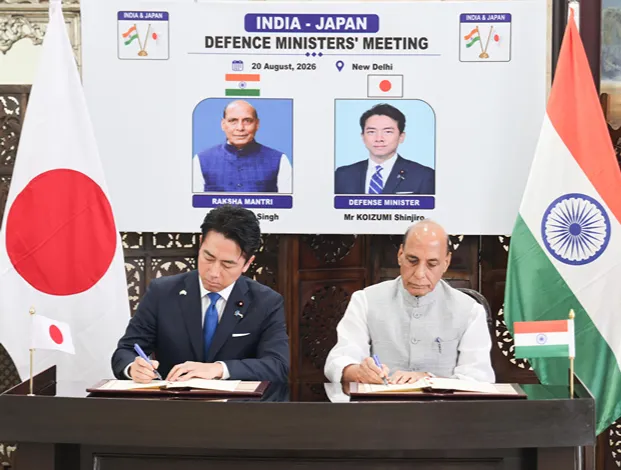
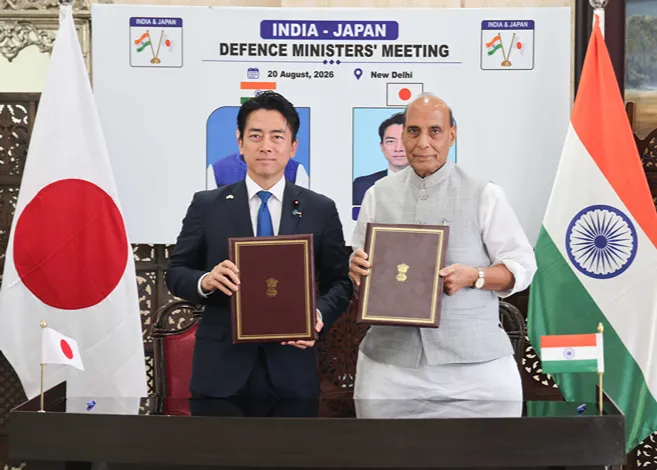
The Indo-Pacific is becoming a harder strategic environment to navigate. Now, India-Japan defence ties are moving from political alignment toward practical military cooperation. On August 20, 2026, India and Japan signed a new Maritime Security Cooperation arrangement. The agreement could significantly deepen cooperation between the Indian Navy and Japan Maritime Self-Defense Force.
Credit: PIB
The timing is important. Both countries are facing a region where sea lanes, surveillance and strategic access increasingly matter. For India, the Indian Ocean remains central to national security. For Japan, uninterrupted maritime trade is essential to its economic security. Therefore, closer defence coordination serves interests shared by both countries.
India-Japan Strategic Partnership to Maritime Security Cooperation
India and Japan established their Special Strategic and Global Partnership in 2014. Since then, their defence relationship has steadily expanded through military exercises, defence dialogues, technology cooperation and information-sharing. The institutional framework has also grown stronger. It now includes the 2+2 dialogue, equipment cooperation and the 2020 Reciprocal Provision of Supplies and Services Agreement, which created greater scope for logistical support during exercises and operations.
This cooperation has gradually moved beyond diplomatic consultations. During the May 2025 defence ministerial meeting, both sides agreed to deepen military cooperation and strengthen exercises. They also discussed protecting sea lines of communication across the Indo-Pacific. The shift became more significant with the August 20, 2026 maritime security agreement. India and Japan agreed to expand cooperation in Maritime Domain Awareness, information-sharing, search and rescue, humanitarian assistance and naval activities.
Credit: PIB
The agreement also provides for naval ship visits, joint exercises and personnel exchanges. In addition, access to ports, maintenance facilities and repair infrastructure could strengthen practical naval cooperation. Together, these measures show how India-Japan defence ties are evolving from a broad strategic partnership into a more operational security relationship. Better coordination could improve both countries’ ability to respond to maritime emergencies, regional crises and challenges affecting critical sea routes.
India-Japan Maritime Security and Defence Technology: The Next Phase
Japan and India share a strong dependence on secure maritime routes. Japan relies heavily on sea-based trade for energy and essential supplies, while India needs stable sea lanes for trade and energy security. As a result, freedom of navigation and maritime stability have become important areas of strategic cooperation. Both countries support international law and a free, open Indo-Pacific while opposing unilateral attempts to change the regional status quo.
The changing maritime environment has added urgency to this partnership. China’s growing naval presence across the Indo-Pacific has increased strategic pressure, particularly around the South China Sea and the wider Indian Ocean. However, India-Japan cooperation is not structured as a formal military alliance. Instead, stronger maritime awareness and coordination are being developed to improve regional resilience and support cooperation with other partners.
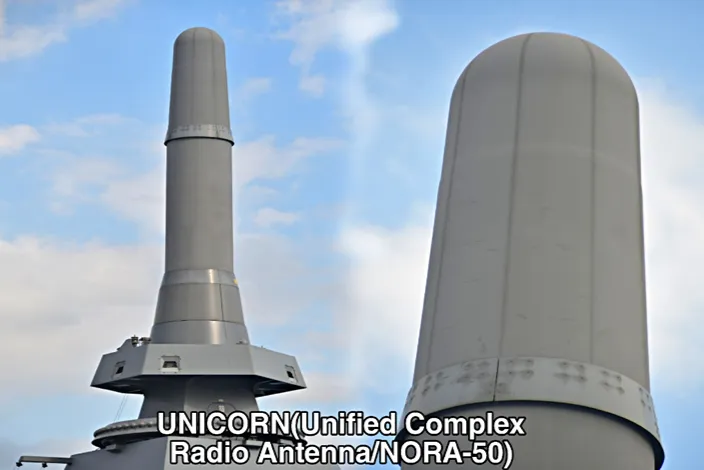
Technology is becoming another important pillar of this relationship. The UNICORN integrated communications antenna, also known as the NORA-50, marks the first defence equipment transfer between India and Japan. It could also open the door to wider cooperation in defence technology and manufacturing. Both countries are exploring naval shipbuilding and design cooperation as well. Japan offers advanced maritime engineering expertise, while India’s expanding defence industry provides manufacturing capacity and a large domestic market.
If these projects progress, cooperation could move beyond equipment transfers toward joint production and industrial partnerships. Reciprocal ship-repair facilities could also make naval cooperation more sustainable across longer distances. Together, maritime security and defence technology could give India-Japan defence ties a more practical foundation. The partnership would then combine strategic coordination with industrial and operational capabilities across the Indo-Pacific.
India-Japan From Joint Exercises to a Wider Indo-Pacific Role
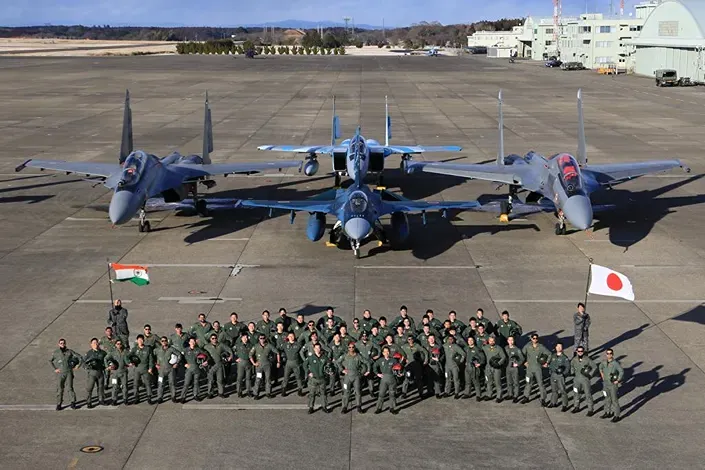
Military exercises have become an important part of India-Japan defence ties, helping both countries improve coordination without creating a formal military alliance. Their cooperation includes Dharma Guardian between their armies, JAIMEX between their navies and Veer Guardian between their air forces. The partnership has already produced meaningful results, with the first Veer Guardian exercise held in January 2023, marking an important milestone in India-Japan air-force cooperation. The upcoming Veer Guardian 26 exercise is particularly notable, as Japanese fighter aircraft are scheduled to visit India for the exercise for the first time. Both countries are also exploring the use of unmanned systems and greater flexibility for short-notice exercises.
Credit: PIB
These developments could improve interoperability while preserving India’s emphasis on strategic autonomy. Instead of forming a traditional alliance, India and Japan are building the ability to coordinate when their interests overlap. The implications extend beyond their bilateral relationship. Greater interoperability, maritime information-sharing and defence cooperation could contribute to a more distributed Indo-Pacific security network.
Regional partnerships could also become more important. India and Japan have already expanded cooperation with other countries, including Indonesia, with a trilateral naval exercise held in February 2026. Such cooperation could strengthen maritime awareness, diversify defence supply chains and create new opportunities for Southeast Asian partners. Over time, India-Japan defence ties could therefore become an important part of a broader regional security network.
India-Japan From Commitments to Capabilities: What Comes Next?
The latest announcements have strengthened India-Japan defence ties, but their long-term value will depend on implementation. A new working group is expected to coordinate cooperation in operations, intelligence, equipment, technology and the defence industry. This mechanism could help translate political commitments into practical capabilities. However, differences in procurement procedures, regulations and technology-transfer requirements could slow progress. Sustained political attention will therefore remain important.
The July 2026 Defence Policy Dialogue already reflected this broader approach. Both countries reviewed maritime cooperation, military exercises, defence technology, cyber security and space cooperation. The planned fourth 2+2 ministerial meeting could become another important milestone. Its outcome may indicate whether recent commitments are developing into longer-term defence capabilities.
Looking ahead, maritime security is likely to remain a central area of cooperation. Naval exercises, maritime information-sharing and shipbuilding could expand further. Repair and maintenance cooperation could also improve the practical reach of both navies.At the same time, defence technology and industrial cooperation could connect security objectives with economic interests. This would allow India and Japan to strengthen their capabilities while maintaining strategic autonomy.
Ultimately, India-Japan defence ties are moving beyond diplomatic symbolism. Their future strength will depend less on new announcements and more on whether existing agreements produce measurable cooperation in the field. If implementation remains consistent, the partnership could become an increasingly important pillar of the Indo-Pacific’s regional security architecture.
FAQs
Why are India-Japan defence ties becoming more important?
The Indo-Pacific is facing greater strategic uncertainty. Therefore, maritime security and secure sea lanes have become increasingly important for both countries
What did India and Japan agree on in August 2026?
They signed a Maritime Security Cooperation arrangement on August 20, 2026. It covers maritime awareness, information-sharing, naval cooperation, search and rescue, and disaster relief.
Are India and Japan becoming military allies?
No, The partnership remains based on strategic cooperation rather than a formal military alliance.
What defence exercises do India and Japan conduct?
Major exercises include Dharma Guardian, JAIMEX and Veer Guardian. Their scope is increasingly being expanded toward greater interoperability.
Could India and Japan jointly build naval equipment?
Potentially, yes. Both sides have agreed to explore naval shipbuilding and design cooperation