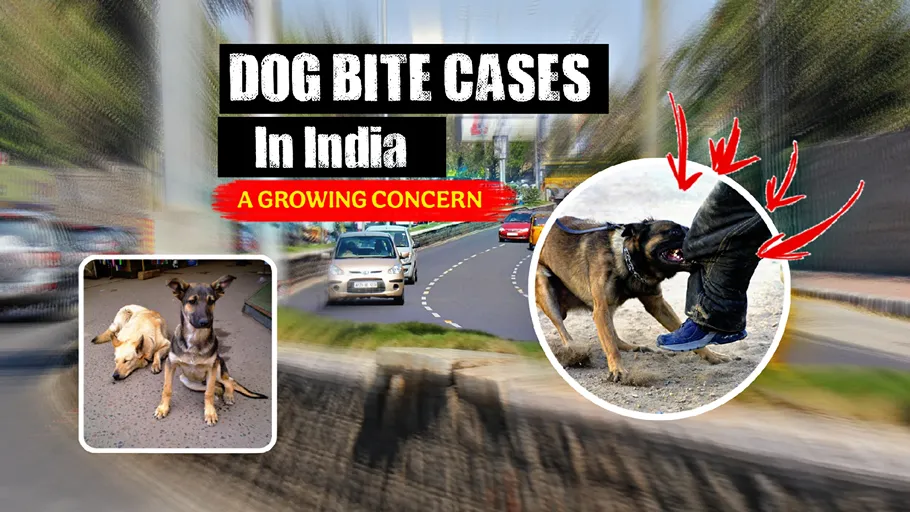

India’s Dog Bite Cases Reveal a Growing Public-Health Challenge
India’s dog bite cases are no longer a scattered municipal problem; they have become a national public-health and child-safety concern. India recorded 47,48,478 dog bite cases in 2025, according to NCDC data obtained through an RTI response, marking a significant increase over the previous year. The figure is particularly concerning because dog bites can create a potentially serious medical emergency when timely treatment is delayed. India’s dog-bite burden remains substantial, reinforcing the importance of prevention, vaccination and rapid post-exposure treatment. However, the 2025 dataset available from the cited source does not provide a verified national figure for children below 15 or suspected human rabies deaths, so those 2024 figures should not be presented as 2025 statistics.
This makes prevention, vaccination and timely post-exposure treatment essential to controlling dog bite cases across the country. The scale of the 2025 figures also highlights wider challenges involving rapid urbanisation, poor waste management, animal birth control and limited public awareness. Government surveillance data should therefore be viewed as more than a simple count of incidents. They provide an important indication of pressure on local public-health systems and underline the need for stronger coordination between municipal authorities, healthcare departments and animal-welfare agencies. The National Rabies Control Programme continues to emphasise prevention and timely medical intervention.
For families, the immediate concern is clear: a child playing outside, walking to school or moving through a residential area can encounter a frightened, territorial or unvaccinated dog. This makes dog bite cases an important child-safety issue as well as a medical concern. Parents and schools can help by teaching children not to tease, chase, corner or suddenly approach unfamiliar dogs. Children should also be encouraged to move away calmly rather than run toward or provoke an unfamiliar animal. Such awareness can reduce risky encounters and help families respond more responsibly when dogs and children share the same public spaces.
The policy challenge is equally clear: reduce dangerous encounters while ensuring that every bite victim receives rapid medical attention. Health officials provide treatment, municipalities manage public spaces, veterinary teams conduct vaccination and sterilisation programmes, while residents can report aggressive or sick animals before an incident becomes a tragedy. Better coordination among these groups is essential to reduce dog bite cases and protect communities. With 47,48,478 cases reported in 2025, the latest figure should strengthen the case for better surveillance, targeted vaccination, sterilisation programmes, waste management and public awareness rather than relying only on responses after attacks occur.
- India’s Wars and Border Conflicts: The Two-Front Challenge
- India vs China: 5 Turning Points That Changed the Himalayan Border Forever
- India vs Pakistan: 4 Wars That Changed the Power Balance Forever
- Pakistan Tanks Near Indian Border: Why Islamabad’s Latest Military Move Has Raised Fresh Security Concerns
Why Children Are Bearing a Heavy Share of Dog Bite Cases
The most worrying part of India’s dog bite cases is the continuing risk faced by children. The latest NCDC data show 47,48,478 dog bite cases across India in 2025, up sharply from 37,17,336 in 2024. However, a nationally consolidated 2025 figure specifically for victims below 15 years has not been identified in the latest NCDC data available, so the earlier child-specific figure should not be presented as a 2025 statistic. Children can be particularly vulnerable because they may not recognise warning behaviour, may run when frightened, and are physically less able to defend themselves during an attack. In severe incidents, bites can involve the face, neck or hands, increasing medical urgency and the possibility of long-term trauma.
Recent reports tracked by the National Rabies Control Programme have also included fatal attacks and rabies deaths involving children. This shows that dog bite cases are not limited to minor injuries and can create serious physical and emotional consequences for affected families. At the same time, it is important not to portray every stray dog as dangerous. Many community dogs are not aggressive, while indiscriminate removal is not a substitute for scientific population management. The real objective should be safer streets through vaccination, sterilisation, responsible waste disposal, reporting of aggressive animals and rapid medical response.
These measures can help reduce dog bite cases while supporting humane animal management. Schools and parents can also play an important role by teaching children not to tease, chase, corner or suddenly approach unfamiliar dogs, particularly animals protecting food or puppies. After a bite, families should immediately wash the wound thoroughly with soap and running water and seek medical assessment for rabies post-exposure prophylaxis. Therefore, dog bite cases involving children should be treated as both a public-health and community-safety issue.
Better data collection is also necessary because reported cases can differ between states and reporting systems. National figures should therefore be viewed as surveillance data rather than a perfect census of every incident. More accurate reporting can help authorities identify high-risk areas, improve vaccination and sterilisation programmes, and strengthen preventive measures. Ultimately, reducing dog bite cases requires cooperation between government agencies, municipalities, health workers, schools, communities and responsible animal-management teams.
Past Records Show the Burden Has Shifted Sharply
A comparison with earlier records shows that India’s dog bite cases have fluctuated sharply rather than following a simple upward trend. Government data recorded 72,77,523 reported cases in 2019, followed by 46,33,493 in 2020, 17,01,133 in 2021, 21,80,185 in 2022 and 30,43,339 in 2023. The unusually low 2021 figure should be viewed cautiously because the COVID-19 pandemic affected public movement, hospital visits and reporting patterns across the country. By 2025, India recorded 47,48,478 dog bite cases, according to NCDC data obtained through an RTI response, marking a substantial increase over the previous year. The figure represents a rise of more than 10 lakh cases compared with the 2024 total.
The 2025 national figure highlights how serious the situation has become across the country. Instead of relying only on the earlier annual records, the latest data provide a clearer picture of the continuing burden of dog bite incidents. Jammu and Kashmir also recorded a significant rise, with 1,12,695 cases in 2025, compared with 93,765 in 2024. Within the Union Territory, the Jammu division reported 71,981 cases in 2025, while the Kashmir division recorded 40,714. Jammu district remained particularly affected, while Srinagar recorded the highest number of incidents in the Kashmir division. These figures show that India’s dog bite cases continue to vary considerably from one region to another.
The regional differences mean India’s dog bite cases cannot be understood through a single national figure. Population density, municipal reporting systems, access to hospitals, waste management, street-dog populations and local animal birth control programmes can all influence reported numbers. The sharp rise to 47,48,478 cases in 2025 does not necessarily mean that every locality became equally more dangerous, but the national increase indicates that existing preventive measures have not completely solved the problem. The growing number of India’s dog bite cases also highlights the need to move beyond temporary responses after serious attacks. Health departments, municipal authorities, veterinary services and animal-welfare organisations need better coordination to identify vulnerable areas and respond more effectively.
Reliable local data can help officials identify high-risk areas, improve vaccination and sterilisation programmes, strengthen waste management and ensure that anti-rabies vaccines and medical treatment are available where exposure is highest. Better surveillance is therefore essential for reducing India’s dog bite cases over the long term. Tracking recurring hotspots can help authorities target vaccination campaigns, improve municipal planning and strengthen emergency preparedness.
The latest 2025 figures also demonstrate why consistent reporting is important when measuring whether interventions are actually working. More accurate data can help officials determine whether existing programmes are reducing exposure among vulnerable communities, particularly children and people living in high-risk neighbourhoods. The focus should ultimately shift from reacting to individual incidents toward continuous prevention, stronger local monitoring and faster access to medical care.
Past record
| Year | Reported dog bite cases |
|---|---|
| 2019 | 72,77,523 |
| 2020 | 46,33,493 |
| 2021 | 17,01,133 |
| 2022 | 21,80,185 |
| 2023 | 30,43,339 |
| 2025 | 47,48,478 |
Government Steps to Control Dog Bite Cases and Rabies
The government response combines human rabies prevention with scientific management of the stray-dog population. The Animal Birth Control Rules, 2023 replaced the earlier 2001 rules and provide a framework for sterilisation and immunisation of stray dogs. The Union government has stated that implementation largely rests with states and local bodies, making municipal capacity decisive. Under the National Rabies Control Programme, surveillance, anti-rabies clinics, reporting systems and post-exposure treatment are being strengthened. In 2025, India recorded 47,48,478 dog bite cases, according to NCDC data obtained through an RTI response, compared with 37,17,341 cases in 2024.
Government support for animal anti-rabies vaccination has also increased. Approved funds under the Assistance to State for Control of Animal Diseases rose from Rs 275.28 lakh in 2020-21 to Rs 1,423.41 lakh in 2024-25. These measures are important because controlling rabies requires vaccination of dogs alongside rapid medical treatment for people after exposure. However, dog bite cases will not fall sustainably through medical treatment alone. Municipalities must improve sterilisation coverage, vaccination tracking, garbage management and identification of high-risk areas. Communities also need effective complaint mechanisms so aggressive or sick animals can be assessed by trained teams rather than handled through panic or violence.
The government’s approach emphasises sterilisation and vaccination instead of indiscriminate removal, making coordinated implementation essential for reducing dog bite cases across vulnerable neighbourhoods. For families, awareness remains another important line of defence. Children should be taught safe behaviour around unfamiliar dogs, while anyone bitten should immediately wash the wound and seek medical care without waiting for symptoms. Reducing dog bite cases requires parents, schools and communities to understand how to avoid risky encounters and respond quickly when an incident occurs. Early action can significantly reduce the risk of serious complications and rabies.
The central lesson from dog bite cases is that prevention requires several systems to work together. If local bodies, health authorities, veterinary teams, schools and communities coordinate consistently, India can reduce serious attacks and rabies deaths. The scale of dog bite cases is concerning, but the figures also identify where intervention can make a measurable difference. Stronger neighbourhood-level prevention, better vaccination and sterilisation, improved waste management and public awareness can help balance humane animal management with public safety.
How many dog bite cases were reported in India in 2025?
India recorded 47,48,478 dog bite cases in 2025, according to data from the National Centre for Disease Control (NCDC) obtained through an RTI response.
HowHow many children were affected by dog bites in 2025?
A verified national figure for children below 15 years in 2025 is not currently available in the government sources I could confirm. The officially published figure available from the Ministry of Health and Family Welfare is 5,19,704 cases among children below 15 in 2024.
What is the government doing to control stray dogs?
The Animal Birth Control Rules, 2023 provide for the sterilisation and immunisation of stray dogs, while the National Rabies Control Programme focuses on rabies surveillance, vaccination and post-exposure treatment. The government collects dog-bite data from States and Union Territories through the National Rabies Control Programme and NCDC.
Can a dog bite cause rabies?
Yes. Rabies is preventable when appropriate post-exposure treatment is started promptly after exposure. Medical advice should be sought immediately after a suspected rabies exposure.
What should someone do after a dog bite?
The wound should be washed thoroughly with soap and running water, followed by immediate medical assessment for the need for rabies post-exposure prophylaxis.
By Sahil Koul | National Affairs Analyst covering Indian politics, governance, public policy, and major developments shaping the nation.