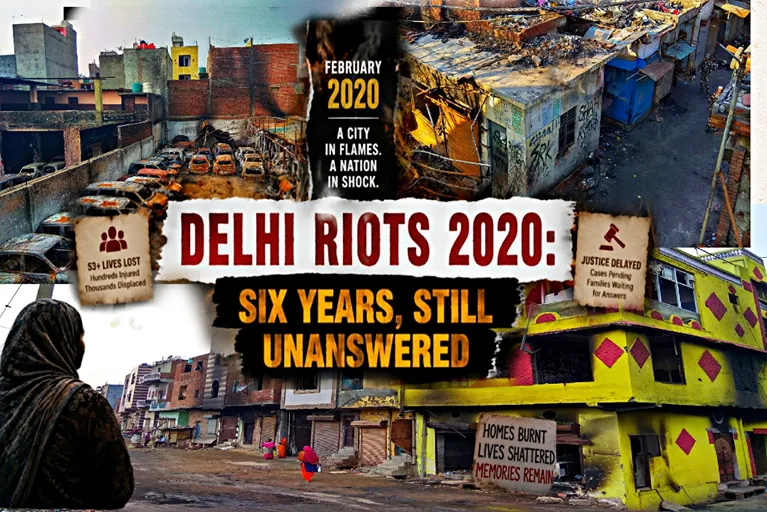

The Delhi Riots 2020 remain one of the most painful episodes in India’s recent political history. Six years later, the violence still shapes legal debates and community relations. More importantly, several questions about justice and accountability remain central to public debate.
The violence struck Northeast Delhi in February 2020.It followed weeks of protests and counter-protests over the Citizenship Amendment Act. Within days, clashes had expanded across several neighbourhoods. According to the Delhi High Court, 53 people lost their lives. More than 1,500 public and private properties were also damaged.
Before the Delhi Riots 2020: CAA Protests and Rising Tensions
The immediate background to the Delhi Riots 2020 was deeply political. The Citizenship Amendment Act had triggered protests across several parts of India. Critics argued that the law created a religious distinction in citizenship rules. The government rejected claims that the law threatened Indian Muslims. In Delhi, demonstrations continued for weeks. Anti-CAA protesters established sit-ins at several locations. Counter-protests also emerged in areas close to those demonstrations. Meanwhile, political speeches increased tensions around the protests.
Social media also became an important source of political mobilisation. Consequently, rumours and inflammatory claims spread rapidly. The situation became particularly tense in Northeast Delhi. Small confrontations increasingly carried a communal dimension. The atmosphere was therefore already fragile when violence erupted.
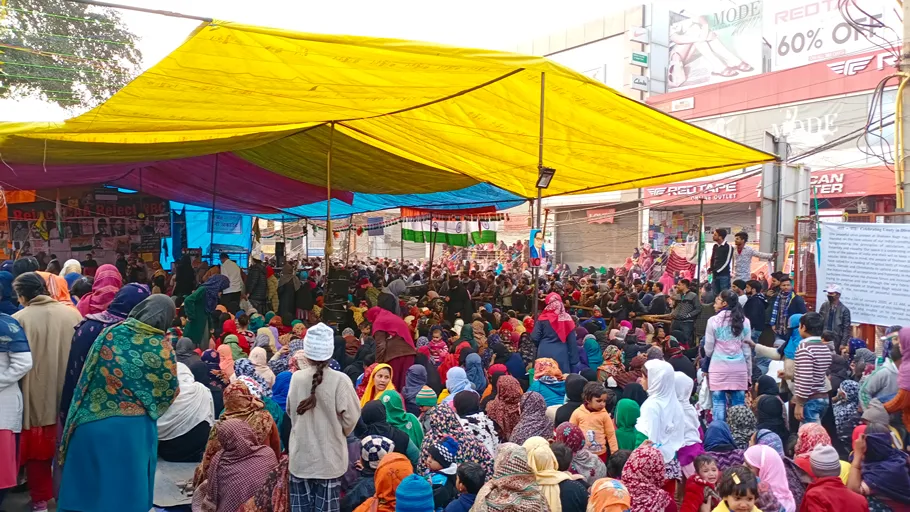
How the Delhi Riots 2020 Escalated
The violence intensified around February 23 and continued through February 25. Several neighbourhoods witnessed clashes, arson and attacks on property. Police forces eventually moved to contain the violence. However, the situation had already produced extensive human and material losses.
The Delhi High Court later recorded 53 deaths during the violence. Police personnel and Intelligence Bureau personnel were also among those killed. Hundreds of people were injured during the clashes. Homes, shops, vehicles and other properties were damaged. The violence also disrupted everyday life across affected neighbourhoods.
The consequences were therefore not limited to the three main days. Many families faced displacement and financial losses afterward. Community relationships were also deeply affected.
Delhi Riots 2020: Information, Investigation and Accountability
The Delhi Riots 2020 also created a major battle over information and accountability. During the violence, videos and messages spread rapidly across social media platforms. Some showed genuine incidents, while others were misleading or lacked proper context. As a result, competing narratives emerged about how the violence had unfolded. Political groups and activists offered sharply different explanations for its causes. Therefore, separating verified evidence from claims became increasingly important. The investigation later produced another layer of controversy.
Police registered hundreds of FIRs covering killings, attacks, arson and property damage. Separate cases were also examined for alleged criminal conspiracy. The prosecution has alleged that some accused persons were involved in a broader conspiracy. Defence lawyers have rejected those allegations and challenged the evidence presented against their clients. These arguments remain part of ongoing judicial proceedings.
Meanwhile, questions have also been raised about the police response. Critics have questioned whether preventive action was sufficient before the violence escalated. Concerns have also been raised about investigative methods in individual cases.
However, accountability must be considered through the judicial process. An allegation does not establish guilt, and an arrest does not constitute a conviction. Courts must ultimately assess the evidence and determine individual responsibility. This makes the Delhi Riots 2020 legal aftermath particularly complex.
Multiple cases involve different allegations, accused persons and bodies of evidence. Therefore, the wider narrative cannot be judged through one investigation alone.The central accountability question is consequently broader than arrests or prosecutions. It concerns whether victims receive justice through credible and fair legal proceedings. At the same time, accused persons must retain their legal and constitutional protections.
Justice After the Delhi Riots 2020
The legal aftermath has continued for years. Several accused persons have remained involved in lengthy bail proceedings. The larger conspiracy case has attracted particular political and legal attention. In January 2026, the Supreme Court denied bail to Umar Khalid and Sharjeel Imam. However, bail was granted to five other accused in the same case.
The court therefore did not treat every accused person identically. Instead, individual roles and the available prosecution material were considered. In April 2026, the Supreme Court dismissed Khalid’s review petition. The court maintained its January decision at that stage. However, another major development followed in May. The Supreme Court referred the UAPA bail issue to a larger bench.
The reference followed concerns about differing interpretations of earlier bail precedents. That development could have wider significance beyond this particular case. It may influence how prolonged pre-trial detention is assessed under the UAPA. Meanwhile, the Delhi High Court continued hearing individual matters. On July 7, 2026, it rejected Athar Khan’s fresh bail plea. The court examined allegations concerning his participation in the alleged conspiracy. These developments show that the legal chapter remains unfinished.
Delhi Riots 2020: Controversies and Political Legacy
The investigation has also faced scrutiny over its methods and conclusions. In some cases, courts have raised concerns about investigative shortcomings. Bail decisions have further highlighted questions about evidence and prolonged pre-trial detention. The use of the Unlawful Activities (Prevention) Act has added another dimension. Supporters argue that serious organised violence requires strong legal measures. Critics, however, have raised concerns about personal liberty and due process. Therefore, the controversy extends beyond individual accused persons. It also concerns how India’s institutions balance security, accountability and constitutional protections.
The wider legacy of the Delhi Riots 2020 is equally significant. The violence demonstrated how political polarisation can deepen communal tensions and make social trust difficult to rebuild. For affected communities, the consequences have extended beyond physical destruction. Economic losses, displacement and damaged neighbourhood relationships created challenges that cannot be measured through court cases alone.
The events also became part of India’s continuing debate over communal relations and social cohesion. Since Delhi is India’s national capital, the violence attracted international attention and influenced perceptions of India’s domestic stability. Ultimately, the legacy of the Delhi Riots 2020 remains a test of India’s ability to deliver justice fairly and transparently. It is also a reminder that political polarisation can have consequences far beyond election cycles.
What Remains After the Delhi Riots 2020?
The Delhi Riots 2020 left behind more than damaged buildings. They left families seeking justice and communities rebuilding damaged trust. They also created a long legal trail that remains unresolved. The latest court developments show that accountability remains an active process. However, justice cannot be measured only through arrests or bail orders.
It must also involve credible investigations and fair trials. Victims need meaningful access to justice and effective legal remedies. At the same time, accused persons retain their constitutional protections. Ultimately, the Delhi Riots 2020 remain a warning about polarisation. They show how political confrontation can become dangerous when social tensions deepen. They also demonstrate why institutions must respond before tensions become violence.
The lasting question is therefore not simply who was responsible. It is whether India’s institutions can ensure justice without deepening existing divisions.
FAQ
What were the Delhi Riots 2020?
The Delhi Riots 2020 were violent clashes in Northeast Delhi during February 2020. The violence followed weeks of protests and counter-protests surrounding the CAA.
How many people died in the Delhi Riots 2020?
According to the Delhi High Court, 53 people died during the violence.
What caused the Delhi Riots 2020?
The violence followed prolonged political and communal tensions around CAA protests.
Investigators have also alleged a broader conspiracy.
However, several aspects remain contested during ongoing legal proceedings.
Are the Delhi Riots cases still being heard?
Yes. Multiple cases and appeals connected with the violence remain active. Courts continued issuing orders in 2026, including bail-related decisions.
Why is the Delhi Riots case politically important?
The cases involve questions about communal violence, political mobilisation and accountability.
They also raise wider debates about national security and individual liberty.