
Oil, Diplomacy and Tariff Pressure: Why India Is Now at the Centre of US-Russia Tensions
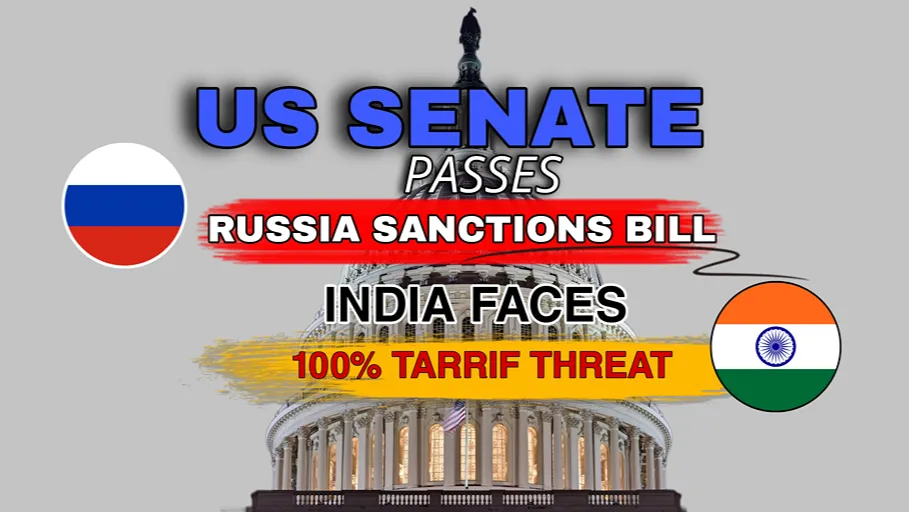
A new geopolitical storm is developing between Washington and New Delhi as energy trade becomes the latest battlefield in global politics. The US Senate Passes Russia Sanctions Bill, creating a potential pathway for heavy tariffs against countries that continue major energy purchases from Russia, including India. The debate is not only about oil. It is about global power, strategic independence, and the difficult balance India maintains between its decades-old partnership with Russia and its growing relationship with the United States. The Senate-backed legislation aims to increase pressure on Moscow by targeting countries that support Russia’s energy revenues. The proposal includes provisions allowing the U.S. administration to impose tariffs of up to 100% on imports from certain countries buying Russian oil.
However, it is important to understand that the tariff is not automatically imposed on India yet. The bill must complete the remaining legislative process before becoming law. The legislation focuses on expanding economic pressure against Russia and limiting revenue sources linked to its energy exports. The development has placed India in a challenging position because New Delhi has significantly increased Russian oil imports since the Russia-Ukraine conflict changed global energy markets.
Why India Could Face 100% Tariff Over Russian Oil
The US Senate Passes Russia Sanctions Bill has become a major talking point because of its potential impact on countries that continue purchasing Russian energy. The primary objective of the bill is to increase economic pressure on Russia by reducing its ability to generate revenue from oil and gas exports. Russia has historically relied heavily on energy exports as a major source of government income. However, after Western nations introduced sanctions following the Ukraine conflict, Moscow shifted a significant portion of its energy trade toward countries such as India and China. India emerged as one of the largest buyers of discounted Russian crude oil, helping Indian refiners manage energy costs and maintain economic stability despite fluctuations in global oil prices.
The proposed tariff mechanism under the US Senate Passes Russia Sanctions Bill would not directly impose a tax on India’s Russian oil purchases. Instead, it could allow the U.S. administration to target exports from countries that continue major energy trade with Russia, potentially affecting Indian goods entering the American market. If implemented, the tariff threat could impact several key Indian export sectors, including pharmaceuticals, textiles, engineering goods, auto components, chemicals, and jewellery. Higher tariffs could increase export costs, reduce competitiveness, create supply chain challenges, and make Indian products more expensive for American consumers and businesses. However, the final impact will depend on how Washington implements the policy and whether the tariff authority is actually used.
The approval of the bill does not automatically mean that India will immediately face a 100% tariff. The US Senate Passes Russia Sanctions Bill primarily sends a strong political message that Washington wants countries involved in Russian energy trade to reconsider their partnerships. For India, the situation remains complex because energy security is a national priority. The US Senate Passes Russia Sanctions Bill highlights the challenge for New Delhi to balance affordable energy access, economic growth, and its long-standing diplomatic relationships while managing its strategic partnership with both Russia and the United States. The future impact of the US Senate Passes Russia Sanctions Bill will depend on diplomatic negotiations and how both countries manage this sensitive issue.
India-US Relations at Risk? The Bigger Diplomatic Challenge Ahead
The US Senate Passes Russia Sanctions Bill could create a difficult moment for India-US relations, but it is unlikely to completely damage the strategic partnership between both nations. Over the past decade, India and the United States have expanded cooperation in defence, technology, trade, and Indo-Pacific security. Both countries view each other as important partners in maintaining regional stability. However, energy policy has remained a sensitive area. The US Senate Passes Russia Sanctions Bill reflects Washington’s belief that reducing Russia’s oil revenue is essential to limiting Moscow’s global influence. India, meanwhile, argues that purchasing energy from different sources is necessary to protect its economy and consumers.
New Delhi has repeatedly maintained that its energy decisions are based on national interest. The possible tariff threat linked to the US Senate Passes Russia Sanctions Bill introduces a new economic challenge because the United States is one of India’s largest export markets. If tariffs are implemented, Indian companies exporting goods to America may face pressure. At the same time, Washington also has economic interests in maintaining strong relations with India. A major trade conflict could affect American companies that depend on Indian manufacturing, technology services, and supply chains. Therefore, both sides are likely to seek diplomatic solutions rather than allowing tensions to escalate over the US Senate Passes Russia Sanctions Bill.
Will India Respond? How New Delhi May Handle the Tariff Pressure
The US Senate Passes Russia Sanctions Bill puts India in a position where it must carefully calculate its next steps. India is unlikely to make a sudden decision regarding Russian oil purchases because energy security is directly connected to economic growth. A major reduction in Russian oil imports could increase fuel costs and affect inflation. However, India may explore diplomatic options to reduce tensions with Washington. Possible steps could include:
- Increasing discussions with U.S. officials
- Explaining its energy security requirements
- Diversifying energy sources gradually
- Expanding cooperation in other strategic areas
- Negotiating trade-related solutions
India has historically followed a policy of strategic autonomy. This means New Delhi avoids completely aligning with any single global power and instead focuses on maintaining relationships with multiple countries. India’s approach toward Russia is based on decades of defence cooperation and historical ties. At the same time, its relationship with the United States has grown significantly due to shared interests in technology, security, and economic development. The challenge for Indian policymakers will be finding a middle path. The US Senate Passes Russia Sanctions Bill is not only a trade issue but also a test of India’s diplomatic balancing strategy.
India’s Diplomatic Tightrope: Balancing Russia’s Partnership and America’s Pressure
The US Senate Passes Russia Sanctions Bill highlights one of India’s biggest foreign policy challenges: maintaining strong relations with competing global powers while protecting its own strategic interests. India has historically maintained a close partnership with Russia, especially in areas such as defence cooperation, energy security, and diplomatic coordination. Russia continues to be an important source of military equipment and affordable crude oil, which plays a significant role in supporting India’s energy requirements and economic stability. At the same time, the United States has become one of India’s most important global partners in areas including trade, technology, investment, defence cooperation, and Indo-Pacific security.
The growing India-US relationship has strengthened significantly in recent years, making Washington an important economic and strategic partner for New Delhi. The US Senate Passes Russia Sanctions Bill has placed India in a difficult diplomatic position because it must balance its historical relationship with Moscow while expanding cooperation with Washington. India’s likely approach will be based on strategic autonomy rather than choosing one side over another. New Delhi is expected to continue engaging with Russia for energy and defence needs while maintaining strong ties with the United States and other global partners.
India is also likely to focus on diversifying its energy sources by strengthening relationships with countries in the Middle East and other regions. At the same time, cooperation with Europe in areas such as trade, investment, and technology will remain important for India’s long-term economic goals. The future impact of the US Senate Passes Russia Sanctions Bill will depend on how the legislation progresses and whether Washington decides to use the proposed tariff authority against countries purchasing Russian energy. While the bill has created uncertainty in global markets, it also represents a new phase in energy diplomacy where economic decisions are increasingly connected with geopolitical interests.
For India, the challenge will be to maintain economic growth, protect energy security, and preserve its independent foreign policy approach. The US Senate Passes Russia Sanctions Bill is not just a trade issue but a test of India’s ability to manage complex relationships in an increasingly divided global order. India’s balancing strategy will determine how effectively it navigates between Moscow and Washington while safeguarding its national interests.
What is the US Senate Passes Russia Sanctions Bill?
The bill is a U.S. legislative measure designed to increase economic pressure on Russia and target countries involved in major Russian energy trade.
Has the US imposed a 100% tariff on India?
No. The bill creates the possibility of tariffs but does not automatically impose a 100% tariff on Indian goods.
Why does India buy Russian oil?
India purchases Russian oil because it provides affordable energy supplies and helps maintain economic stability.
Will this affect India-US relations?
The issue may create tensions, but both countries have strong strategic and economic interests that encourage cooperation.
What will India do next?
India is expected to use diplomatic discussions while continuing to protect its energy security and strategic independence.
By Sahil Koul | National Affairs Analyst covering Indian politics, governance, public policy, and major developments shaping the nation.