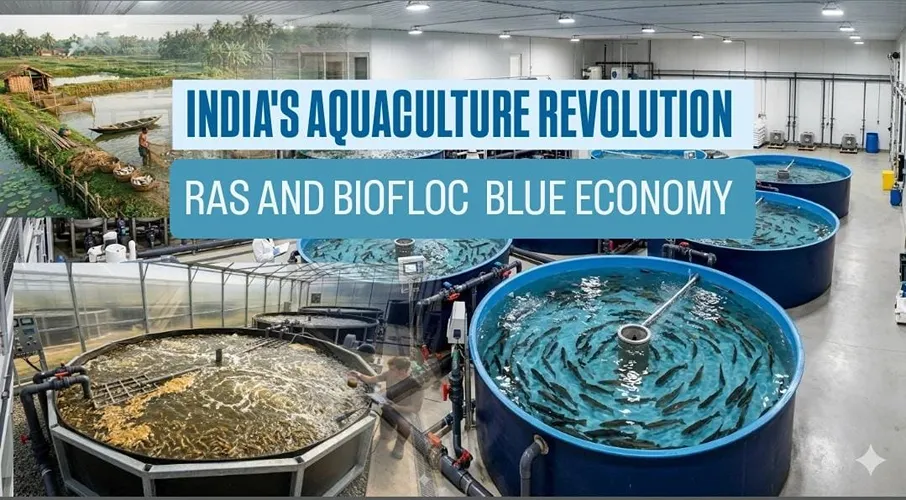

India’s fisheries sector is no longer confined to traditional ponds, rivers and coastal waters. A technology-led transformation is changing how fish are produced, with Recirculatory Aquaculture Systems (RAS) and Biofloc technology emerging as two important tools in this shift.
The stakes are significant. Fish production has more than doubled over the past decade, while seafood exports have reached record levels. Now, as India looks towards a larger and more sustainable Blue Economy, modern aquaculture could become an important engine of rural income, food security, entrepreneurship and exports.
The transformation also comes at a time when conventional farming faces pressure from land and water constraints, climate variability and rising input costs. Controlled production systems offer a way to produce more fish using fewer resources while bringing farming closer to major markets.
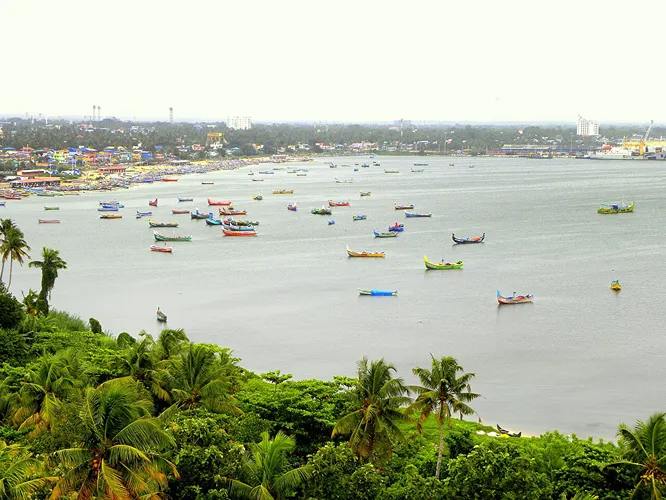
Photo: Arunvrparavur/Wikimedia Commons Licensed under CC BY-SA 3.0
India’s Fisheries Sector Is Entering a New Phase
India has emerged as the world’s second-largest fish producer and second-largest aquaculture producer. It is also the world’s largest producer and exporter of shrimp, giving fisheries an increasingly important role in India’s agricultural and export economy. The sector supports the livelihoods of nearly three crore fishers and fish farmers and creates employment across activities ranging from hatcheries and feed production to processing, transportation, cold chains and international marketing.
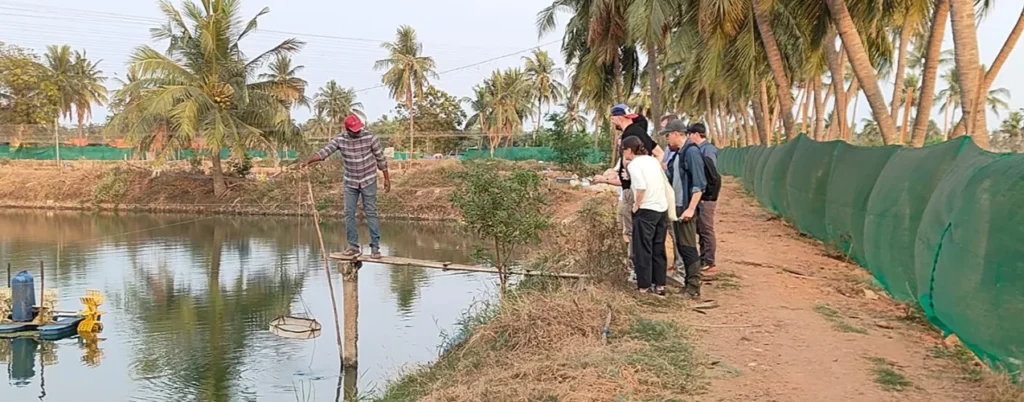
The scale of expansion becomes clearer when production figures are compared over time.
| Indicator | 2013-14 | Latest figure | Growth/Change |
|---|---|---|---|
| Total fish production | 95.79 lakh tonnes | 198 lakh tonnes (2024-25) | More than doubled |
| Inland fisheries & aquaculture | 61.36 lakh tonnes | 151.60 lakh tonnes (2024-25) | 147% increase |
| Seafood exports | ₹30,213 crore | ₹73,890 crore (2025-26) | More than doubled |
| RAS units approved | — | 9,467 | Major technology expansion |
| Biofloc units approved | — | 4,573 | Major technology expansion |
| PMMSY investment in RAS/Biofloc | — | ₹4,120 crore | Technology-focused investment |
The numbers show that inland production has been a major contributor to the fisheries boom. But the next challenge is not simply producing more fish. India needs to produce them efficiently, sustainably and consistently.
That is where technology becomes crucial. Traditional aquaculture can depend heavily on suitable land, reliable water availability and favourable climatic conditions. RAS and Biofloc can reduce some of these constraints by creating more controlled production environments. India has also approved or announced cumulative investments of more than ₹39,272 crore in fisheries and aquaculture-related initiatives since 2015. The objective is increasingly moving beyond production alone towards infrastructure, technology, market access, value addition and competitiveness.
How RAS and Biofloc Could Transform Fish Farming
RAS and Biofloc are based on different technical principles, but both aim to make fish farming more intensive and resource efficient. A Recirculatory Aquaculture System treats and reuses water instead of continuously replacing it. Fish are raised in tanks connected to filtration and water-treatment components that help maintain suitable conditions. This makes RAS particularly attractive where freshwater is scarce or where farmers want to establish production units near urban markets. Under well-managed systems, RAS can recycle around 90–95% of the water. The advantage is not merely water conservation. Controlled conditions can also allow farmers to monitor water quality, oxygen levels, temperature and fish health more closely.
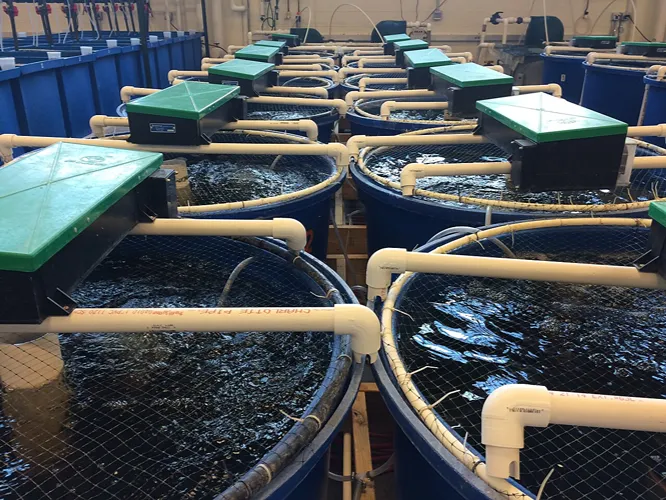
Biofloc takes a different route. Instead of relying primarily on mechanical filtration, it encourages beneficial microorganisms to convert waste nutrients into microbial biomass. Fish can consume part of this biomass, while the system helps manage water quality. The result can be a more compact farming model with reduced water exchange and potentially lower dependence on certain feed inputs. However, neither technology is a shortcut to guaranteed profits. RAS requires skilled operation, reliable electricity, effective filtration and regular monitoring. Biofloc also demands careful control of factors such as aeration, carbon balance, stocking density and water quality. The technology works best when paired with knowledge and disciplined management.
Several advantages make these systems increasingly attractive:
- Year-round production: Controlled environments can reduce dependence on seasonal conditions.
- Efficient water use: Water recycling can substantially reduce freshwater requirements.
- Better monitoring: Farmers can track important production parameters more closely.
- Location flexibility: Units can be established closer to cities and consumption centres.
- Higher productivity: Intensive systems can produce more fish from relatively small areas.
- Biosecurity potential: Controlled environments can help manage exposure to certain external risks.
- New business opportunities: Young entrepreneurs can enter aquaculture without requiring large traditional ponds.
The government’s support under the Pradhan Mantri Matsya Sampada Yojana has accelerated adoption. As many as 9,467 RAS units and 4,573 Biofloc units have been approved, backed by ₹4,120 crore in investment. That expansion could gradually change the geography of Indian fish farming.
Technology, Exports and the Road to Viksit Bharat
One of the biggest opportunities lies in connecting technology-driven aquaculture with India’s growing seafood export industry. Global buyers are increasingly looking beyond volume, with greater emphasis on quality, traceability, food safety, biosecurity and consistency. Controlled production systems such as RAS and Biofloc can help farmers and processors meet these expectations while supporting a broader export basket. Shrimp remains India’s biggest seafood export strength, but species such as trout, seabass, tilapia, murrel and pangasius offer opportunities for diversification, while ornamental fish could create smaller but potentially high-value markets.
The flexibility of RAS and Biofloc is also opening opportunities in regions where conventional aquaculture has traditionally been difficult. Cold-water fisheries clusters in Jammu & Kashmir, Ladakh, Uttarakhand and Himachal Pradesh can use modern systems for species such as trout, while saline and brackish-water regions remain important for shrimp production. This geographical flexibility could help expand India’s Blue Economy beyond traditional aquaculture belts, allowing specialised production clusters to develop closer to local consumption centres, processing facilities and export hubs.
The next phase could see aquaculture increasingly connected with artificial intelligence, sensors, drones and renewable energy. AI-based systems could detect unusual changes in fish behaviour or water conditions, while sensors can continuously monitor dissolved oxygen, temperature and pH. Drones could support surveillance and farm management, while solar and other renewable-energy solutions could help reduce the electricity burden of intensive systems. Digital marketplaces could also connect farmers more directly with buyers, processors and exporters, potentially improving price discovery and reducing supply-chain inefficiencies.
However, technology alone cannot guarantee success. RAS can require substantial upfront investment, while both RAS and Biofloc demand technical expertise and continuous monitoring. Power interruptions can create serious risks for systems dependent on aeration and pumping, and poor management can quickly turn an expensive facility into a loss-making venture. Training, affordable finance, reliable electricity, quality seed and feed, veterinary support and strong cold-chain infrastructure will therefore remain essential. If these gaps are addressed, the combination of technology and traditional livelihoods can generate opportunities across equipment manufacturing, hatcheries, feed, logistics, processing and exports.
For Atmanirbhar Bharat, the goal is to strengthen domestic capabilities across the aquaculture value chain; for Viksit Bharat, it is to turn India’s fisheries potential into a productive, sustainable and globally competitive economic sector. RAS and Biofloc alone cannot deliver that transformation, but they could become important building blocks of India’s next-generation aquaculture economy.
What is RAS technology in aquaculture?
Recirculatory Aquaculture System (RAS) is a fish-farming method in which water is continuously treated and reused. It allows farmers to maintain greater control over water quality and production conditions.
What is Biofloc technology?
Biofloc is an intensive aquaculture technique that uses beneficial microorganisms to convert waste nutrients into microbial biomass. This helps maintain water quality while providing an additional food source for some cultured species.
How can RAS and Biofloc help Indian fish farmers?
They can support intensive, year-round production while reducing water use and enabling farming in areas where conventional pond-based aquaculture may be difficult.
Can RAS and Biofloc increase seafood exports from India?
They have the potential to support export growth by improving production consistency, traceability, biosecurity and quality, particularly when integrated with modern processing and cold-chain infrastructure.
What is the role of aquaculture in India’s Blue Economy?
Aquaculture can contribute to food security, rural employment, entrepreneurship, seafood exports and efficient resource use, making it an important component of India’s broader Blue Economy ambitions.