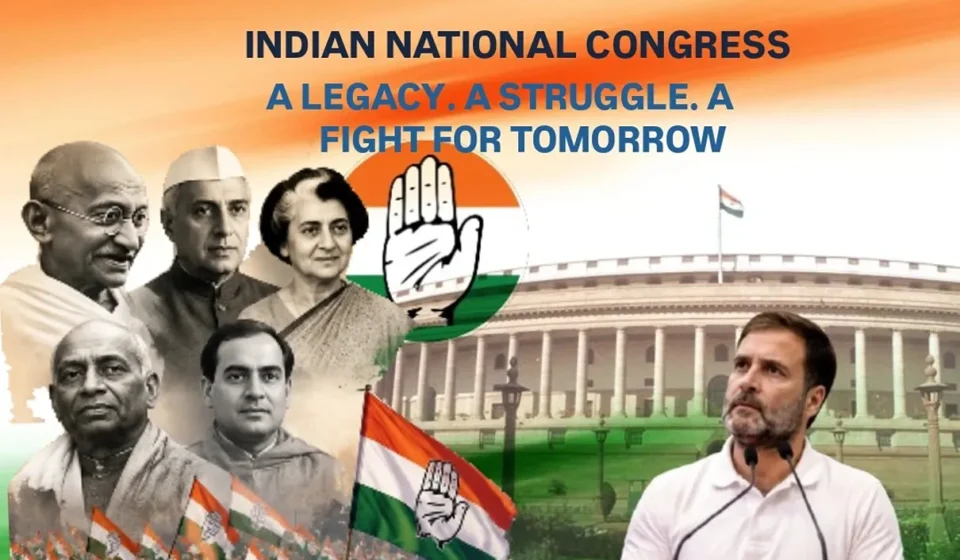

The Indian National Congress stands at one of the most important phases of its political journey. Once the centre of India’s freedom struggle and the country’s dominant political force, the party is now fighting to rebuild its national influence.
From leading the independence movement to shaping India’s economic and democratic institutions, Congress has played a historic role. However, decades of electoral setbacks have raised questions about its future direction and ability to challenge emerging political forces.
The Birth of Indian National Congress
The Indian National Congress was founded on 28 December 1885 in Bombay (now Mumbai) during the period of British colonial rule. The organisation was established as a political platform where Indian leaders could discuss public issues, present demands before the British administration and seek greater participation of Indians in governance. The formation of Congress was largely driven by Allan Octavian Hume, a retired British civil servant, along with prominent Indian leaders such as Dadabhai Naoroji, Dinshaw Wacha and Womesh Chandra Bonnerjee, who became the first president of the organisation. The first session of the Congress was attended by representatives from different regions of India, reflecting the early attempt to create a common national political platform.
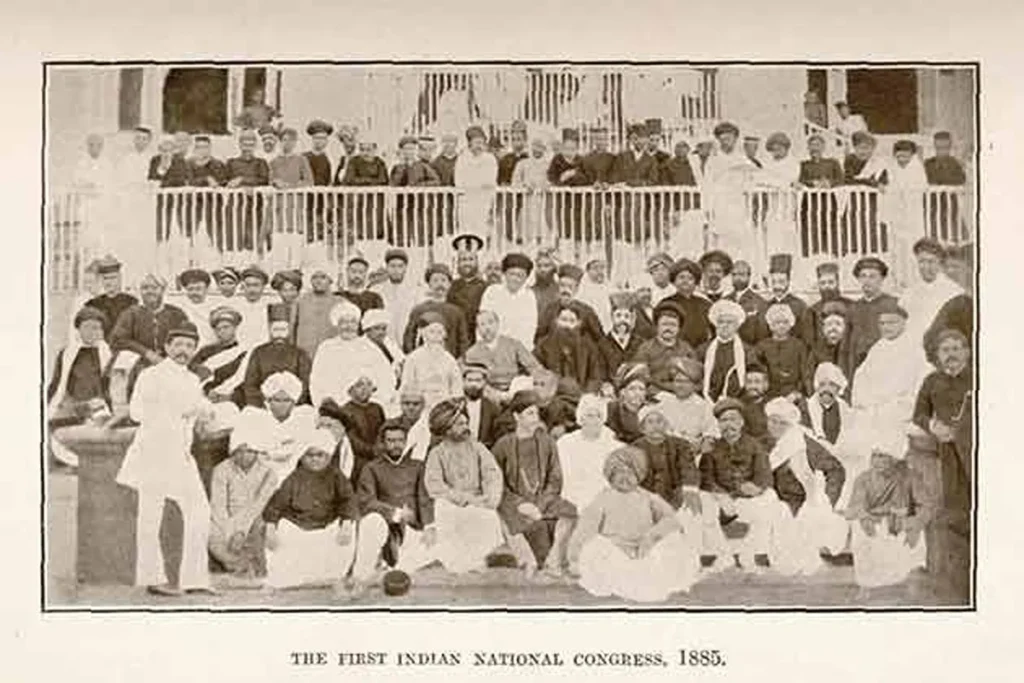
During its initial phase, Indian National Congress followed a moderate approach. Its leaders focused on constitutional reforms, expansion of legislative councils, increased opportunities for Indians in government services and greater accountability from the British administration. They believed that political progress could be achieved through discussions, petitions and peaceful negotiations.
However, as British policies continued to create economic and political challenges, the demands within Congress gradually became stronger. The organisation began moving beyond limited reforms and started raising broader questions about self-governance and Indian rights. Over the following decades, Congress transformed into a nationwide movement that united people from different regions, communities and social backgrounds. This evolution eventually placed the party at the centre of India’s freedom struggle and made it the leading force demanding independence from British rule.
From Freedom Movement to Political Dominance
The biggest transformation of the Indian National Congress came under Mahatma Gandhi’s leadership. Gandhi converted the party from an elite political organisation into a mass movement involving farmers, workers, students and ordinary citizens. Movements such as the Non-Cooperation Movement (1920), Civil Disobedience Movement (1930) and Quit India Movement (1942) became major milestones in India’s fight against British rule.
Along with Gandhi, leaders like Jawaharlal Nehru, Sardar Vallabhbhai Patel, Subhas Chandra Bose and Maulana Abul Kalam Azad shaped the party’s national identity. After independence in 1947, Congress became the dominant political force in India. The party governed the country for several decades and played a central role in building democratic institutions.
Congress Governments and Prime Ministers
| Prime Minister | Congress Leadership Period | Major Developments |
|---|---|---|
| Jawaharlal Nehru | 1947–1964 | Democratic institutions, industrial development, non-alignment policy |
| Lal Bahadur Shastri | 1964–1966 | Green Revolution foundations, national security focus |
| Indira Gandhi | 1966–1977, 1980–1984 | Bank nationalisation, Bangladesh war, Green Revolution expansion |
| Rajiv Gandhi | 1984–1989 | Technology expansion and telecom reforms |
| P. V. Narasimha Rao | 1991–1996 | Economic liberalisation reforms |
| Manmohan Singh | 2004–2014 | RTI Act, MGNREGA, welfare programmes |
Congress Legacy: Nation Building and Economic Transformation
For much of independent India’s history, Congress shaped national policies in areas such as education, industry, foreign relations and welfare. During Jawaharlal Nehru’s leadership, India adopted a mixed economic model. The government focused on public sector development, scientific institutions and industrial growth.
Later, Prime Minister Indira Gandhi introduced major economic decisions, including bank nationalisation in 1969. Her government also supported agricultural reforms that contributed to India’s Green Revolution. One of the most important turning points came in 1991. Under Prime Minister P. V. Narasimha Rao and Finance Minister Dr Manmohan Singh, India introduced economic liberalisation reforms. These reforms opened the economy to global investment and transformed India’s growth model.
Decline of Congress: The End of Political Dominance
The decline of the Indian National Congress began gradually after decades of dominance. The rise of regional parties, changing voter preferences and increasing competition from the Bharatiya Janata Party (BJP) reshaped Indian politics. The party suffered a major setback in the 2014 Lok Sabha elections, winning only 44 seats. In the 2019 elections, Congress improved slightly but remained far behind the BJP. Several factors contributed to the party’s decline. These included organisational weaknesses, leadership challenges, changing political narratives and difficulties in connecting with younger voters.
Congress Election Performance
| Lok Sabha Election | Congress Seats Won | Political Situation |
|---|---|---|
| 2004 | 145 | Formed UPA government |
| 2009 | 206 | Increased strength under UPA-II |
| 2014 | 44 | Major electoral setback |
| 2019 | 52 | Continued opposition role |
| 2024 | 99 | Improved performance but remained opposition |
Congress’ Battle for Revival
In recent years, the Indian National Congress has focused on rebuilding its political position through organisational reforms, public outreach campaigns and efforts to strengthen its presence among voters. After facing major electoral setbacks in 2014 and 2019, the party has attempted to reconnect with different sections of society and present itself as a strong national opposition force.
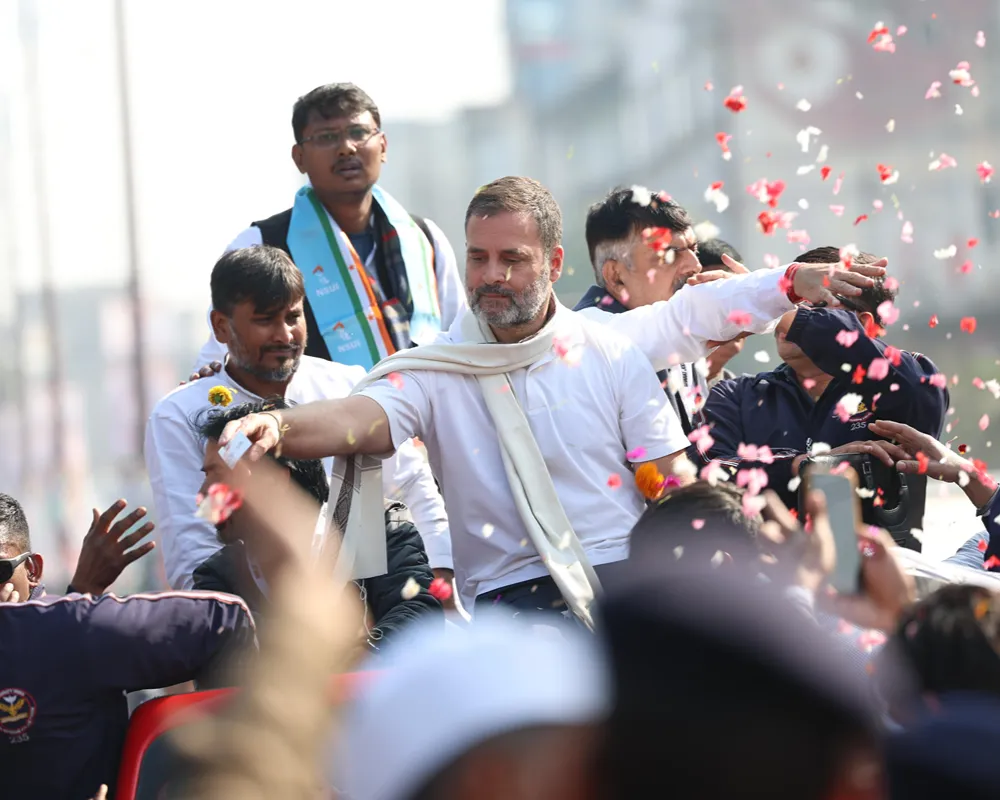
The Bharat Jodo Yatra (2022–23) led by Rahul Gandhi became one of the party’s biggest mass outreach initiatives in recent years. The campaign covered thousands of kilometres across India and focused on issues such as unemployment, economic inequality, inflation and social unity. Congress presented the yatra as an effort to directly engage with citizens and understand public concerns beyond traditional political platforms.
The 2024 Lok Sabha election results brought a significant improvement for Congress compared with its previous performances. The party increased its seat tally from the 2019 elections and played a more important role within the opposition alliance. The results provided some momentum for the party and strengthened its position in parliamentary politics.
However, the road to revival remains challenging. Congress needs to improve its organisational structure at the grassroots level, especially in states where it has lost political influence. Building stronger regional leadership, improving election strategies and connecting with younger voters will be crucial for the party’s future.
Can Congress Return as a National Force?
The future of the Indian National Congress will depend on how effectively the party adapts to India’s rapidly changing political environment. While Congress continues to benefit from its long history, nationwide presence and association with the freedom movement, it faces the challenge of converting its historical influence into electoral strength. The party’s legacy remains one of its biggest advantages. Its role in India’s independence struggle, experience in governance and long-standing organisational network provide it with a strong political foundation. Indian National Congress also continues to have support among sections of voters who connect with its focus on welfare policies, social justice and democratic institutions.
However, political legacy alone may not be enough in today’s competitive environment. The party needs to strengthen its grassroots organisation, develop stronger state-level leadership and create a clearer message that connects with younger voters. Issues such as employment, economic growth, technology, education and social welfare are becoming increasingly important in shaping voter choices. The rise of the Bharatiya Janata Party (BJP) has created the biggest challenge for Congress in recent years. BJP’s strong organisational structure, effective communication strategy and nationwide electoral presence have changed the balance of Indian politics. To compete effectively, Congress will need to build a stronger political narrative and expand its influence beyond traditional support bases.
The coming elections will be a crucial test for the party. Its ability to turn public support, opposition unity and political campaigns into actual electoral victories will determine whether Congress can rebuild itself as a major national force or continue its struggle for revival.
A Historic Party Facing a New Political Era
The journey of the Indian National Congress represents one of the most significant stories in Indian political history. From leading the independence movement to shaping decades of governance, the party has left a lasting impact on the nation. However, its current challenge is not about history but about the future. Congress must balance its legacy with political innovation to remain relevant in a competitive democratic environment. The coming years will determine whether Indian National Congress can rebuild itself as a major national force or remain a secondary player in India’s evolving political landscape.
When was the Indian National Congress founded?
The Indian National Congress was founded on 28 December 1885 in Bombay during British rule.
Who was the first president of Indian National Congress?
Womesh Chandra Bonnerjee became the first president of the Indian National Congress.
Why did Congress lose political dominance?
Congress declined due to increasing competition from BJP and regional parties, organisational challenges and changing voter preferences.
Who is the current Congress president?
Mallikarjun Kharge is the president of the Indian National Congress.
Can Congress return to power nationally?
Congress can regain influence if it strengthens its organisation, develops effective leadership and connects with changing voter expectations.