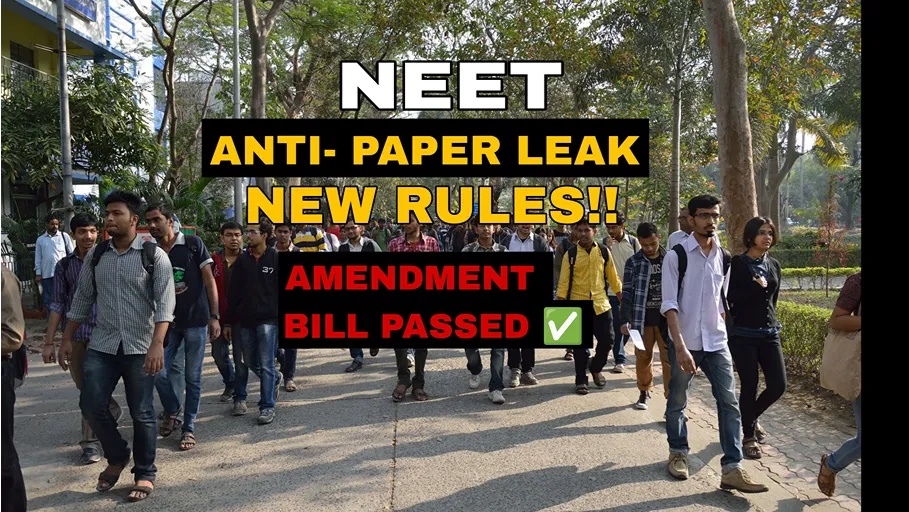

Can India Restore Trust After NEET-UG Controversy?
India’s examination system, once considered a symbol of merit-based opportunity, is facing one of its biggest credibility challenges after the NEET-UG paper leak controversy. For millions of students competing for medical seats, a leaked question paper is not just an academic violation — it can change the future of an entire generation.
The government’s move to introduce the Anti Paper Leak Bill 2026 represents a major attempt to rebuild confidence in competitive examinations. The proposed amendments seek tougher punishments, faster investigations, and stronger accountability for individuals, institutions, and organized groups involved in examination fraud. The controversy surrounding NEET-UG has triggered nationwide debates over examination security, political responsibility, and whether India’s existing laws are strong enough to protect students from unfair practices.
What Is the New Anti Paper Leak Bill 2026?
The Anti Paper Leak Bill 2026 is a proposed amendment aimed at strengthening India’s legal framework against cheating, question paper leaks, and organized examination fraud. The bill expands the scope of existing laws by introducing stricter penalties, faster investigation mechanisms, and stronger accountability measures for individuals, institutions, and organizations involved in examination malpractice. The proposed legislation focuses on protecting major public examinations, including medical entrance tests such as NEET-UG, recruitment examinations, and other competitive assessments where millions of students participate every year.
The government’s objective is to ensure that success in competitive examinations depends only on a candidate’s preparation and ability rather than illegal networks, financial influence, or unfair practices. The proposed reforms come after growing concerns over examination security and transparency, especially following the NEET-UG controversy, which raised questions about the effectiveness of existing safeguards.
Why Does India Need a New Anti Paper Leak Law?
The NEET-UG controversy exposed several weaknesses in India’s examination security system. Competitive exams have become extremely high-stakes events, with millions of young candidates spending years preparing for a single opportunity. A paper leak creates unequal competition because some candidates gain access to confidential material while others depend entirely on their preparation.
Growing Threat of Organized Exam Fraud
Over the years, paper leaks have evolved from isolated incidents into organized operations involving:
- Middlemen networks
- Technology-based cheating methods
- Unauthorized access to digital systems
- Financial transactions between candidates and brokers
The increasing use of technology has also created new challenges. Cyber threats, data breaches, and encrypted communication platforms have made traditional security methods less effective.
Impact on Students
The biggest impact of examination fraud is experienced by students. A candidate preparing for NEET may spend:
- Several years studying biology, chemistry, and physics
- Significant financial resources on coaching
- Emotional effort and personal sacrifices
When a paper leak occurs, students often face uncertainty about whether their hard work was enough or whether unfair advantages influenced the results. The controversy also raised concerns about public trust in institutions responsible for conducting national-level examinations.
Anti Paper Leak Bill 2026 vs Existing Law
The new amendments aim to make the existing legal framework more powerful.
| Feature | Existing Law | Proposed Anti Paper Leak Bill 2026 |
|---|---|---|
| Maximum punishment | Limited imprisonment provisions | Up to 10 years imprisonment proposed |
| Financial penalty | Lower penalties | Fines potentially reaching ₹10 crore |
| Investigation process | Regular legal process | Faster investigation mechanisms |
| Court proceedings | Normal courts | Special fast-track courts proposed |
| Digital crimes | Limited coverage | AI, cyber fraud, and digital leaks included |
| Institutional responsibility | Mainly individual offenders | Agencies and organizations can face action |
The government believes stronger punishment will discourage organized groups from treating examination fraud as a profitable business.
Major Changes Proposed in the Anti Paper Leak Bill
Harsher Punishment for Paper Leak Networks
One of the biggest proposed changes is increasing penalties for individuals involved in organized examination fraud. Those involved in:
- Stealing examination papers
- Selling leaked questions
- Helping cheating networks
- Manipulating examination systems
could face longer imprisonment and heavy financial penalties. The intention is to move beyond treating paper leaks as simple cheating cases and classify them as serious offenses affecting national education systems.
Special Fast-Track Courts
The bill proposes faster legal proceedings through dedicated courts. Currently, examination fraud cases can continue for years because of lengthy legal procedures. A delayed judgment reduces the impact of punishment. Fast-track mechanisms aim to:
- Complete trials quickly
- Provide faster justice
- Increase confidence among students
The government argues that quick action is necessary because examination credibility depends not only on punishment but also on timely accountability.
Stronger Investigation Powers
The proposed law focuses on improving coordination between agencies investigating paper leaks. Authorities will have greater ability to examine:
- Financial transactions
- Digital communication
- Technology-based cheating methods
- Connections between different members of fraud networks
This approach recognizes that modern examination crimes often involve multiple individuals operating across different locations.
Action Against Institutions and Private Organizations
Earlier cases often focused mainly on individual suspects. However, many paper leaks involve larger networks. The proposed amendments aim to hold accountable:
- Examination service providers
- Private agencies
- Employees involved in security violations
- Organizations benefiting from illegal activities
This could increase responsibility among institutions handling confidential examination material.
Technology-Based Security Measures
The bill also highlights the importance of improving digital security. Possible measures include:
- Better encryption systems
- Digital monitoring
- Secure question paper management
- Artificial intelligence-based detection systems
As examination systems become more technology-driven, cybersecurity has become an important part of education governance.
Why Did It Become a National Issue?
The NEET-UG controversy became a major political and social issue because the examination affects admission to medical colleges across India. Students and parents raised concerns about:
- Alleged paper leaks
- Examination irregularities
- Transparency of results
- Accountability of authorities
The issue gained national attention because medical entrance examinations directly influence thousands of future doctors. For many students, the controversy was not only about one examination but about whether India’s competitive exam system could guarantee equal opportunity.
Opposition Parties’ Reaction to the Bill
Opposition parties have supported stronger action against paper leaks but have questioned the government’s handling of examination security. Several opposition leaders have demanded:
- A detailed investigation into the NEET controversy
- Accountability from officials responsible for security failures
- Greater transparency in examination management
The opposition argument is that passing a stricter law alone cannot solve the problem unless authorities improve implementation and prevent leaks before they occur. Some leaders have also criticized the government for introducing legal reforms after public pressure rather than preventing the crisis earlier.
Students Demand More Than New Laws
Among students and parents, reactions have been mixed. Many welcomed tougher punishments, arguing that paper leaks damage the future of deserving candidates. However, some students believe legal reforms must be combined with practical improvements, including:
- Better examination centre monitoring
- More transparent investigation reports
- Stronger cybersecurity systems
- Faster communication during controversies
For young aspirants, the biggest demand is simple: competitive examinations should reward preparation, not connections or money.
Political and Education Impact of the New Bill
The Anti Paper Leak Bill has become more than an education reform measure. It has developed into a major governance issue. The credibility of national examinations affects:
- Public trust in institutions
- Youth confidence in government systems
- India’s education reputation
- Future recruitment processes
A successful implementation could strengthen India’s examination ecosystem. However, critics argue that laws alone cannot prevent corruption without strict enforcement.
What Happens Next?
The effectiveness of the Anti Paper Leak Bill will depend on how successfully it is implemented. Experts believe India needs a combination of:
- Strong laws
- Better technology
- Independent monitoring
- Transparent investigations
- Institutional accountability
The NEET controversy has highlighted a larger challenge: protecting fairness in an era where examinations involve millions of candidates and increasingly complex digital systems.
What is the Anti Paper Leak Bill 2026?
The Anti Paper Leak Bill 2026 is a proposed law aimed at strengthening penalties and investigation procedures against examination paper leaks and unfair practices.
Why was the bill introduced after the NEET-UG controversy?
The bill was introduced after concerns over examination security, transparency, and student confidence following the NEET-UG paper leak controversy.
What punishment can offenders face under the new bill?
The proposed amendments include stricter imprisonment terms and heavy financial penalties for individuals and organizations involved in organized paper leaks.
Will the new law stop all paper leaks?
The law can create stronger deterrence, but experts believe prevention also requires better technology, cybersecurity, and monitoring systems.
How will the bill affect future competitive examinations?
If implemented effectively, the bill could increase security standards for NEET, recruitment exams, and other major public examinations.
By Sahil Koul | National Affairs Analyst covering Indian politics, governance, public policy, and major developments shaping the nation.