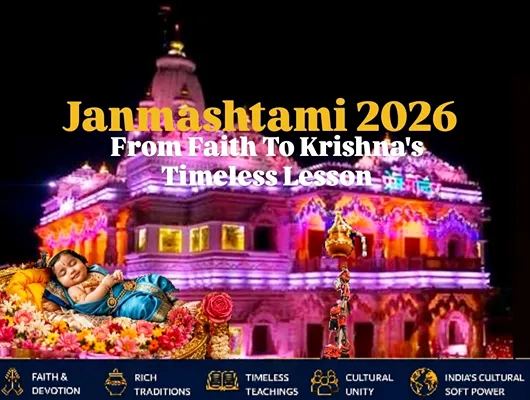

Janmashtami 2026 is being celebrated across India today as millions of devotees mark the birth of Lord Krishna through prayers, fasting, temple rituals and cultural programmes. The celebrations bring an ancient tradition into contemporary India, with communities gathering to honour Krishna’s life and teachings.
The festival carries a deeper message of righteousness, duty, courage, compassion and selfless action. These values are closely associated with Krishna’s teachings in the Bhagavad Gita and continue to influence Indian philosophy and ideas of leadership and responsibility.
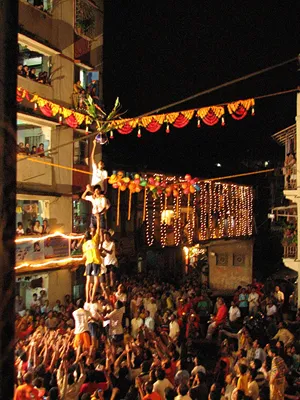
Although celebrations differ across regions, Krishna remains the common thread. Mathura and Vrindavan are major centres of devotion, while Maharashtra is known for Dahi Handi. Gujarat, Rajasthan, Assam and Manipur also have distinctive Krishna traditions, showing how Janmashtami reflects India’s cultural diversity.
Credit: Madhav Pai/Wikimedia Commons
Janmashtami 2026: The Story Behind the Festival
The story of Lord Krishna begins in Mathura, where he was born to Devaki and Vasudeva during the rule of Kansa. A prophecy had warned Kansa that Devaki’s eighth child would one day bring an end to his rule. Afraid of losing his power, Kansa imprisoned Devaki and Vasudeva. Krishna was born at midnight, when the kingdom was under the shadow of fear and injustice.
Soon after his birth, Vasudeva carried the newborn Krishna across the Yamuna to Gokul. There, Nanda and Yashoda raised him with love and care. Krishna’s playful childhood, his love for butter and his bond with the people of Gokul later became some of the most beloved stories in Hindu tradition.
Even today, these stories are at the heart of Janmashtami celebrations. Devotees gather at midnight to celebrate Krishna’s birth, while temples organise prayers, music and devotional programmes. Ras Leela brings his stories to life through dance and drama, while Dahi Handi celebrates his playful childhood and love for butter and curd. In this way, Janmashtami keeps Krishna’s story alive from one generation to the next.
Janmashtami 2026: Leaders Share Krishna’s Message
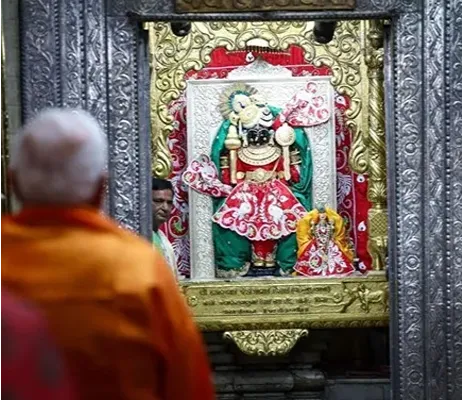
The festival has also prompted greetings from India’s senior national leaders. President Droupadi Murmu extended her wishes on the eve of Janmashtami and highlighted Krishna’s teachings on truth, righteousness, justice, compassion and selfless service. She also linked these values with social harmony and devotion to duty.
Credit: Prime Minister’s Office
Prime Minister Narendra Modi greeted the nation on September 4 and emphasised Krishna’s message of selfless action. He also invoked a traditional Sanskrit verse dedicated to Krishna and wished that the occasion bring positive energy and strength to people’s lives.
The messages from the President and Prime Minister place particular emphasis on the ethical dimension of the festival. Rather than focusing only on celebration, they draw attention to values such as duty, morality, service and responsible action.
How India Celebrates Janmashtami 2026
Across India, Janmashtami is observed through a mix of religious rituals and community celebrations. Devotees often fast during the day before joining prayers and special ceremonies. Homes and temples are decorated with flowers, lights and Krishna idols, while children frequently dress as Krishna and Radha.
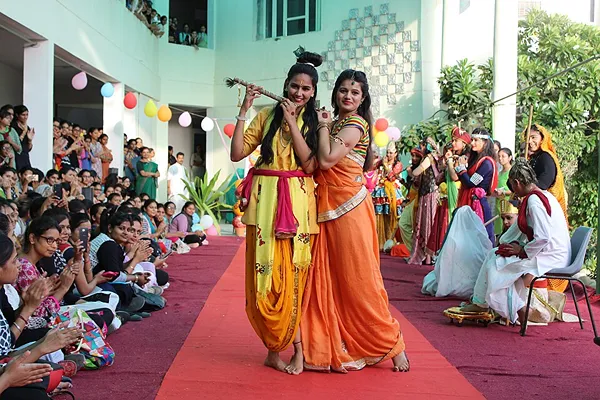
In Mathura and Vrindavan, celebrations draw on the region’s strong connection with Krishna’s life. Devotional music, dance, theatre and Ras Leela performances form an important part of the festivities.
Maharashtra adds a distinctly energetic element through Dahi Handi. Participants form human pyramids to break a suspended pot filled with curd or butter. Inspired by stories of Krishna’s childhood, the tradition has developed into a major community and cultural event.
Why Krishna’s Teachings Still Matter Today
The lasting importance of Janmashtami lies partly in the ideas associated with Krishna’s teachings. In the Bhagavad Gita, Krishna guides Arjuna through a moral dilemma and discusses duty, responsibility, action and righteousness. One of the central lessons is the importance of performing one’s duty without becoming excessively attached to the result. That principle remains relevant in modern life, particularly when individuals and leaders must make difficult decisions under pressure.
Krishna’s teachings also emphasise self-discipline and moral courage. These ideas extend beyond politics and leadership, offering a broader framework for understanding personal responsibility and resilience. This philosophical dimension helps explain why Krishna continues to resonate with younger generations. The stories may be ancient, but the questions surrounding duty, ethics and difficult choices remain contemporary.
Janmashtami 2026: Culture and Soft Power
Janmashtami also has significance for India’s cultural diplomacy. The festival showcases a living tradition that has evolved across different regions while retaining a shared cultural foundation. India has increasingly promoted its cultural heritage internationally through yoga, Ayurveda, classical arts, cuisine and traditional festivals. Janmashtami contributes to this broader cultural presence through religious tourism, overseas celebrations and Indian diaspora communities.
Its international reach has also expanded through digital platforms. Temple ceremonies, devotional music and cultural performances can now reach audiences far beyond India. This allows Indian communities abroad to maintain cultural connections while introducing international audiences to Krishna traditions.
For India, such cultural visibility can complement its wider diplomatic engagement. It presents the country not only through its economic and strategic capabilities but also through its civilisational heritage and contemporary cultural life.
Conclusion
Janmashtami 2026 combines religious devotion with cultural expression and philosophical reflection. Its celebrations preserve stories and traditions associated with Krishna, while the teachings attributed to him continue to shape discussions about duty, ethics and responsibility. The festival also demonstrates India’s cultural diversity, from Krishna’s sacred geography in Mathura and Vrindavan to Maharashtra’s Dahi Handi celebrations and regional traditions elsewhere.
Beyond India, its growing visibility highlights another dimension of the festival: culture can strengthen connections between communities and contribute to a country’s soft power. Janmashtami therefore remains both a deeply rooted religious occasion and a reflection of India’s evolving cultural identity.
What is Janmashtami 2026?
Janmashtami 2026 marks the birth of Lord Krishna and is being celebrated across India on September 4, 2026.
Why is Janmashtami celebrated at midnight?
According to Hindu tradition, Krishna was born at midnight. Therefore, many devotees conduct the main birth ceremony around midnight.
How is Janmashtami celebrated in India?
People observe fasting, visit temples, sing devotional songs and participate in prayers. Many regions also organise cultural performances, processions and Dahi Handi events.
Why is Krishna important in Hindu philosophy?
Krishna is a central figure in Hindu traditions. His teachings in the Bhagavad Gita address duty, ethical action, self-discipline and righteousness.
Which places are most associated with Janmashtami?
Mathura and Vrindavan are among the most important centres. Gokul and Dwarka are also strongly associated with Krishna traditions.