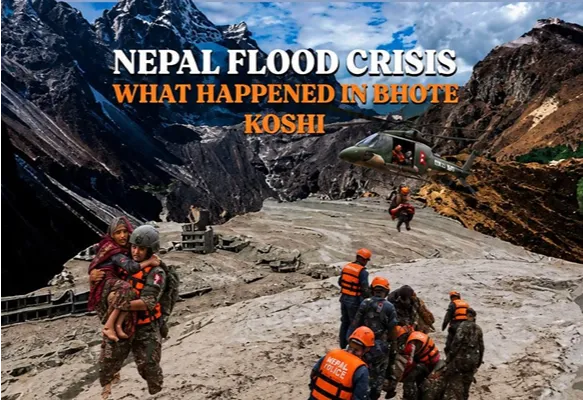

A sudden flood in Nepal has turned a remote Himalayan disaster into a fast-moving regional emergency. Within minutes, a powerful surge swept through the Bhote Koshi and Trishuli river systems, destroying bridges, roads and other vital infrastructure while leaving hundreds of people unaccounted for.
The disaster struck on August 26, 2026, near Nepal’s border with Tibet. Unlike a typical monsoon flood, the event appears to have been triggered by a suspected ice-and-rock avalanche. The collapse released huge volumes of water, mud and debris into the river system, creating a destructive flood wave that raced downstream with little warning.
The consequences now extend well beyond the immediate loss of life and property. Foreign tourists, pilgrims and residents are among those reported missing, while the affected corridor plays an important role in Nepal-Tibet connectivity. At the same time, the disaster has exposed vulnerabilities in Himalayan infrastructure and raised urgent questions about early-warning systems, disaster preparedness and cross-border coordination among Nepal, India and China.
Nepal Flood Latest Updates: 177 Dead, Hundreds Missing
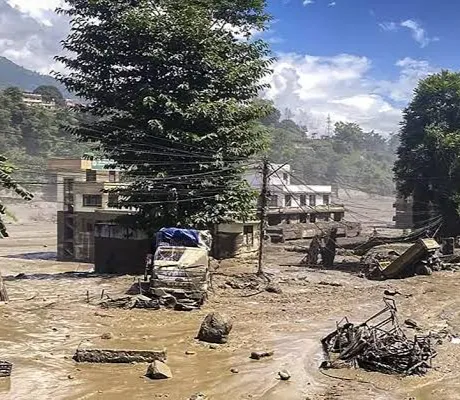
The humanitarian situation remains serious as rescue teams continue operations across the affected Himalayan districts. Authorities are still working to locate missing people, identify victims and update records as previously inaccessible areas become reachable. Nepal has reported 177 bodies recovered, while 823 people remain unaccounted for. The figures underline the scale of the disaster, particularly in areas cut off by damaged roads and bridges.
Across the border, authorities in Tibet have reported three deaths and 558 missing people in the Gyirong area. Several foreign nationals are also among those unaccounted for, adding an international dimension to the rescue effort. Because Nepal and Tibet are maintaining separate casualty records, international reports have produced different combined totals. Therefore, the widely cited figure of more than 1,300 missing people should be viewed as an evolving estimate rather than a final count.
Nepal Flood: Latest Disaster Statistics
| Year | Nepal Deaths | Nepal Missing | Tibet Deaths | Tibet Missing | Combined Missing |
|---|---|---|---|---|---|
| 2026 | 177 | 823 | 3 | 558 | 1,381 |
How the Bhote Koshi Flood Spread
The cause of the Bhote Koshi flood was initially uncertain, with early reports suggesting a possible earthquake or landslide. Later assessments pointed to a high-altitude ice-and-rock avalanche as the likely trigger. The collapse sent ice and rock into the Lhende Khola, a tributary of the Bhote Koshi, creating a sudden surge of water and debris.
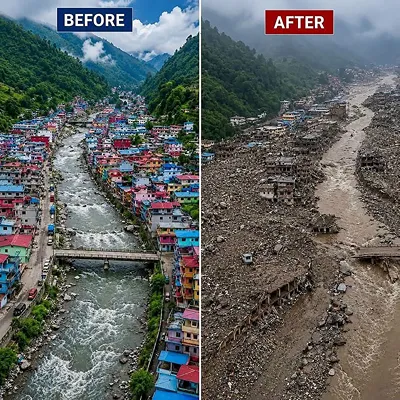
The flood carried huge amounts of water, mud, sediment and boulders, making it far more destructive than a normal river flood. The surge then moved rapidly from the Bhote Koshi into the Trishuli River system, affecting areas including Rasuwa, Nuwakot and Dhading. Water levels at Galchchi reportedly rose by up to nine metres within 30 minutes, leaving communities with little time to react.
The Trishuli forms part of the wider Narayani river system, which flows toward India’s northern plains. This raised concerns beyond Nepal and highlighted the transboundary nature of Himalayan disasters. The event also showed the need for faster early-warning systems that can detect sudden glacier collapses, landslides and debris flows, rather than relying only on rainfall forecasts.
Indians and Foreign Nationals Among the Missing
The presence of foreign tourists and pilgrims has added an international dimension to the disaster. The affected region is an important travel corridor between Nepal and Tibet and is also used by pilgrims travelling toward Mount Kailash and Lake Manasarovar. Reports indicate that nearly 180 Indians were among those reported missing in Nepal, including 108 pilgrims travelling as part of the Kailash Mansarovar Yatra. Nationals from the United States, Malaysia, Ukraine, Australia and several European countries have also been reported missing.
The region carries deep religious significance for Hindus, Buddhists, Jains and followers of the Bon tradition, making the pilgrimage an important spiritual journey. However, reaching Mount Kailash and Lake Mansarovar is physically demanding, with pilgrims facing high altitudes, extreme weather and difficult mountain terrain. Despite these challenges, the official MEA-organised Yatra saw 941 pilgrims complete the journey, underlining the scale and importance of the annual pilgrimage.
The large number of foreign travellers has made the rescue effort more complex. Authorities are checking immigration records, hotel registers, tourism lists and pilgrimage groups while rescue teams search damaged roads, riverbanks and isolated settlements. Some people listed as missing may already have reached safety but remain unable to contact their families. Therefore, the missing-person figure should be treated as an evolving estimate rather than a confirmed death toll.
Infrastructure Damage and the Risk of Another Flood
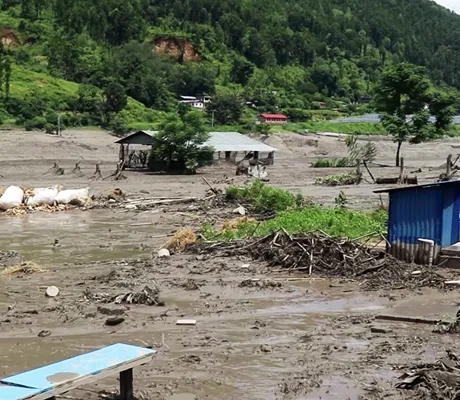
The Nepal flood has caused major damage to roads, bridges and hydropower facilities, complicating rescue operations and threatening economic activity. The Gyirong border crossing, an important Nepal-China trade and connectivity route, was also affected, disrupting transport and regional movement.
Nepal’s hydropower projects face additional risks because many are located along steep river valleys. Floodwaters, landslides and debris can damage power facilities and transmission networks, while destroyed roads make repairs more difficult. The resulting losses could increase reconstruction costs and prolong disruption.
The threat may also continue after the initial flood. Large amounts of rock and sediment can block river channels, creating temporary water bodies that may collapse suddenly. Authorities are monitoring these risks closely, particularly around the Nepal-Tibet border, where another sudden release could send floodwaters downstream.
India’s Response and the Regional Impact
For India, the Nepal flood has both humanitarian and strategic implications. Indian tourists and pilgrims are among those affected, making the safety of its citizens an immediate priority for New Delhi. India has also provided relief assistance as Nepal continues its rescue and recovery efforts.
The disaster highlights the importance of stronger India-Nepal cooperation on emergency response, satellite monitoring and real-time river data. A sudden event in Tibet can rapidly affect Nepal and potentially send floodwaters farther downstream toward India.
This shared geography makes Himalayan disaster management a regional responsibility. Better cross-border communication, faster warnings and coordinated rescue systems could reduce casualties during future emergencies.
Nepal Flood Exposes Wider Himalayan Risks
The Nepal flood struck a strategically important corridor connecting Kathmandu with the China border. Damage to roads and border infrastructure could affect trade, tourism and regional connectivity. It also exposes the vulnerability of Nepal’s northern transport network and highlights the need for India and China to monitor risks across interconnected Himalayan river systems.
The disaster has also renewed concerns about Himalayan environmental instability. Glacier retreat, changing permafrost and unstable mountain slopes can increase exposure to floods, landslides and other hazards. However, scientists have not yet established a direct link between climate change and this specific event.
The immediate priority remains finding survivors, monitoring rivers and restoring damaged infrastructure. Over the longer term, Nepal, India and China will need stronger data sharing, satellite monitoring and early-warning systems. The disaster shows that Himalayan risks cross national boundaries and require coordinated regional preparedness.
What happened in the Bhote Koshi River?
A powerful flash flood surged through the Bhote Koshi River system on August 26 after a suspected high-altitude ice-and-rock avalanche triggered a sudden debris flow.
How many people died in the Nepal flood?
Nepalese police reported 177 bodies recovered as of August 27. Three additional deaths were reported on the Tibet side.
How many people are missing?
Nepal reported 823 missing, while China reported 558 missing in Tibet. Combined, more than 1,300 people were reported missing across the two areas.
Why are so many foreign nationals affected?
The affected region is a major travel corridor between Nepal and Tibet. It is also used by tourists and pilgrims travelling toward Mount Kailash and Lake Manasarovar.
Could another flood occur?
Yes. Authorities are monitoring river blockages and unstable debris because a sudden release could create another dangerous flood wave