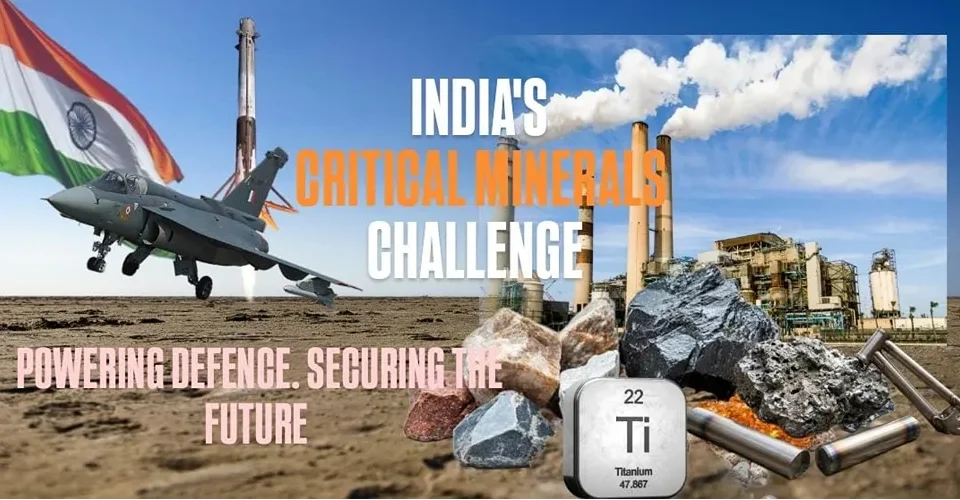

India is rapidly expanding its defence manufacturing capabilities. From Tejas fighter jets and missiles to warships, helicopters and drones, New Delhi wants more military equipment to be designed and produced at home. But beneath this push for defence self-reliance lies a less visible vulnerability: critical minerals.
Titanium, rare earth elements, tungsten, nickel, cobalt, lithium and graphite are increasingly important to advanced defence and aerospace technologies. A disruption in their supply could affect not just manufacturing costs but India’s ability to produce sophisticated military systems at scale. Recognizing this strategic challenge, the government launched the National Critical Mineral Mission (NCMM) in January 2025 to strengthen India’s entire critical-mineral value chain, from exploration and mining to processing and recycling.
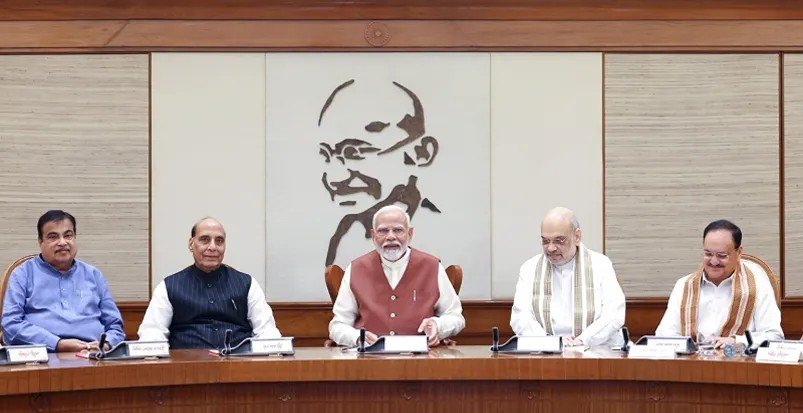
For India, therefore, the critical-minerals question is no longer simply about mining. It is increasingly about national security, defence preparedness and strategic independence.
Why Critical Minerals Matter to India’s Defence
Titanium is one of the clearest examples of why mineral security matters to India’s military ambitions. The metal combines high strength with relatively low weight and strong resistance to corrosion and high temperatures. These properties make titanium and its specialized alloys valuable in aerospace and defence applications, including aircraft structures, engine components, missiles, naval systems and space technologies. This is particularly relevant as India moves towards more ambitious indigenous aerospace programmes.
The Tejas fighter aircraft, helicopters, missiles, unmanned systems and the planned Advanced Medium Combat Aircraft (AMCA) are part of India’s broader attempt to build a stronger domestic defence-industrial base. But manufacturing the final platform in India does not automatically mean every material and component behind it is produced domestically. That distinction is crucial. India can manufacture a weapon at home while still depending on foreign supply chains for the materials needed to build it. A fighter aircraft may roll out of an Indian factory, but its production could still be exposed to disruptions in specialised metals, alloys, electronics or other advanced materials.
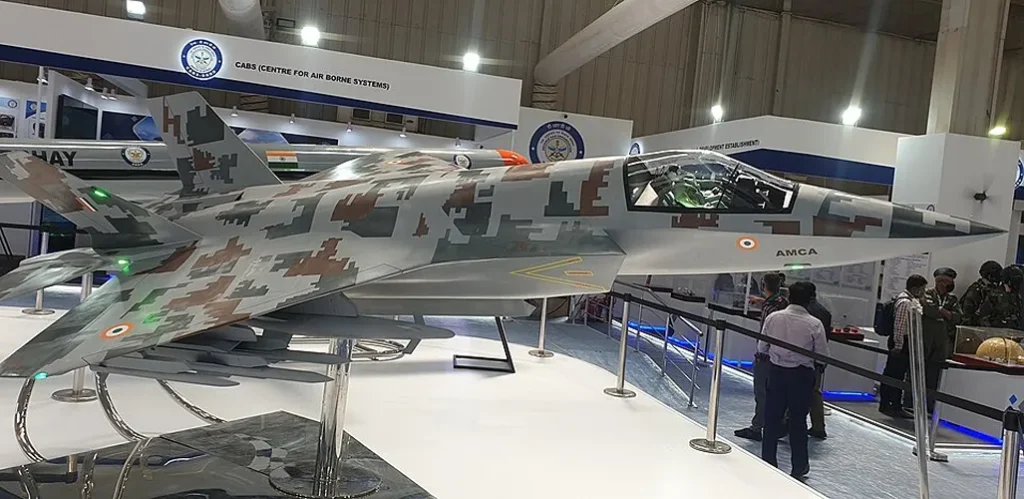
Photo: FlyingDaggers45SQUADRON / Wikimedia Commons, CC BY-SA 4.0
The same vulnerability applies across the defence sector. Rare earth elements are important for high-performance magnets, sensors and electronic systems. Tungsten has applications in military ammunition and high-temperature environments. Nickel and cobalt are used in specialized alloys and energy-storage technologies, while lithium and graphite are increasingly important for batteries. As India’s defence industry becomes more technologically sophisticated, its dependence on reliable access to such materials is likely to grow. The issue is therefore bigger than titanium. It is about whether India can secure the material foundation of its defence ambitions.
The Global Supply Chain India Cannot Ignore
The biggest mistake would be to look at critical minerals only through the question of where they are mined. The modern supply chain is much more complicated.
A mineral can move through several stages:
Mining → Beneficiation → Refining → Processing → Advanced materials → Components → Defence systems
A country can possess mineral deposits and still lack the technology, infrastructure or industrial capacity to convert those resources into the high-purity materials required by aerospace and defence manufacturers. This is where global geopolitics becomes important. China has developed significant capabilities in the processing and refining of several critical minerals. Its influence therefore extends beyond mining into the industrial stages that turn raw materials into usable products.
For countries such as India, the strategic challenge is clear: finding another source of ore does not necessarily guarantee another source of processed material. This is particularly important during a geopolitical crisis. If an important supplier suddenly becomes unavailable because of sanctions, conflict, export restrictions or shipping disruptions, replacing that supplier may take months or years rather than days.
India’s critical-minerals push
| Indicator | Figure |
|---|---|
| Critical minerals identified by India | 30 |
| National Critical Mineral Mission approved | January 2025 |
| Mission duration | 7 years |
| Government expenditure under NCMM | ₹16,300 crore |
| Expected investment by PSUs and others | ₹18,000 crore |
| Overall financial framework | ₹34,300 crore |
| Strategic mineral blocks auctioned | 24 |
| GSI critical-mineral exploration projects over previous three years | 368 |
| GSI projects underway in FY 2024-25 | 195 |
| GSI projects planned for FY 2025-26 | 227 |
These numbers show that India is already trying to address the vulnerability rather than simply recognising it.
The Mines and Minerals (Development and Regulation) Act, 1957, was amended in 2023 to encourage greater exploration and mining of critical minerals. According to the Ministry of Mines, 24 strategic mineral blocks have subsequently been auctioned. The Geological Survey of India has also expanded exploration activity, with hundreds of projects undertaken over the preceding three years. But exploration is only the beginning. India ultimately needs to build capabilities across the entire value chain.
Can India Build a Secure Mineral Shield?
The government’s National Critical Mineral Mission (NCMM) is significant because it goes beyond simply finding new mineral deposits. The seven-year mission covers the entire value chain, including exploration, mining, beneficiation, processing and recovery from end-of-life products. It also aims to speed up regulatory approvals for critical-mineral projects, provide financial incentives for exploration, support mineral processing parks, promote recycling and advance research through a proposed Centre of Excellence on Critical Minerals.
Another key part of India’s strategy is securing resources overseas. The government wants Indian PSUs and private companies to acquire critical-mineral assets abroad and strengthen partnerships with resource-rich countries. This approach is already visible through Khanij Bidesh India Ltd. (KABIL), which has acquired approximately 15,703 hectares in Argentina’s Catamarca province for lithium exploration and mining.
Such overseas partnerships can diversify India’s supply sources, but they cannot eliminate the need for domestic processing. The most strategically important part of a supply chain may not always be the mine—it can be the refinery or processing plant that converts raw minerals into materials suitable for advanced manufacturing.
That is why India needs to strengthen its ability to process both domestically sourced and imported minerals. The NCMM’s proposals for processing parks, recycling, research and strategic stockpiles are designed to build this resilience. Strategic reserves could provide a buffer during temporary international disruptions, while recycling could help recover valuable materials from India’s expanding electronics, electric-vehicle, aerospace and defence sectors.
India has also taken trade-related measures. The government said customs duties were eliminated on the majority of critical minerals in the Union Budget 2024-25, with the aim of improving domestic availability and encouraging investment in processing facilities.
Together, these measures point to a broader strategy: India does not need to produce every mineral domestically, but it does need diversified supplies, domestic processing capabilities and strategic reserves strong enough to prevent a supply disruption from becoming a national-security crisis.
The China Factor and India’s Defence Future
For India, the critical-minerals question cannot be separated from its strategic competition with China. The two countries already compete across manufacturing, technology, trade and military power. Critical minerals add another layer because control over processing and industrial supply chains can translate into geopolitical leverage. The concern is not that China controls every mineral. The greater issue is that China has built substantial capabilities in processing and refining several strategically important minerals. This gives it influence over the stages between mining and finished products.
For India, that creates a difficult question. Suppose New Delhi successfully increases domestic production of fighter aircraft, missiles and drones. What happens if access to a specialised material suddenly becomes restricted? Finding another mine may not solve the problem. The alternative supplier would also need the right processing technology, quality standards, infrastructure, transportation links and production capacity. This is why critical minerals should be viewed as a defence-planning issue rather than merely a mining issue.
The challenge becomes even more important as India attempts to expand its defence exports and reduce dependence on imported military equipment. The idea of Atmanirbhar Bharat therefore needs to extend beyond the final assembly line. A genuinely resilient defence ecosystem requires security across the chain:
Raw materials → Processing → Components → Technology → Manufacturing → Maintenance
Critical minerals sit near the beginning of that chain. If their supply is disrupted, factories may remain operational, but production can still slow. That does not mean India is facing an immediate critical-mineral crisis. Instead, it highlights a vulnerability that could become more serious as defence production expands and military technology becomes more resource intensive. The strategic competition of the future may therefore not be decided only by who has the most advanced fighter, missile or drone. It may also depend on who can secure the minerals and materials needed to manufacture those systems when global supply chains come under pressure.
For India, the National Critical Mineral Mission is an important step in that direction. But the larger test will be implementation—turning exploration projects, overseas assets, processing facilities, recycling systems and strategic reserves into a supply chain capable of supporting the country’s defence ambitions. The battlefield may be where wars are fought. But the next strategic contest could begin much earlier—in mines, refineries, processing plants and supply routes spread across the world. For India, securing those links could be as important as securing the weapons themselves.
Why are critical minerals important for India’s defence industry?
Critical minerals are essential for producing aircraft, missiles, electronics, sensors, batteries, specialised alloys and other advanced defence technologies. Supply disruptions could affect India’s ability to manufacture military systems.
Why is titanium important for India’s military?
Titanium is lightweight, strong and resistant to corrosion and high temperatures. These properties make it valuable for fighter aircraft, engines, missiles, naval systems and aerospace applications.
Is India dependent on other countries for critical minerals?
Yes. India has domestic resources for some critical minerals, but it remains dependent on imports and international supply chains for several minerals, refined materials and specialised processing capabilities.
Why is China important in the global critical-minerals supply chain?
China has significant capabilities in the processing and refining of several critical minerals. This gives it influence over important stages between mining and the manufacture of advanced industrial and defence products.
How is India trying to secure its critical-mineral supply?
India is pursuing domestic exploration, processing, recycling, overseas resource partnerships and strategic investments. The National Critical Mineral Mission is a major part of this effort to build a more resilient supply chain.