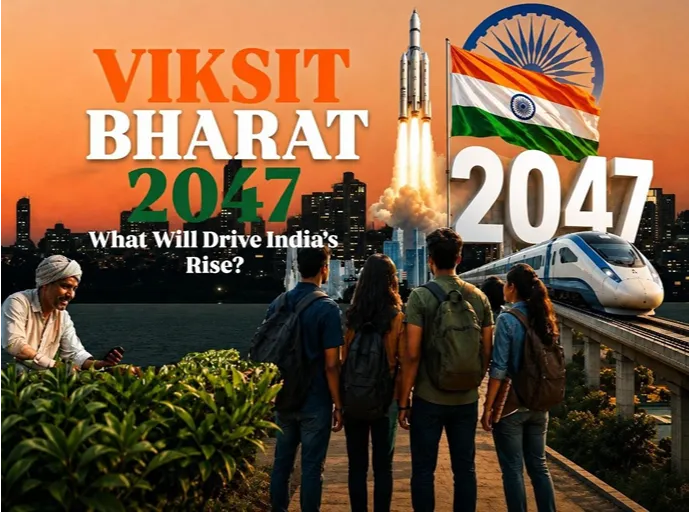

Viksit Bharat 2047 is more than a long-term development target. It reflects India’s ambition to become a developed, prosperous and globally influential nation by 2047, the centenary of independence. Achieving this vision will require sustained economic growth, productive employment, modern infrastructure, technological innovation and higher living standards. At the same time, India must navigate energy security, climate challenges, artificial intelligence and an increasingly competitive global environment.
The scale of this transformation makes Viksit Bharat 2047 a broader national development framework rather than simply a political slogan. Its success will depend on how effectively India converts its demographic advantage, economic potential and technological capabilities into inclusive and sustainable growth.
The vision has also sought to involve India’s youth in shaping the country’s long-term development. In 2023, PM Narendra Modi launched the “Viksit Bharat 2047, Voice of Youth” initiative through video conferencing.
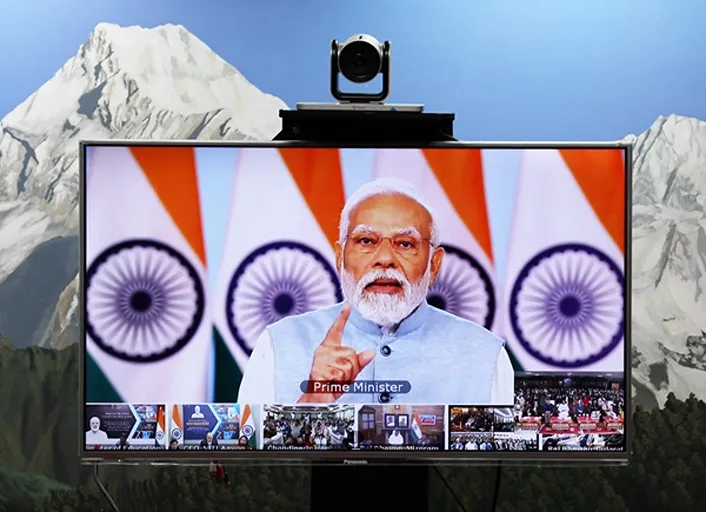
Credit: PIB
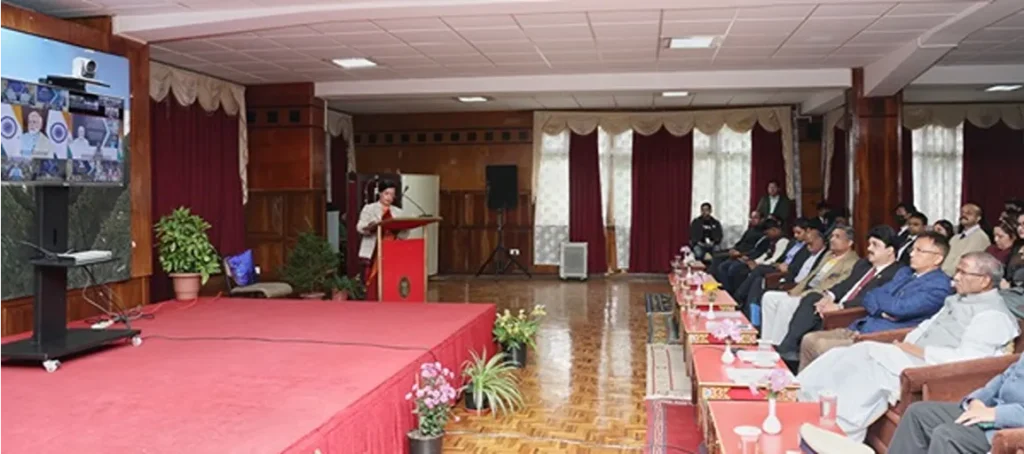
Credit: PIB
The programme brought together vice-chancellors, heads of institutions and faculty members at workshops held at Raj Bhavans across the country. The initiative aimed to encourage young Indians and academic institutions to contribute ideas for India’s transformation by 2047.
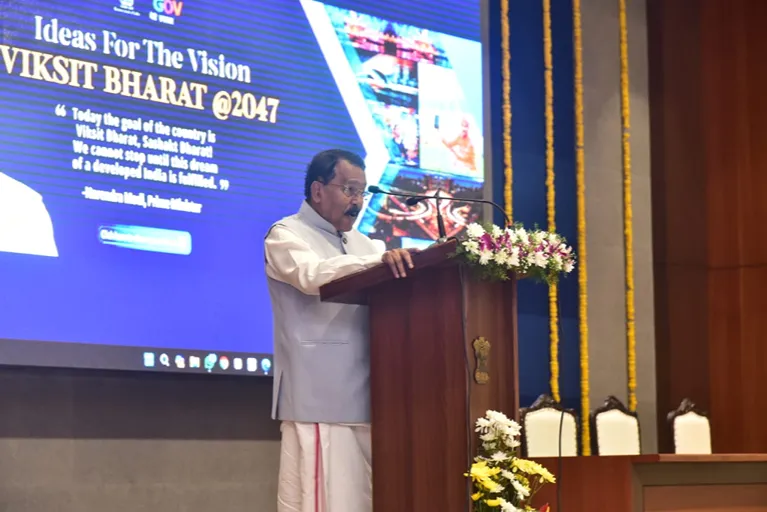
Credit: PIB
What Is Viksit Bharat 2047?
Viksit Bharat 2047 is India’s long-term national vision to become a developed country by 2047, marking 100 years of independence. It seeks to transform India into a stronger, more prosperous and self-reliant economy while improving the quality of life for its citizens.
The vision goes beyond measuring progress by GDP alone. It focuses on economic growth, employment, modern infrastructure, technological innovation, social development, environmental sustainability and effective governance. The broader objective is to ensure that economic progress translates into better opportunities and living standards across society.
To achieve this ambition, India is aligning policies in areas such as manufacturing, digital technology, agriculture, energy, education, healthcare and infrastructure with long-term development goals. The approach also places greater emphasis on inclusive growth, ensuring that rural communities and vulnerable sections benefit from India’s economic transformation. Ultimately, Viksit Bharat 2047 is an attempt to build an India that is economically powerful, technologically advanced, socially inclusive and capable of playing a larger role in global affairs.
Vision and Purpose of Viksit Bharat 2047
The core vision of Viksit Bharat 2047 is to build an India that combines economic strength with human development. Becoming a developed nation will require higher incomes, stronger productivity and modern infrastructure. However, growth must also improve opportunities and living standards for households, farmers, workers, entrepreneurs and young people.
India’s young population is a major advantage, with around 65% of the population under 35. This creates a large potential workforce and consumer base. However, this demographic strength will deliver results only if India expands quality education, skills and productive employment. Therefore, inclusive development remains central to the 2047 ambition.
The purpose of Viksit Bharat 2047 also extends to strengthening India’s strategic position. A stronger manufacturing base, reliable energy supplies, advanced technology and diversified trade can reduce dependence on external sources and improve resilience. Ultimately, the goal is to convert India’s economic and demographic potential into higher incomes, better public services, greater self-reliance and stronger global influence.
Viksit Bharat 2047: Seven Key Pillars
The success of Viksit Bharat 2047 will depend on how effectively India strengthens several interconnected areas. Rather than treating development as a single economic target, the vision combines industrial growth, infrastructure, technology, human capital, agriculture, energy and social development.
| Pillar | Key Focus | 2047 Outlook |
|---|---|---|
| Economic Growth | Manufacturing, investment and exports | Move towards a high-value, globally competitive economy |
| Infrastructure | Roads, railways, ports, airports and digital networks | Faster connectivity and lower logistics costs |
| Technology | AI, semiconductors, space, biotechnology and quantum technology | Greater technological and strategic autonomy |
| Youth & Jobs | Education, skills, entrepreneurship and employment | Convert demographic strength into productive human capital |
| Agriculture | Technology, irrigation, storage and rural infrastructure | Higher productivity and higher rural incomes |
| Energy | Renewables, nuclear power and energy security | Reliable and cleaner energy for long-term growth |
| Inclusive Development | Healthcare, education, housing and social protection | Broader improvements in living standards |
These pillars are closely connected. Economic growth requires infrastructure and energy, while technology and skilled workers can raise productivity. Similarly, stronger agriculture and public services are essential for ensuring that development reaches rural and lower-income communities.
What Could Stop India’s Rise?
The journey to 2047 will face significant challenges. India must create enough quality jobs, improve learning outcomes, raise workforce productivity and manage rapid urbanisation. At the same time, climate pressures, energy-price volatility, trade disputes and geopolitical tensions could disrupt growth.
Another challenge is maintaining policy continuity over several decades. Viksit Bharat 2047 is a long-term transformation rather than a single government programme. Its success will ultimately depend on sustained reforms, private investment, technological innovation and the ability to convert economic growth into higher living standards.
Conclusion
Viksit Bharat 2047 is ultimately a test of whether India can turn its demographic strength, economic potential and technological capabilities into sustained national development. The country has several advantages, including a large domestic market, young workforce, expanding infrastructure and growing global economic influence.
However, becoming a developed nation requires more than a larger GDP. India must create productive jobs, raise per-capita incomes, strengthen advanced industries, improve public services and maintain energy and strategic security. At the same time, it must respond to climate risks, technological disruption and changing global power dynamics.
The next two decades will therefore be crucial. The real measure of Viksit Bharat 2047 will not simply be India’s position among the world’s largest economies, but whether its growth delivers broader prosperity and a higher quality of life. The ambition is clear; the challenge now is sustaining the reforms, investment and productivity needed to turn that ambition into reality.
What is Viksit Bharat 2047?
Viksit Bharat 2047 is India’s long-term vision to become a developed nation by 2047, the centenary year of independence.
What are the main pillars of Viksit Bharat 2047?
Major areas include economic growth, infrastructure, manufacturing, technology, employment, agriculture, energy security, human development and effective governance.
Why is 2047 important for India?
2047 marks 100 years since India became independent. It provides a long-term national target for achieving developed-country status.
How important is technology to Viksit Bharat 2047?
Technology is critical because AI, semiconductors, biotechnology, space technology and digital infrastructure can raise productivity and strengthen India’s strategic autonomy.
What are the biggest challenges to Viksit Bharat 2047?
Job creation, skills, income levels, infrastructure, energy security, inequality, productivity and global economic uncertainty are among the biggest challenges.