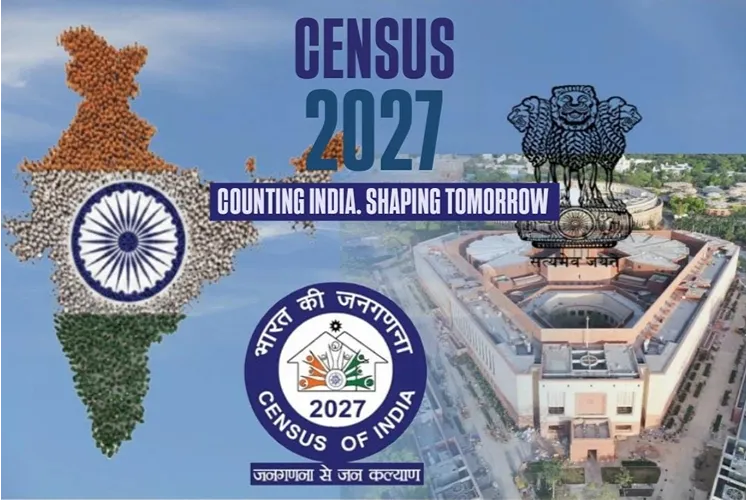

India is preparing for one of its most consequential statistical exercises in decades. Census 2027 will not simply count the country’s population; it could influence welfare planning, resource allocation, caste policy, electoral representation and the future balance of power between India’s states.
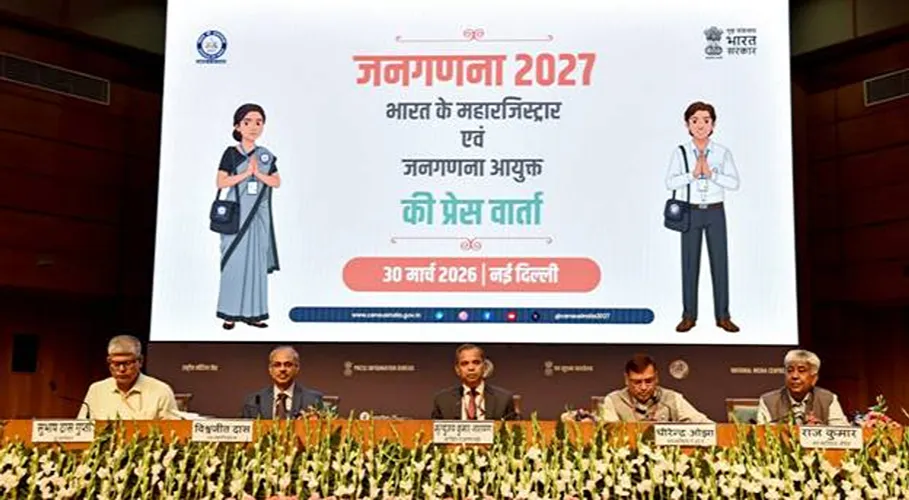
The exercise comes after a gap of 16 years since the 2011 Census, with the 2021 Census having been postponed during the COVID-19 pandemic. The government has now announced Census 2027, which will be conducted digitally and will include caste enumeration for the first time in independent India’s regular Census exercise.
With India’s population expected to have crossed 1.4 billion, the new data could reveal how dramatically the country has changed since 2011.
Census 2027: What Will Be Different?
Census 2027 is scheduled to be conducted in two phases. The first phase will involve the House Listing and Housing Census, followed by the Population Enumeration phase. For most of India, the population reference date will be 1 March 2027. For snow-bound areas, the reference date will be 1 October 2026.
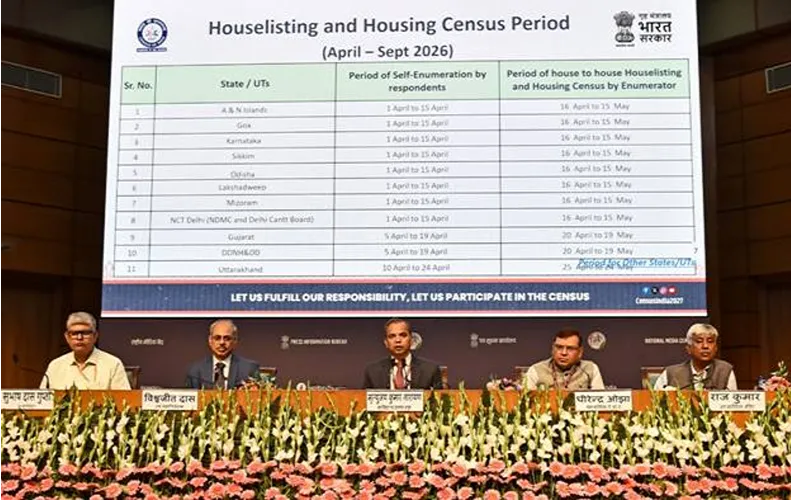
One of the biggest changes will be technology. Census 2027 is planned as India’s first digital Census, with enumerators using mobile applications rather than relying entirely on traditional paper-based forms. The exercise is also expected to use digital monitoring and data-management systems to improve the speed and quality of data collection.
Another major development is caste enumeration. The decision has considerable political and policy significance because updated nationwide caste data could influence discussions surrounding reservations, welfare programmes, social justice and political representation. However, it is important to distinguish between Census 2027 data and population projections. The Census has not yet produced a new official population count. Figures available before enumeration are estimates and projections rather than Census results.
India’s Population: 2011 vs 2027
| Indicator | Census 2011 | Around 2027* |
|---|---|---|
| Total population | 1.21 billion | Around 1.47 billion |
| Population increase from 2011 | — | Around 260 million |
| Urban population | 377 million | Expected to be substantially higher |
| Rural population | 833 million | Expected to remain the majority, but with a declining share |
| Population growth trend | Relatively high | Slowing |
| Census status | Official Census count | Projection/estimate until enumeration |
*The 2027 figure is an estimate based on demographic projections, not the final Census 2027 result.
The comparison illustrates why Census 2027 matters. India has not simply become more populous; its demographic structure has also changed. Fertility has declined, urbanisation has accelerated, migration has increased and the age profile of different states has begun to diverge sharply.
Why Census 2027 Could Change Politics
The biggest political question surrounding Census 2027 is what happens after the population data is published. The Constitution links parliamentary representation to population, while the allocation of Lok Sabha seats among states has remained frozen for decades, with the current freeze continuing until after the first Census conducted following 2026.
That makes the post-Census period particularly important. A future delimitation exercise could redraw parliamentary and assembly constituencies using updated population data. If representation is redistributed more closely according to population, states that have experienced faster population growth could potentially gain greater political representation.
This is where the North-South debate becomes politically sensitive. States such as Uttar Pradesh and Bihar have recorded substantial population growth, while Tamil Nadu and Kerala have experienced lower fertility and slower population growth. Southern states have argued that they should not lose political influence because they successfully implemented population-control policies.
The opposing argument is equally powerful: India’s democratic principle requires representation to broadly reflect the number of citizens. The result could be a difficult constitutional question — should India prioritise equal representation by population, or protect the political weight of states that achieved demographic stability?
Any eventual change, however, will depend on the constitutional and legal framework governing delimitation after the Census. The final impact cannot be determined until the population data and subsequent delimitation process are completed.
Population and Political Weight
| State/Region | Demographic trend | Possible political significance |
| Uttar Pradesh | Very large population; growth remains significant | Could become even more important in future seat calculations |
| Bihar | Large and relatively young population | Potential increase in political weight |
| Rajasthan | Strong population growth historically | Could gain relative representation |
| Madhya Pradesh | Significant population growth | Important in delimitation debate |
| Tamil Nadu | Low fertility and slower growth | Concern over relative political representation |
| Kerala | Very low fertility and ageing population | Strong focus on demographic reward |
| Karnataka | Lower fertility than many northern states | Representation debate linked to population and economic contribution |
| Andhra Pradesh | Lower fertility and slower demographic growth | Potential concern over seat redistribution |
These outcomes are not yet final. Census 2027 will provide the data, but the eventual redistribution of seats will depend on the constitutional and legal process that follows.
Caste Data, Economy and the India Census
The political importance of Census 2027 extends beyond delimitation. Caste enumeration could become one of its most consequential components. India has lacked comprehensive, contemporary caste population data for most communities since the 1931 Census, although Scheduled Castes and Scheduled Tribes have been enumerated in subsequent Censuses.
New caste data could provide policymakers with a clearer understanding of India’s social composition and potentially reshape debates over:
- Reservation policies
- Welfare targeting
- Educational opportunities
- Government recruitment
- Social justice programmes
- Political representation
The findings could also create new political pressures. If actual population shares differ substantially from existing estimates, political parties and social groups could demand changes to government policies and representation.
For the economy, Census 2027 could provide an updated picture of housing, migration, urbanisation, household conditions and demographic distribution. India’s economic transformation is increasingly urban, with millions of people moving between rural and urban areas in search of employment, education and better living conditions. Updated Census data could therefore help governments plan cities, transport networks, housing, healthcare and schools more effectively.
The age structure will be equally important. India remains relatively young compared with many major economies, but demographic ageing is already becoming a serious issue in states with very low fertility. This means India could increasingly face two different demographic realities: a young workforce in several states and a rapidly ageing population in others.
That demographic divergence could influence everything from healthcare spending and pension planning to labour migration and the future distribution of India’s workforce.
The Bigger Question: What Will Census 2027 Reveal?
The real importance of Census 2027 lies in what the numbers reveal about India’s transformation since 2011. The country is likely to discover a more urban, mobile and increasingly diverse demographic landscape, with significant differences between states in fertility, ageing, migration and social composition.
For policymakers, this information could be invaluable. Governments cannot effectively plan schools, hospitals, housing, employment programmes and infrastructure using population data that is more than a decade old. At the same time, the findings could trigger difficult political debates, particularly when population data is combined with caste enumeration and future delimitation.
This combination could make Census 2027 one of the most politically sensitive exercises in modern India. The central challenge will be finding a balance between demographic representation and federal fairness, particularly as states have followed very different demographic paths since 2011.
India’s population has changed dramatically over the past decade and a half. The question now is whether its political and policy systems can adapt to those changes without creating a deeper divide between states.
Census 2027 could ultimately be more than a count of India’s people. It could become the statistical foundation for India’s next political, economic and social transformation.
When will Census 2027 take place?
Census 2027 will be conducted in two phases. The reference date for most of India is 1 March 2027, while snow-bound areas will use 1 October 2026 as their reference date.
Will Census 2027 include caste data?
Yes. The government has announced that caste enumeration will be included in Census 2027, making it a major source of updated information on India’s social composition.
Will Census 2027 immediately change Lok Sabha seats?
No. Census data and delimitation are separate processes. Census 2027 will provide demographic data, while any future redistribution of seats will require the appropriate constitutional and legal process.
Why are southern states concerned about Census 2027?
Southern states generally have lower fertility and slower population growth. They are concerned that population-based delimitation could reduce their relative political representation despite their demographic and economic contributions.
Why is Census 2027 important for India’s economy?
Updated demographic data can help governments plan infrastructure, healthcare, education, housing, employment policies and urban development according to India’s changing population distribution.