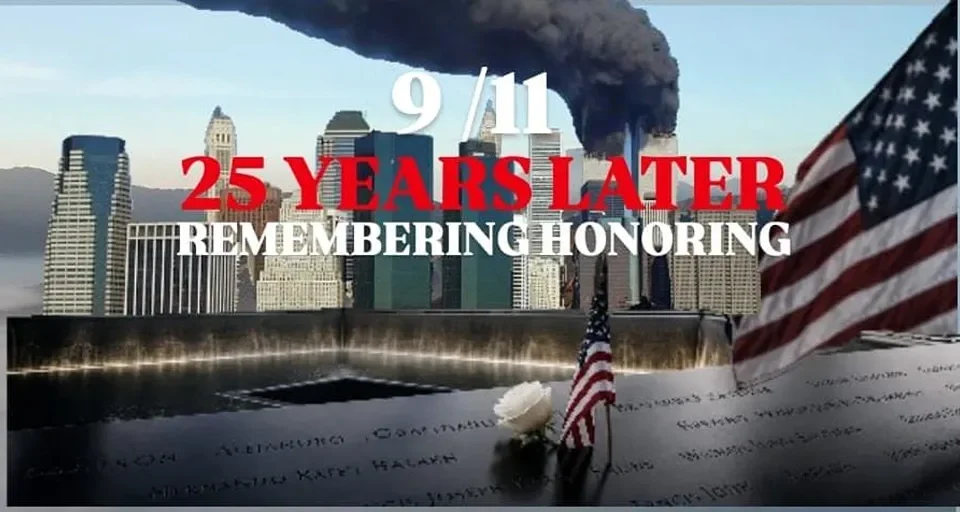

On September 11, 2001, four hijacked passenger planes turned an ordinary morning into a global security crisis. Nineteen al-Qaeda hijackers seized the aircraft, with two crashing into New York’s World Trade Center, one striking the Pentagon, and Flight 93 crashing near Shanksville, Pennsylvania, after passengers fought back.
The 9/11 attacks killed 2,977 victims, including 343 firefighters, 23 NYPD officers and 37 Port Authority police officers. The attacks caused massive destruction and triggered the U.S.-led War on Terror, the Afghanistan war, major intelligence reforms and sweeping changes to aviation and counterterrorism security. Twenty-five years later, the impact of 9/11 continues to shape global security and foreign policy. As the 25th anniversary approaches in 2026, its legacy remains relevant to debates over terrorism, intelligence cooperation, military intervention and civil liberties.
Who Planned the 9/11 Attack?
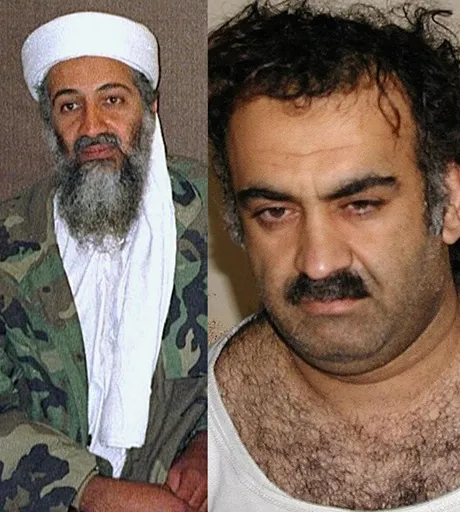
The 9/11 attack was organized by al-Qaeda, led by Osama bin Laden. Khalid Sheikh Mohammed played a central role in developing the aircraft-based plot and was later identified by the 9/11 Commission as its principal architect. The plan evolved over several years, with al-Qaeda selecting targets, recruiting operatives and arranging training, travel and logistics. Several hijackers, including Mohamed Atta, Marwan al-Shehhi and Ziad Jarrah, were linked to the Hamburg group in Germany, while others received aviation training in the United States. The operation demonstrated al-Qaeda’s ability to coordinate a complex, cross-border terrorist network.
How 9/11 Unfolded
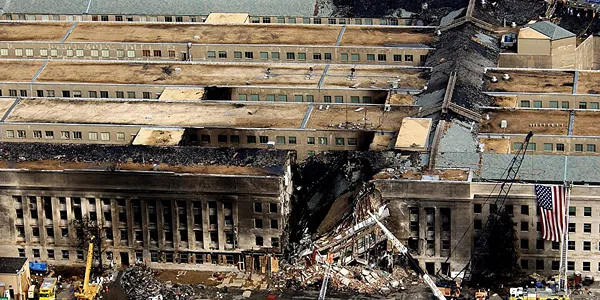
Four commercial aircraft were hijacked on September 11, 2001. American Airlines Flight 11 struck the World Trade Center’s North Tower at 8:46 a.m., followed by United Airlines Flight 175 hitting the South Tower at 9:03 a.m. American Airlines Flight 77 crashed into the Pentagon at 9:37 a.m., while United Airlines Flight 93 crashed near Shanksville, Pennsylvania, at 10:03 a.m. after passengers attempted to retake control. The attacks caused massive destruction, and the Twin Towers collapsed at 9:59 a.m. and 10:28 a.m., respectively. The collapse also devastated Lower Manhattan and killed 343 firefighters, along with numerous police officers and other emergency personnel.
Flight 93 became a defining example of resistance during the attacks. After learning about the earlier hijackings through phone calls, passengers confronted the hijackers, preventing the aircraft from reaching its intended target in Washington. Meanwhile, the attacks exposed major weaknesses in U.S. intelligence coordination. Agencies had received warnings about al-Qaeda activity before September 2001, including the August 2001 briefing titled “Bin Ladin Determined To Strike in US.” However, crucial information was not effectively connected or acted upon, becoming a central finding of the subsequent 9/11 Commission investigation.
9/11 Attack Timeline
| Date / Year | Major Development |
|---|---|
| 1988 | Al-Qaeda emerged under Osama bin Laden. |
| 1993 | A terrorist bombing targeted the World Trade Center. |
| 1996 | Bin Laden intensified his campaign against the United States. |
| 1998 | Al-Qaeda-linked bombings targeted U.S. embassies in Kenya and Tanzania. |
| 2000 | The USS Cole was attacked in Yemen, killing 17 U.S. sailors. |
| August 2001 | U.S. intelligence warned of a possible bin Laden attack inside the United States. |
| September 11, 2001 | Nineteen hijackers seized four aircraft, attacking targets in New York, Virginia and Pennsylvania. |
| October 2001 | The United States launched military operations in Afghanistan against al-Qaeda and the Taliban. |
| 2002 | The Homeland Security Act paved the way for the Department of Homeland Security. |
| 2003 | The Department of Homeland Security began operations, while the U.S. invaded Iraq. |
| 2004 | The 9/11 Commission released its final report on the attacks and intelligence failures. |
| 2011 | U.S. forces killed Osama bin Laden in Abbottabad, Pakistan. |
| 2021 | The U.S. withdrawal from Afghanistan ended its nearly 20-year military campaign. |
| 2026 | The world marks the 25th anniversary of the 9/11 attacks. |
How 9/11 Changed Global Security
The 9/11 attacks transformed counterterrorism and international security. Before 2001, terrorism was largely treated as a criminal and intelligence challenge. After the attacks, major terrorist networks were increasingly viewed as strategic national-security threats.
Governments strengthened intelligence sharing, border controls, aviation security, financial surveillance, counterterrorism operations and emergency preparedness. The United States also created new institutions to improve homeland-security coordination. However, these measures also sparked lasting debates over surveillance, privacy and executive power.
The impact quickly extended beyond the United States. NATO invoked Article 5 for the first and only time in its history, treating the attacks as a collective-security challenge. The alliance supported the U.S. through intelligence cooperation and other measures before becoming deeply involved in the mission in Afghanistan. Thus, 9/11 changed not only U.S. security policy but also the way major powers approached terrorism and collective defense.
The Wider Impact of 9/11
The 9/11 attack triggered major changes in U.S. foreign policy, domestic security and public health. The United States invaded Afghanistan in October 2001 to dismantle al-Qaeda and remove the Taliban government that had sheltered it. Although the Taliban was initially removed from power, the conflict developed into a prolonged insurgency. NATO later supported the mission, which expanded toward strengthening Afghan institutions and security forces. The war lasted nearly two decades before U.S. forces withdrew in 2021, allowing the Taliban to return to power.
The post-9/11 environment also shaped the 2003 Iraq War, although Iraq was not responsible for the attacks. The conflict was justified by broader U.S. security concerns, including claims about weapons of mass destruction, and later contributed to instability across the Middle East. At home, the United States created the Department of Homeland Security and strengthened airport screening through the Transportation Security Administration. Meanwhile, thousands of first responders, recovery workers and residents exposed to conditions at Ground Zero later suffered serious illnesses. These lasting health consequences show that the human cost of 9/11 extended far beyond the 2,977 people killed on the day of the attacks.
9/11 Legacy in a New Era
As September 11, 2026 marks the 25th anniversary of the attacks, the focus is shifting from firsthand memory to remembrance and historical education. The National September 11 Memorial & Museum is commemorating the anniversary while highlighting the growing number of Americans who were born after the attacks or were too young to remember them.
The security landscape has also changed. Terrorist networks are more decentralized, while digital platforms can accelerate recruitment and propaganda. Governments now face additional threats from cyberattacks, drones and hybrid warfare. The central lesson remains the need to identify threats early, but post-9/11 experience also highlights the importance of protecting privacy, civil liberties and democratic institutions while maintaining national security.
Conclusion
The 9/11 attacks reshaped global security, U.S. foreign policy and counterterrorism. It led to the wars in Afghanistan and Iraq, stronger intelligence cooperation, tighter airport security and new homeland-security institutions.
Beyond geopolitics, its human impact continues through the deaths and long-term illnesses linked to the attacks. As the 25th anniversary approaches in 2026, the 9/11 attacks remain a lasting reminder of the need to balance national security, intelligence and civil liberties.
When did the 9/11 attack happen?
The attacks occurred on September 11, 2001. Nineteen al-Qaeda hijackers seized four commercial aircraft.
Who planned the 9/11 attack?
Al-Qaeda orchestrated the operation. Osama bin Laden provided strategic leadership, while Khalid Sheikh Mohammed played a central role in developing the plot.
How many people died in the 9/11 attacks?
2,977 victims were killed, excluding the 19 hijackers.
What countries were affected by the 9/11 attacks?
The immediate attacks occurred in the United States, but citizens from more than 90 countries were among the victims. The geopolitical consequences spread worldwide.
Why did the 9/11 attacks change global security?
The attacks led to major changes in intelligence cooperation, aviation security, counterterrorism policy and military strategy. NATO also invoked Article 5 for the first time.