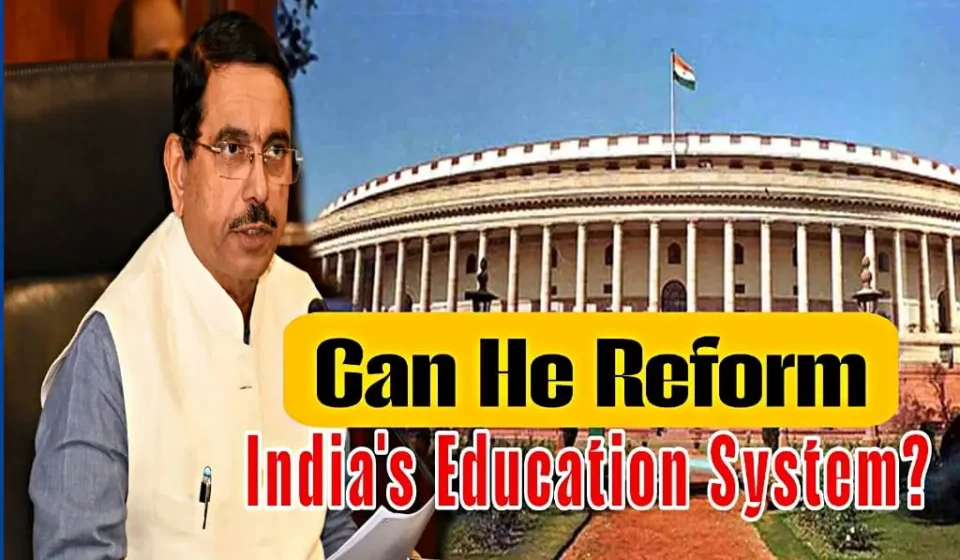

Pralhad Joshi, the new Education Minister of India, takes charge at a time when the country’s education system stands at one of its most critical crossroads in recent years. Following the resignation of Dharmendra Pradhan, the veteran Bharatiya Janata Party (BJP) leader has been entrusted with leading the Ministry of Education. The appointment comes as the ministry faces intense public scrutiny over examination security, implementation of the National Education Policy (NEP), and the need to restore public confidence in India’s competitive examination system.
Pralhad Joshi brings extensive experience in government administration and parliamentary affairs to the Education Ministry. Having handled multiple Cabinet portfolios, he is expected to focus on governance, coordination, and implementation of reforms. At the same time, observers note that the ministry faces complex education-specific challenges that will require close collaboration with academic institutions, regulatory bodies, and policy experts.
Who Is Pralhad Joshi?
Pralhad Venkatesh Joshi is a senior BJP leader from Karnataka and one of the party’s most experienced parliamentarians. Born on 27 November 1962 in Karnataka, Joshi entered public life through grassroots politics before rising steadily within the BJP organization. He graduated with a Bachelor of Arts degree from Shri Kadasiddheshwar Arts College in Hubballi. Over the years, he built a reputation as a disciplined organizational leader capable of handling politically sensitive assignments.
His parliamentary journey began in 2004, when he was elected to the Lok Sabha from the Dharwad constituency. Since then, he has successfully retained the seat in every general election, making him one of Karnataka’s most consistent BJP performers. Apart from electoral politics, Joshi also served as the President of the Karnataka BJP, where he played an important role in strengthening the party’s organizational structure across the state.
Pralhad Joshi’s Political Journey
Unlike leaders who quickly rise through ministerial appointments, Joshi spent years working within the party organisation before becoming a Union Cabinet Minister. His image has largely been that of a consensus builder who focuses on administration rather than political theatrics. During parliamentary sessions, he has often been responsible for negotiating legislative business between the government and opposition parties. This administrative experience eventually led to his appointment as Union Minister in Prime Minister Narendra Modi’s cabinet.
Ministerial Experience
| Ministry | Role | Key Responsibilities |
|---|---|---|
| Parliamentary Affairs | Cabinet Minister | Managed legislative business in Parliament and coordinated between ministries. |
| Coal | Cabinet Minister | Oversaw coal production, mining reforms and energy security initiatives. |
| Mines | Cabinet Minister | Supervised mining policy, mineral development and regulatory reforms. |
| Consumer Affairs, Food & Public Distribution | Cabinet Minister | Managed food grain procurement, PDS reforms, consumer protection and food security. |
| New & Renewable Energy | Cabinet Minister | Promoted solar energy, wind energy, green hydrogen and India’s renewable energy targets. |
| Education (Additional Charge) | Union Minister | Responsible for education policy, national examinations, higher education and implementation of NEP 2020. |
His diverse ministerial experience suggests that the government values his administrative capabilities across multiple sectors.
Why Was Pralhad Joshi Given the Education Ministry?
The appointment follows a politically sensitive period for the Ministry of Education. The government has faced criticism over examination management, particularly after controversies surrounding national entrance examinations. Questions about examination security, transparency, and accountability have dominated political discussions over the past year.
Assigning an experienced administrator like Joshi appears to be an effort to strengthen governance within the ministry while ensuring smoother coordination with Parliament and other ministries. Government supporters argue that managing the education ministry today requires not only educational expertise but also administrative discipline, policy coordination, and crisis management.
Current Challenges Before the New Education Minister
Taking charge of India’s education system is never an easy assignment. For Pralhad Joshi, the challenges are immediate and significant.
1. Restoring Trust in National Examinations
Perhaps the biggest challenge is rebuilding confidence in competitive examinations. Millions of students appear for entrance examinations every year. Even isolated allegations of irregularities can create nationwide anxiety. The ministry will be expected to strengthen examination security, improve digital monitoring, and ensure timely investigations whenever concerns arise.
2. Implementation of National Education Policy (NEP) 2020
The National Education Policy remains one of the government’s flagship reforms. However, implementation varies across states. Key priorities include:
- Curriculum reforms
- Teacher training
- Digital education
- Multidisciplinary higher education
- Vocational learning
- Increased Gross Enrollment Ratio
Coordinating with state governments will remain essential since education is a subject involving both the Centre and the states.
3. University Governance
India’s higher education institutions continue to face issues related to:
- Faculty shortages
- Research funding
- Infrastructure
- International rankings
- Academic autonomy
The ministry will have to balance expansion with quality.
4. Digital Education
The COVID-19 pandemic accelerated digital learning, but unequal internet access remains a concern. Future reforms may focus on:
- AI-assisted learning
- Digital classrooms
- Online certification
- Rural connectivity
- Teacher digital training
5. Skill Development
Industry demands are changing rapidly. Employers increasingly seek graduates with practical skills rather than theoretical knowledge alone. Strengthening industry-academia partnerships could become another important priority.
What Does the Opposition Want?
Opposition parties have consistently raised several demands regarding the education sector. While the exact emphasis differs among parties, common themes include:
Greater Accountability
Opposition leaders have sought stronger accountability mechanisms whenever allegations of examination irregularities arise. They have argued for transparent investigations and timely communication with students.
Faster Examination Reforms
Several opposition leaders have called for reforms in examination administration, including enhanced security measures, improved technology, and stronger oversight to prevent malpractice.
Parliamentary Discussion
Many opposition members have also demanded detailed discussions in Parliament on education governance, examination systems, and implementation of reforms.
Greater Consultation
Opposition parties have urged the government to consult state governments, universities, education experts, and student representatives more extensively while implementing major policy changes.
The government, meanwhile, has maintained that it has already introduced legislative and administrative measures to strengthen examination integrity and continues to improve systems through technology and institutional reforms.
Can Administrative Experience Translate Into Education Reform?
One of the biggest questions surrounding Joshi’s appointment is whether administrative experience alone is enough to lead one of India’s largest ministries. Supporters argue that modern governance requires coordination across multiple departments, Parliament, state governments, regulatory bodies, and educational institutions.
Joshi’s experience in handling complex ministries like Coal, Parliamentary Affairs, and Consumer Affairs may prove valuable in navigating these administrative demands. Critics, however, contend that education policy requires deep engagement with pedagogy, academic research, teacher development, and long-term institutional planning. They believe subject-matter expertise is equally important for driving meaningful reforms.
Ultimately, the success of his tenure is likely to be judged less by his political résumé and more by measurable outcomes—such as the smooth conduct of examinations, progress on NEP implementation, improvements in higher education, and the restoration of public confidence in the education system.
What Lies Ahead?
The coming months are likely to shape Pralhad Joshi’s legacy as Education Minister. Students, parents, educators, universities, and political parties will closely watch how the ministry responds to emerging challenges. Key indicators of success will include:
- Smooth conduct of national entrance examinations
- Transparent governance
- Effective implementation of NEP
- Stronger university ecosystem
- Greater collaboration with states
- Improved public confidence
If these objectives are achieved, Joshi’s tenure could become an important chapter in India’s evolving education reforms.
Conclusion
Pralhad Joshi enters the Ministry of Education with a reputation built on administrative efficiency, parliamentary experience, and organizational leadership. While he may not come from a traditional education policy background, his long career in government equips him with experience in managing complex portfolios and navigating consensus within the political system.
However, expectations are exceptionally high. The ministry faces pressing challenges—from safeguarding the integrity of national examinations to advancing the National Education Policy and improving higher education outcomes. Success will depend not only on administrative skill but also on meaningful engagement with students, educators, state governments, and academic institutions.
Whether Pralhad Joshi’s tenure becomes a turning point for India’s education sector will ultimately be measured by tangible reforms, transparent governance, and the restoration of public trust.
Who is Pralhad Joshi?
Pralhad Joshi is a senior BJP leader from Karnataka and a five-time Member of Parliament from the Dharwad constituency. He has held several Union Cabinet portfolios before taking charge of the Ministry of Education.
Why was Pralhad Joshi appointed Education Minister?
He was given the responsibility after the resignation of Dharmendra Pradhan. The government has entrusted him with the portfolio during a period of heightened focus on examination integrity and education reforms.
Which ministries has Pralhad Joshi handled?
He has served as Minister of Parliamentary Affairs, Coal, Mines, Consumer Affairs, Food & Public Distribution, New & Renewable Energy, and now holds the additional charge of the Ministry of Education.
What are the biggest challenges before the new Education Minister?
Key priorities include strengthening examination security, implementing the National Education Policy (NEP 2020), improving higher education, expanding digital learning, and restoring public confidence in the education system.
What does the opposition expect from the new Education Minister?
Opposition parties have called for greater transparency in examination management, stronger accountability, faster reforms, detailed parliamentary discussions, and broader consultation with states and education stakeholders.
By Sahil Koul | Geopolitical Analyst covering global politics, international relations, economic trends, and emerging geopolitical challenges.