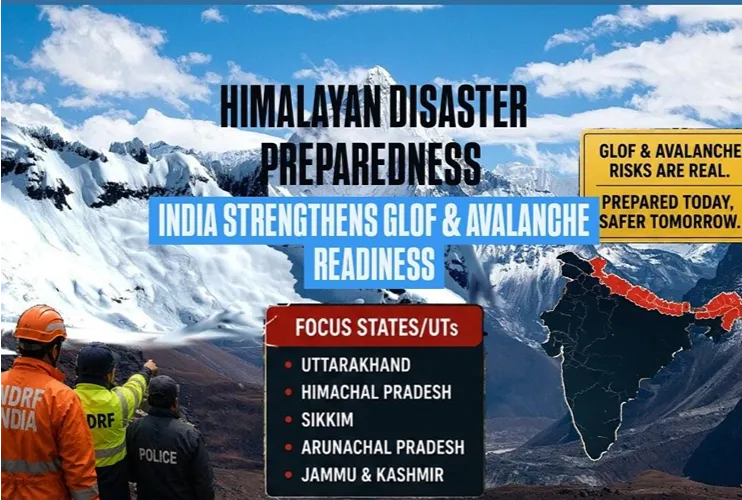

India is stepping up its Himalayan disaster preparedness as the risks from Glacial Lake Outburst Floods and snow avalanches demand faster warnings, better evacuation plans and stronger coordination on the ground. The urgency was underlined on September 3, 2026, when Union Home Secretary Govind Mohan chaired a meeting in New Delhi to review preparedness across Uttarakhand, Himachal Pradesh, Sikkim, Arunachal Pradesh and Jammu & Kashmir.
The meeting brought together the Chief Secretaries and State Disaster Management Authorities of the Himalayan States and senior officials from the Ministry of Home Affairs, National Disaster Management Authority, Central Water Commission, India Meteorological Department and Defence Geoinformatics Research Establishment. Discussions covered monitoring of vulnerable glacial lakes and snow-covered areas, identification of high-risk locations and possible flood flow paths, timely dissemination of alerts, evacuation planning and the deployment of response resources.
The review also pushed States to move beyond emergency response and strengthen preventive mitigation and community preparedness. They were asked to regularly identify gaps in warning and evacuation systems and expedite the GLOF mitigation projects sanctioned by the Central Government in 2024.
Why GLOFs Are Becoming a Serious Himalayan Risk
A Glacial Lake Outburst Flood (GLOF) occurs when water stored in a glacial lake is suddenly released, potentially after the natural barrier holding the lake becomes unstable or fails. The resulting surge can move rapidly through mountain valleys, carrying water, rocks, mud and debris and causing destruction well beyond the original glacial lake.
The threat is particularly serious because Himalayan geography can magnify the impact. Steep slopes and narrow valleys can accelerate floodwaters, while roads, bridges, villages, hydropower projects and other infrastructure are often concentrated along river systems. A disaster beginning in a remote high-altitude area can therefore create consequences far downstream.
The South Lhonak Lake GLOF in Sikkim in October 2023 provided a stark demonstration of this danger. The flood caused extensive damage across the Teesta basin, including to bridges, roads and hydropower infrastructure. The event reinforced a crucial lesson for Himalayan disaster preparedness. Risk assessment cannot stop at identifying a dangerous glacial lake. Authorities must also know where the water could travel and which people and assets could be caught in its path.
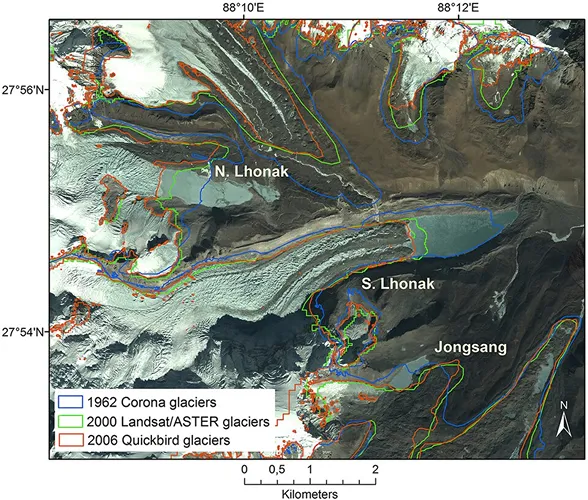
Photo: A. E. Racoviteanu, Y. Arnaud, M. W. Williams, W. F. Manley – A. E. Racoviteanu et. al./ Wikimedia Commons Licensed under CC BY-SA 3.0
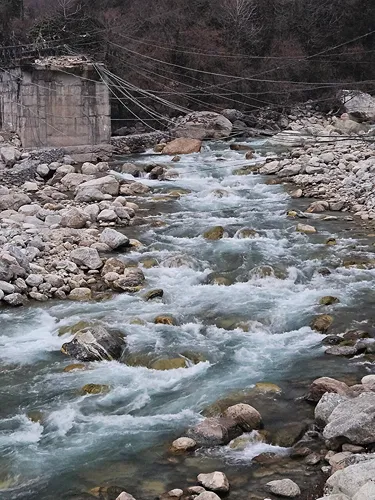
Photo: Biswajit0220/ Wikimedia Commons Licensed under CC BY-SA 4.0
Himalayan Risk at a Glance
| Area | Major concern |
|---|---|
| Uttarakhand | GLOFs, flash floods, avalanches and landslides |
| Himachal Pradesh | Avalanches, flash floods and unstable slopes |
| Sikkim | Glacial lakes, GLOFs and Teesta basin risks |
| Arunachal Pradesh | Heavy rainfall, landslides, floods and high-altitude hazards |
| Jammu & Kashmir | Avalanches, snow hazards and landslides |
| Ladakh | High-altitude snow and glacial hazards |
| Critical infrastructure | Roads, bridges, tunnels and hydropower |
| Key preparedness tools | Monitoring, early warnings, risk mapping and evacuation |
The changing Himalayan environment makes this challenge more complicated. Glacier and snow conditions are not static, while extreme rainfall can interact with already fragile terrain. This does not mean every glacial lake or snow-covered slope will produce a disaster, but it makes continuous risk assessment essential.
Avalanches Add Another Layer of Danger
GLOFs are only one part of the problem. Snow avalanches can become equally destructive, particularly in high-altitude areas where roads, military routes, settlements and tourist destinations operate close to avalanche-prone slopes.
An avalanche can occur suddenly and travel at considerable speed, leaving little time for people caught in its path. Heavy snowfall, changing temperatures and unstable snow layers can increase the danger. For communities and agencies operating in high-altitude areas, this means preparedness has to continue throughout periods of elevated risk rather than beginning only after an avalanche occurs.
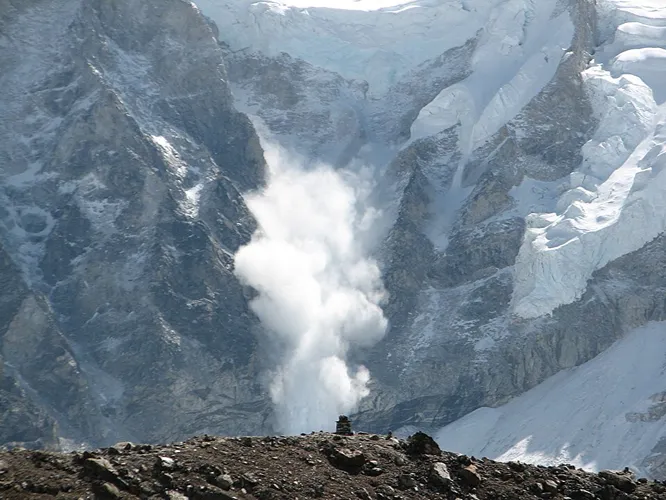
Photo: Chagai/Wikipedia Commons
The consequences also extend to connectivity. A major avalanche can block roads, isolate settlements and disrupt the movement of emergency teams. In strategically important border regions, prolonged road closures can have wider implications for logistics and access. This makes avalanche forecasting and road management important elements of Himalayan disaster preparedness.
Tourism has added another dimension. More visitors are travelling into mountain regions for trekking, skiing, winter tourism and adventure activities. Clear warnings, restrictions in high-risk zones and reliable communication can help reduce exposure when conditions become dangerous.
Early Warnings Must Reach the Ground
The biggest test for India’s Himalayan disaster preparedness will be whether early-warning systems can turn scientific information into timely action. Monitoring a glacial lake or avalanche-prone slope is only the first step. The warning must then move rapidly from scientific and technical agencies to State authorities, district administrations and finally the people who may need to evacuate.
India has a growing range of tools for this task, including satellite imagery, remote sensing, weather monitoring, ground-based sensors, geographic information systems and other technologies. These systems can help authorities observe changes in glaciers, snow cover, water bodies and weather conditions across terrain that is difficult for personnel to access regularly.
But technology alone cannot guarantee safety. A warning arriving at a control room has limited value if residents receive it too late or do not know what action to take. Effective disaster preparedness therefore requires a functioning last-mile system involving local administrations and communities. Evacuation routes, shelters, emergency communication and response resources need to be established before an event.
This is why flow-path planning is so important. Authorities need to understand not only where a hazard could begin but also the route it might take, the settlements it could affect and the infrastructure that could be damaged. Such mapping can help determine where warnings should be issued and where evacuation should begin.
Infrastructure Must Be Built With Risk in Mind
The Himalayan region cannot simply be closed to development. Roads, bridges, tunnels and power infrastructure are essential for economic development, local communities and national security. Better connectivity is particularly important in remote border areas.
The challenge is ensuring that infrastructure does not create additional vulnerability. Construction in unstable terrain can alter drainage, disturb slopes and expose roads and structures to hazards. At the same time, infrastructure located downstream from vulnerable glacial lakes or along avalanche-prone routes can face risks that may not have been fully apparent when it was originally planned.
This makes risk-informed planning increasingly important. Infrastructure assessments need to consider the possibility of extreme events rather than relying only on past conditions. Roads should account for avalanche and landslide risks, bridges should be assessed against potential flood and debris flows, while hydropower projects need robust emergency planning for sudden changes in river conditions.
The progress of the GLOF mitigation projects sanctioned in 2024 is therefore significant. The latest review called on States to expedite these projects, signalling the need to convert identified risks into concrete mitigation measures. Monitoring systems, warning infrastructure, protective engineering where appropriate and local evacuation arrangements all need to move forward rather than remain at the planning stage.
Communities Will Decide How Prepared India Really Is
The strongest disaster-management system is not necessarily the one with the most sophisticated equipment. It is the one that can translate information into action quickly. In remote Himalayan areas, local communities may be the first to observe unusual changes and the first to respond when roads or communications are disrupted.
Community-level preparedness should therefore become a permanent part of Himalayan disaster preparedness. Residents in vulnerable areas need to know what an alert means, where they should go, which routes are safe and how they can communicate during an emergency. Regular evacuation exercises can reveal problems that may remain invisible on paper.
Coordination is equally important. State disaster authorities, district administrations, scientific institutions, weather agencies, water-management authorities and technical organisations need to share information continuously. A hazard does not follow State boundaries or administrative jurisdictions, and a flood originating high in the mountains can affect several areas downstream.
The September 3 review has placed the emphasis where it matters most, on preparedness before the crisis. The Himalayan challenge is no longer simply about responding to disasters after they happen. It is about identifying vulnerable locations, monitoring them continuously, issuing warnings early, preparing communities and making infrastructure more resilient.
India’s mountains will continue to face avalanches, floods, landslides and other natural hazards. Not every extreme event can be prevented, but its human and economic cost can be reduced significantly when preparation starts well before the first warning becomes an emergency.
For a country expanding connectivity and economic activity across the Himalayas, Himalayan disaster preparedness is ultimately about balancing development with resilience. The real measure of success will be whether a warning reaches a vulnerable community early enough for people to act, and whether the infrastructure they depend on is capable of surviving what comes next.
What is a Glacial Lake Outburst Flood?
A GLOF is a sudden release of water from a glacial lake. It can generate powerful downstream flooding accompanied by rocks, sediment and debris.
Which Himalayan regions are being covered by the latest preparedness review?
The September 3 review covered Uttarakhand, Himachal Pradesh, Sikkim, Arunachal Pradesh and Jammu & Kashmir. The broader Himalayan risk also includes the Union Territory of Ladakh.
Why was the 2023 Sikkim GLOF significant?
The South Lhonak Lake event demonstrated how a high-altitude glacial hazard can produce destructive flooding downstream, damaging roads, bridges and hydropower infrastructure across the Teesta basin.
How can GLOF and avalanche risks be reduced?
Continuous monitoring, accurate risk mapping, early-warning systems, flow-path planning, evacuation arrangements, preventive mitigation and community preparedness can reduce the impact.
What are the 2024 GLOF mitigation projects?
The Central Government sanctioned GLOF mitigation projects for vulnerable Himalayan States in 2024. The latest review called for faster progress so that planned mitigation measures are implemented on the ground.