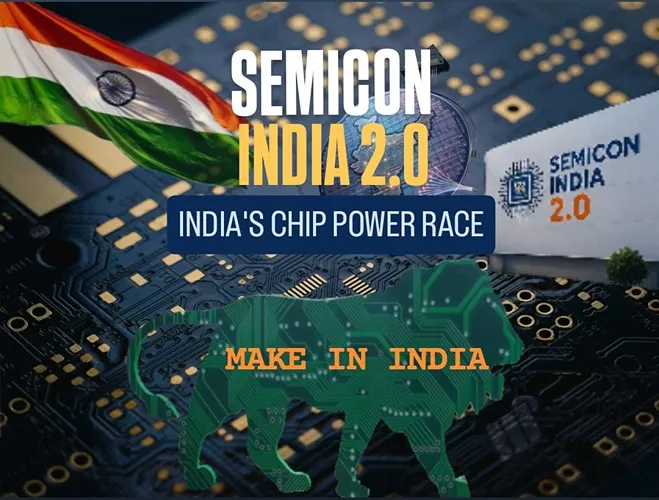

India is entering a semiconductor race that could reshape its economic and strategic future. From smartphones and electric vehicles to artificial intelligence, satellites and defence systems, modern technology depends on tiny chips that have become one of the world’s most valuable strategic assets.
The first phase of India’s semiconductor push was about getting manufacturing off the ground. Semicon India 2.0 represents a more ambitious question: can India build an ecosystem around those factories and become a serious player in the global chip supply chain?

Photo: ISM
That transition will not be easy. Semiconductor manufacturing requires enormous investment, specialized technology, skilled workers and reliable infrastructure. But geopolitical tensions and the global effort to diversify supply chains have opened a rare opportunity for India.
From Semicon India 1.0 to Semicon India 2.0
India’s original semiconductor programme was approved in 2021 with a ₹76,000 crore financial outlay. Its purpose was straightforward: create the foundations of a domestic semiconductor and display manufacturing ecosystem. The programme supported semiconductor fabs, display fabs, compound semiconductor facilities, semiconductor packaging and testing, and chip-design initiatives.
The importance of this first phase went beyond manufacturing. India already had a strong presence in semiconductor design and a large pool of engineers working for global technology companies. What it lacked was a substantial manufacturing base connecting chip design with fabrication, packaging, testing and the wider supply chain.
That is where Semicon India 1.0 attempted to make a difference. The next phase is broader. Semicon India 2.0 was announced in the Union Budget 2026-27 with a proposed ₹1 lakh crore outlay, signaling that the government wants to move from creating initial capacity to building scale and technological depth.
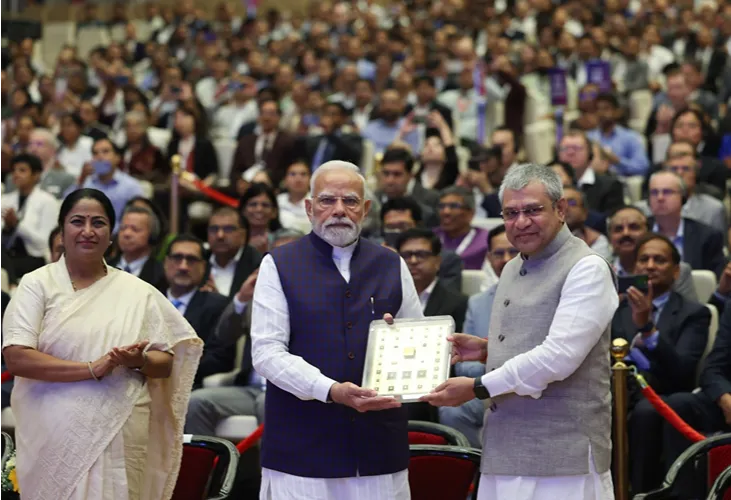
Photo: ISM
| Indicator | Semicon India 1.0 | Semicon India 2.0 |
|---|---|---|
| Financial framework | ₹76,000 crore | ₹1 lakh crore proposed |
| Main objective | Establish semiconductor ecosystem | Scale and deepen the ecosystem |
| Key focus | Fabs, packaging, design and related facilities | Manufacturing, technology, supply chains and ecosystem expansion |
| Strategic ambition | Enter semiconductor manufacturing | Build globally competitive capabilities |
Semicon India 1.0 was about opening the door. Semicon India 2.0 is about building what lies behind it.
Tata, Micron and the Race to Build India’s Chip Base
India’s semiconductor ambitions became more tangible when major companies began announcing large investments. Tata Electronics is at the centre of India’s manufacturing push. Its semiconductor fabrication project in Gujarat, being developed with Taiwan’s Powerchip Semiconductor Manufacturing Corporation (PSMC), is intended to create domestic wafer fabrication capacity. Tata is also developing a semiconductor assembly and testing facility in Assam. Together, these projects illustrate an important part of India’s strategy: developing different stages of the semiconductor value chain rather than relying on a single type of facility.
Micron is another major name in the story. The American semiconductor company is developing a semiconductor assembly, test and packaging facility in Gujarat. Such facilities are crucial because manufacturing a wafer is only one part of the journey. Chips must eventually be packaged, tested and prepared for use in electronic products. CG Power, in partnership with Japan’s Renesas Electronics and Thailand’s Stars Microelectronics, is also developing semiconductor assembly and testing capabilities. These projects matter because India’s semiconductor strategy is gradually becoming less theoretical.
The country is attempting to establish a chain that can connect design, fabrication, packaging, testing and electronics manufacturing. That could eventually make India more attractive to companies looking to diversify their production networks. But building factories is only the beginning. A semiconductor ecosystem requires hundreds of supporting companies providing specialised chemicals, materials, equipment, gases, components, logistics and maintenance services. It also needs universities and research institutions capable of producing engineers with highly specialised semiconductor skills. This is where the success of Semicon India 2.0 will ultimately be judged.
Why the World Is Giving India a Semiconductor Opportunity
The semiconductor industry is no longer simply an economic sector; it has become a geopolitical battlefield. The global chip shortage exposed the world’s dependence on a relatively small number of semiconductor manufacturing centres, while growing tensions between the United States and China have pushed governments and companies to rethink their technology supply chains.
Taiwan remains the dominant force in advanced semiconductor manufacturing, while South Korea, Japan, China, the United States and several Southeast Asian economies occupy critical positions across different parts of the supply chain. India does not need to replace these established players to benefit. Its opportunity lies in becoming an important additional manufacturing and technology hub.
India already has several advantages, including a huge domestic electronics market, a large engineering workforce, growing electronics production and considerable experience in chip design. Government incentives can further reduce the financial barriers facing semiconductor manufacturers. The China+1 strategy also creates an opening, as global companies increasingly seek production networks that are less dependent on a single country. India can potentially become one of those alternative locations.
The opportunity is particularly significant for sectors such as:
- Artificial intelligence
- Electric vehicles
- Telecommunications
- Smartphones
- Defence electronics
- Aerospace
- Renewable energy
- Data centres
- Consumer electronics
A stronger semiconductor industry could therefore have an impact far beyond the technology sector. For India’s defence industry, domestic access to critical chips could reduce vulnerabilities in sensitive systems. For electric vehicles and telecommunications, local semiconductor capabilities could strengthen supply security, while access to advanced computing hardware will become increasingly important for artificial intelligence.
This is why Semicon India 2.0 should be viewed not only as an industrial policy but also as a strategic initiative with implications for India’s economic security, technology capabilities and geopolitical position.
The Hard Road to Becoming a Chip Powerhouse
India’s biggest challenge is that semiconductors are among the world’s most difficult products to manufacture at scale. A fabrication facility requires billions of dollars, extremely precise machinery, highly controlled environments, reliable electricity and water, and specialized materials. Technology is another major obstacle. India has strong capabilities in chip design but designing a semiconductor and manufacturing one are very different challenges. The most advanced chips require years of manufacturing expertise, sophisticated equipment and deep relationships across the global supply chain.
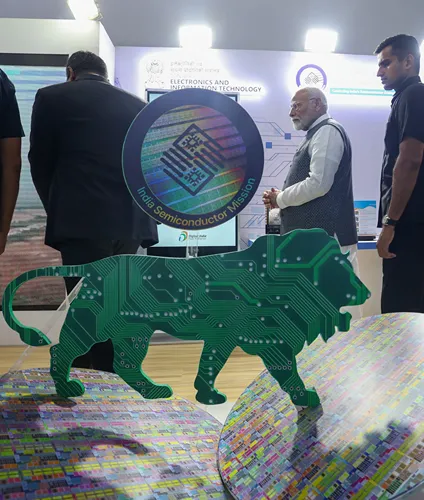
India must therefore avoid measuring success simply by the number of semiconductor plants announced. The bigger test is whether these facilities can become the centre of a wider ecosystem with domestic suppliers, specialized workers, research and development, and stronger links between semiconductor manufacturers and India’s electronics industry.
The competition is also fierce. Taiwan and South Korea have decades of semiconductor experience, China has invested enormous resources into domestic chip production, Japan remains a major supplier of semiconductor materials and equipment, while the United States continues to dominate important areas of chip design and technology. India cannot close this gap overnight.
A more realistic strategy is to build strength step by step across chip design, mature-node manufacturing, advanced packaging, testing, specialised semiconductors and electronics manufacturing, while gradually developing the capabilities required for more advanced fabrication. That makes Semicon India 2.0 a long-term bet rather than an instant transformation.
India has already taken the difficult first step by moving from ambition to actual semiconductor projects. The harder task now is turning those projects into a connected, competitive and resilient ecosystem. If India can combine its engineering talent with manufacturing expertise, reliable infrastructure, domestic suppliers and sustained investment, it could become an important node in the global semiconductor supply chain.
But becoming a true chip powerhouse will require patience. The race is not simply about building a semiconductor fab; it is about building everything around it. Semicon India 1.0 began India’s attempt to enter the semiconductor manufacturing race. Semicon India 2.0 could determine whether India merely participates in that race or becomes one of its important global contenders.
What is Semicon India 2.0?
Semicon India 2.0 is the next phase of India’s semiconductor push, aimed at expanding manufacturing capacity while strengthening the wider ecosystem covering chip fabrication, packaging, testing, design, materials, equipment, research and skilled talent.
How is Semicon India 2.0 different from Semicon India 1.0?
Semicon India 1.0 focused on establishing India’s semiconductor ecosystem through financial incentives for fabs, packaging, testing, display manufacturing and chip design. Semicon India 2.0 is focused more heavily on scaling and deepening that ecosystem.
Why are semiconductors important for India?
Semiconductors are essential for smartphones, automobiles, artificial intelligence, telecommunications, defence systems, satellites and many other technologies. Building domestic capabilities can reduce supply-chain vulnerabilities and strengthen India’s technological and strategic autonomy.
Which companies are building semiconductor facilities in India?
Major companies involved include Tata Electronics, Micron and CG Power, along with international technology partners. Their projects cover different parts of the semiconductor manufacturing and assembly ecosystem.
Can India become a global semiconductor powerhouse?
India has the potential to become an important global semiconductor hub, particularly because of its engineering talent, large electronics market and growing manufacturing base. However, reaching that level will require sustained investment, advanced technology, specialised talent and a much deeper domestic supply chain.