

The next major digital conflict may not begin with a missile strike or a dramatic cyberattack. It could begin thousands of metres beneath the ocean, where fibre-optic undersea cables carry the data that keeps the global economy moving. From financial transactions and cloud services to government communications and everyday internet traffic, these cables form the largely invisible backbone of modern connectivity.
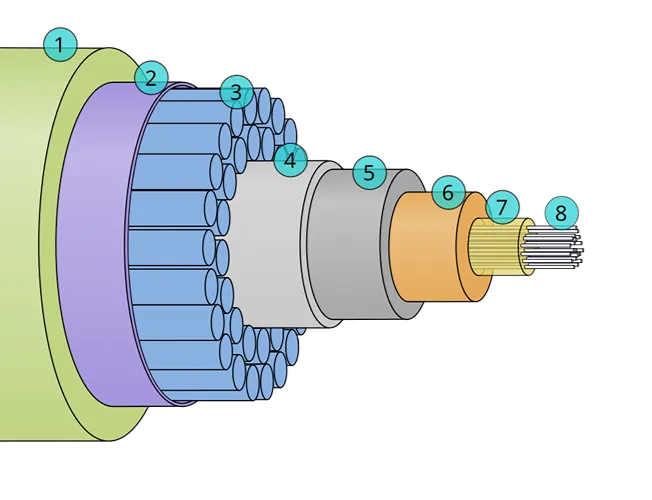
For India, the issue is becoming increasingly important. The country’s digital economy, data centres, digital payments and technology sector depend on reliable international connectivity. As geopolitical competition intensifies, undersea cables are no longer just telecom infrastructure. They are becoming strategic assets that could be targeted, disrupted or protected as part of a wider contest for digital and maritime power.
Why Undersea Cables Are Becoming Strategic Targets
More than 95% of intercontinental internet traffic is commonly estimated to travel through submarine cables rather than satellites. These cables connect continents through vast networks on the seabed, providing the capacity needed for modern digital communication. A single cable may carry enormous volumes of data, but the global network is designed with multiple routes so that traffic can often be redirected when one connection fails.
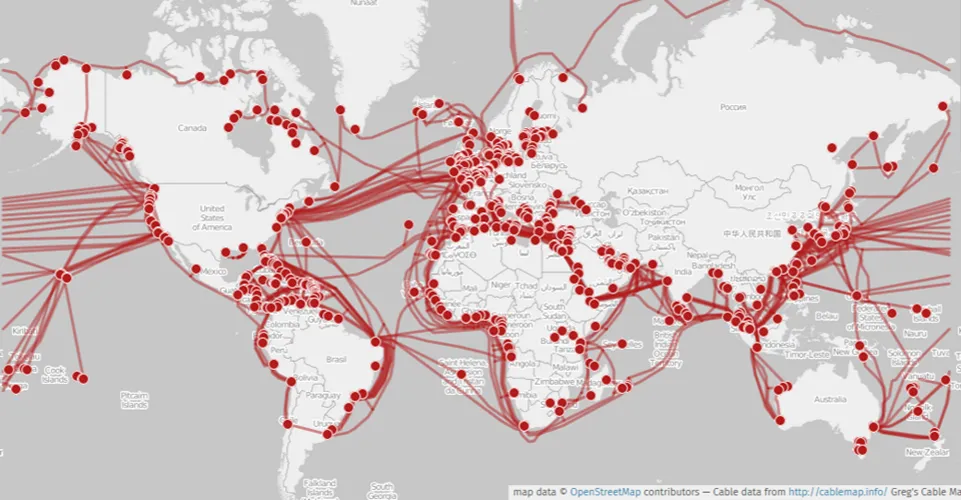
Photo: cable data by Greg Mahlknecht , map by Openstreetmap contributors CC BY-SA 2.0/Wikimedia Commons
That redundancy does not eliminate the risk. If several important cables are damaged around the same time, alternative routes can become congested and digital services can experience delays or higher costs. The challenge becomes even more serious when damage occurs in strategically important waters where repair operations may be complicated by weather, maritime disputes or security concerns.
Cable damage itself is not unusual. Fishing activity, ship anchors, earthquakes and underwater landslides can all cause breaks. What has changed is the geopolitical environment surrounding these incidents. Recent damage to telecommunications and energy infrastructure in and around European waters has triggered investigations and increased concern about the possibility of deliberate interference.
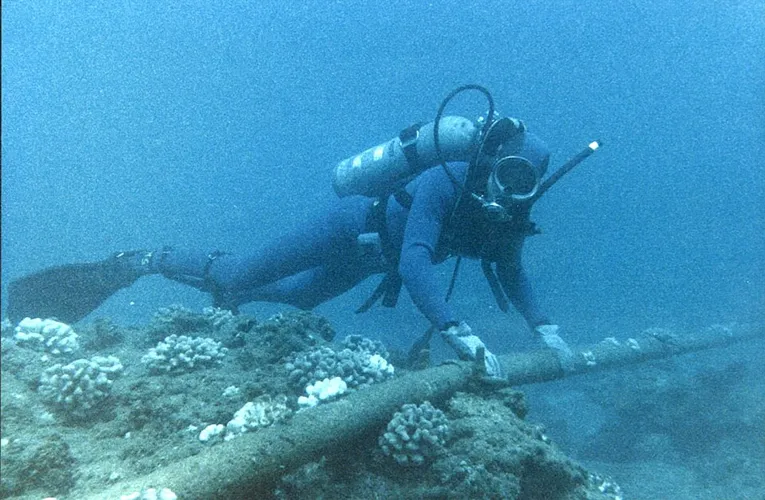
Photo: The Official CTBTO Photostream CC BY 2.0 /Wikimedia Commons
That does not mean every damaged cable is the result of sabotage. Establishing intent can be extremely difficult. But this uncertainty is precisely what makes undersea cables attractive within what security experts describe as grey-zone competition. An adversary could potentially create disruption while avoiding the clear military signature associated with a conventional attack.
NATO has increasingly treated critical underwater infrastructure as a security priority, particularly after a series of incidents involving subsea infrastructure in the Baltic region. The alliance has strengthened cooperation and surveillance efforts around critical infrastructure, while European governments have also been working on improving the resilience of submarine cable networks.
The strategic calculation is straightforward: a cable does not need to be permanently destroyed to become a powerful tool of disruption.
Why India Cannot Ignore the Threat
India’s dependence on undersea cables is closely linked to its ambitions to become a major digital and technology power. International cable systems connect India with Europe, the Middle East, Africa and Southeast Asia, while major landing stations on India’s coastline serve as gateways for global data traffic.
Mumbai is one of India’s most important international connectivity hubs, while Chennai, Kochi and other coastal locations also form part of the country’s submarine communications infrastructure. These connections support everything from multinational businesses and cloud platforms to financial services and ordinary internet use.
The government has recognised the importance of strengthening India’s international digital connectivity. The Department of Telecommunications has been working on policies relating to submarine cable landing stations and international connectivity as India seeks to expand its digital infrastructure. India has also been encouraging the development of additional cable routes and landing infrastructure to improve resilience.
The country’s strategic location adds another dimension. The Indian Ocean contains some of the world’s most important maritime trade and communication routes. Cables crossing the region connect major economic centres in Asia, Europe, Africa and the Middle East, making the ocean an increasingly important arena for both economic and strategic competition.
India’s growing maritime-security capabilities could therefore have a role beyond protecting ships and sea lanes. Monitoring activity around critical undersea cables, cable landing stations and other seabed infrastructure could become an increasingly important part of national security.
The vulnerability is particularly relevant as India expands its digital ambitions. Artificial intelligence, cloud computing, semiconductor manufacturing, digital public infrastructure and data-centre capacity will all require dependable connectivity. The more India depends on international data flows, the greater the importance of resilient undersea cables.
The Dangerous Economics of a Cable Cut
The biggest impact of a serious cable disruption may not be immediately visible. A cable cut does not necessarily switch off the internet across an entire country. Instead, traffic can be diverted through alternative routes. But if several cables are affected, those alternative pathways may struggle to absorb the additional demand. The consequences could extend to businesses, financial institutions, cloud platforms, international communications and digital services. A disruption affecting a major connectivity corridor could increase latency, reduce network capacity and raise operating costs.
Repairing undersea cables is another major challenge. Specialised cable ships have to locate the damaged section, recover it from the seabed, repair or replace the faulty portion and carefully lay it back into position. In deep water, the process can be technically demanding and expensive. There is also a limited global supply of specialised cable-repair vessels. This creates another vulnerability: even when the cause of damage is known, restoration cannot necessarily happen immediately.
For governments, this makes resilience more important than simply trying to prevent every possible cable failure. Countries need multiple geographically diverse routes, adequate landing stations, repair capabilities and mechanisms for quickly identifying damage.
India can reduce its exposure by developing a broader network of undersea cables and avoiding excessive dependence on a small number of international routes. Regional cooperation in the Indian Ocean could also help countries share information about suspicious maritime activity and respond more quickly when critical infrastructure is damaged.
The Digital War Beneath the Waves
The most important change may be conceptual. Cybersecurity has traditionally focused on software, networks, servers and data. But the digital world ultimately depends on physical infrastructure, and undersea cables are among its most important physical components. This is why the seabed is emerging as another arena of geopolitical competition. Russia’s suspected capabilities around critical underwater infrastructure have generated concern among European governments and NATO members. Moscow has rejected accusations of deliberately targeting civilian infrastructure. China, meanwhile, is expanding its technological and maritime capabilities while becoming increasingly important in the global digital-infrastructure ecosystem.
The strategic competition is not simply about cutting cables. It also involves the ability to map seabed infrastructure, monitor maritime activity, deploy specialised vessels, conduct repairs and protect critical landing points. Knowledge of where vulnerable infrastructure is located can itself have strategic value.
For India, the Indian Ocean will be particularly important. The region sits at the intersection of major global trade and communication routes, while India’s own dependence on digital connectivity continues to grow. Protecting undersea cables will therefore require cooperation between telecom authorities, maritime agencies, the Navy, private operators and international partners. The future of digital security may consequently involve a combination of cyber defence and maritime surveillance. Governments will need to know not only who is attempting to penetrate a network, but also what ships and vessels are operating close to the infrastructure that supports that network.
The next digital conflict may never look like a traditional war. It could involve cyberattacks, disinformation, electronic warfare and carefully calibrated physical disruption. Undersea cables could become an attractive target precisely because they occupy the space between cyberspace and the physical world.
For India, the message is clear: protecting the internet cannot stop at firewalls and data centres. It has to extend beneath the waves. Building more diverse cable routes, strengthening maritime awareness, improving repair capacity and protecting cable landing stations could determine how resilient India’s digital economy remains during a geopolitical crisis. The cables may be invisible to most people, but their strategic importance is becoming impossible to ignore. In the next digital war, one of the most important battlefields could be the seabed.
What are undersea cables used for?
Undersea cables carry international telecommunications and internet traffic between continents. They support cloud computing, financial transactions, business communications, video services and many other digital activities.
Can cutting an undersea cable shut down a country’s internet?
Usually not by itself. Countries generally have multiple international connections, allowing traffic to be rerouted. However, multiple cable failures can cause congestion, slower services and disruptions.
Who can damage undersea cables?
Cables can be damaged accidentally by ship anchors, fishing equipment, earthquakes and underwater geological events. Deliberate damage is also a security concern, although proving that an incident was intentional can be difficult.
Why are undersea cables important for India?
India relies on undersea cables for international digital connectivity with Europe, Asia, Africa and the Middle East. They support India’s growing technology sector, businesses, financial services and digital economy.
How can India protect its undersea cables?
India can improve resilience by developing diverse cable routes, strengthening cable landing stations, increasing maritime surveillance, maintaining repair capabilities and cooperating with other countries and private cable operators.